
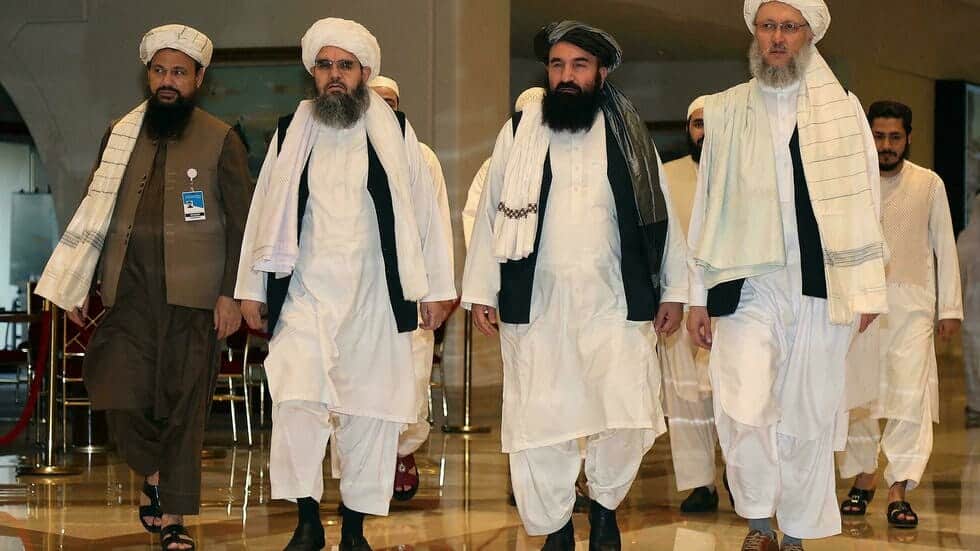


Qatar called on the Taliban to adopt a ceasefire and reduce escalation Saturday as the insurgents’ lightning advance across Afghanistan entered a decisive phase.
Doha has facilitated on and off meetings between the militants and the Afghan government for months, with little sign of progress as the Taliban presses its rout of government forces.
“During their meeting, the minister of foreign affairs urged the Taliban to reduce escalation and adopt a ceasefire, which would contribute to accelerating efforts to reach a comprehensive political settlement that would guarantee a prosperous future for the government and people of Afghanistan,” the Qatari foreign ministry said in a statement.
It is the clearest call to date from Qatar, which hosts the Taliban’s politics office, for the militants to halt their lightning advance across Afghanistan.
It followed a meeting in Doha between the minister, Sheikh Mohammed bin Abdulrahman Al-Thani, and the head of the Taliban’s political office, Mullah Abdul Ghani Baradar.
With the country’s second- and third-largest cities, Kandahar and Herat, now in Taliban hands, the besieged capital, Kabul, has effectively become the last stand for government forces, who have offered little or no resistance elsewhere.