
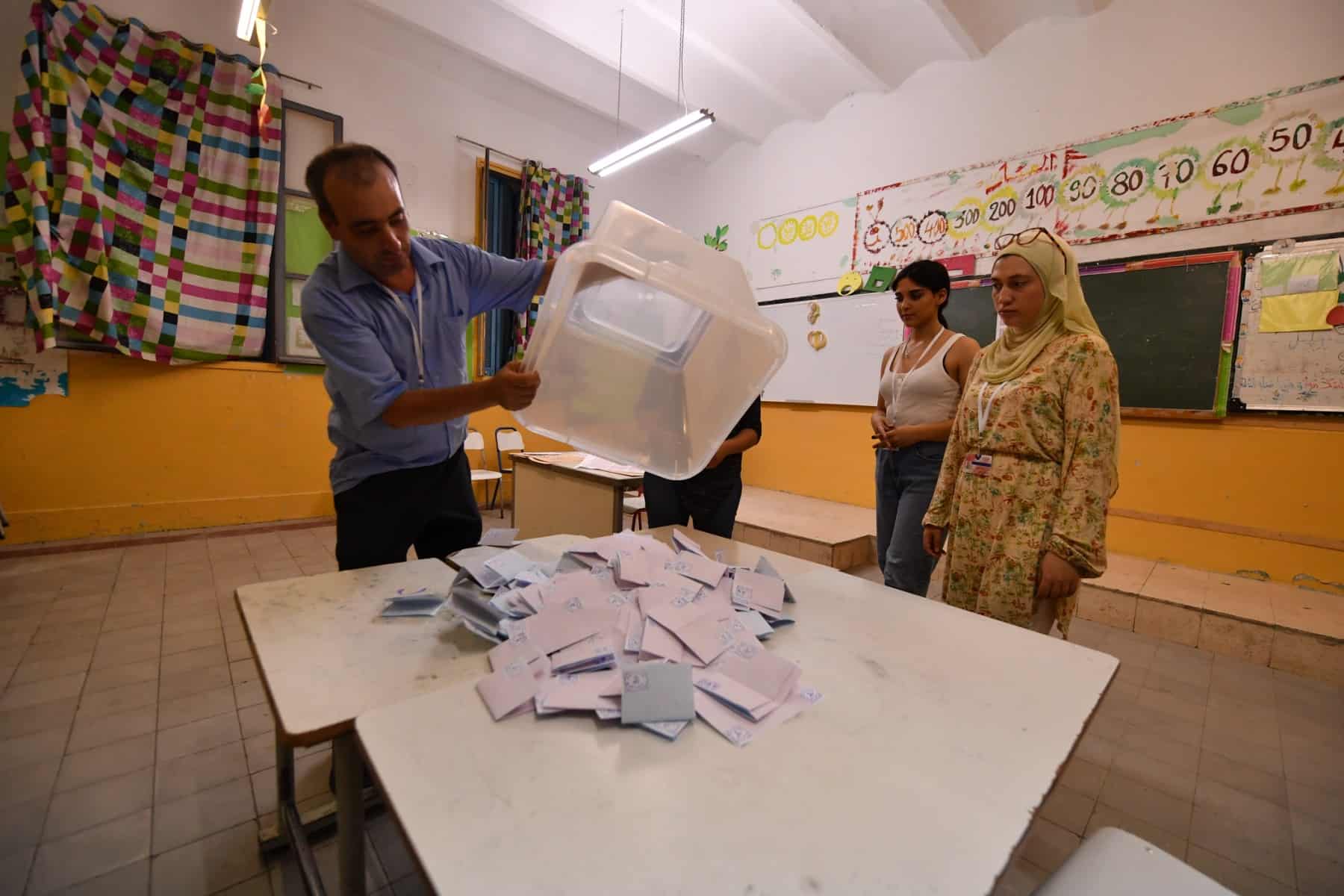


Its detractors say Tunisia’s draft constitution will give President Kais Saied unchecked powers, but for voter Baya, that’s a welcome break from the country’s old political elite.
“They were in power for 10 years and did nothing. Let this man do his job!” the 54-year-old said after voting in a referendum on the charter on Monday.
“We believe in him and we’ll support him until the end.”
Monday marks a year since Saied sacked the government and froze parliament in a dramatic move against a system praised as the only democracy to emerge from the 2011 Arab uprisings — but also hobbled by chronic crises and corruption.
He has since tightened his grip on power and pushed to replace the North African country’s 2014 constitution with a document that would lock in his virtually unchecked powers.
Many of those voting were in their 40s and 50s, but student Aya, 23, was also in favour.
She hopes it will be “the starting point for real change, as the president will be able to implement the policy he sees as the most appropriate for the country’s interests”, she said.
Tunisians are facing growing poverty, surging inflation and high joblessness particularly among the young.
But Aya said she was “optimistic” that Saied could change things.
Initial figures after polling closed showed that almost 28 percent of eligible voters had cast ballots, beating expectations, and an exit poll suggested most had voted yes.
Saied under fire
On Monday evening in the Lafayette district of central Tunis, voters steadily flowed through a polling station, where an official confirmed that there had been an uptick in attendance in the cooler early evening.
Chokri, who was helping his aged father reach a polling booth at a school in Tunis, said he agreed with the new charter.
“We approve of all these measures and that’s why we came today to give a big ‘Yes’ to Saied and his decisions,” the 45-year-old said.
Despite Tunisians having had just weeks to read or discuss the new constitution, few doubted the yes vote would win.
But observers also said voter turnout was key and would reflect Saied’s popularity.
Saied’s opponents, including the Islamist-inspired Ennahdha party that had dominated Tunisian politics since 2011, called for a boycott.
Saied came under fire for giving a speech on Monday urging a yes vote for “a new republic based on genuine freedom, justice and national dignity”, despite his own electoral law stipulating campaign silence until the polls closed.
One “no” voter, who asked not to be named, said those telling journalists they had voted in favour were “trying to intimidate others who reject this constitution”.
But for Majrya Hajja, 60, voting “yes” was “a duty”.
“Anyone who loves Tunisia must come and vote yes,” she said.