
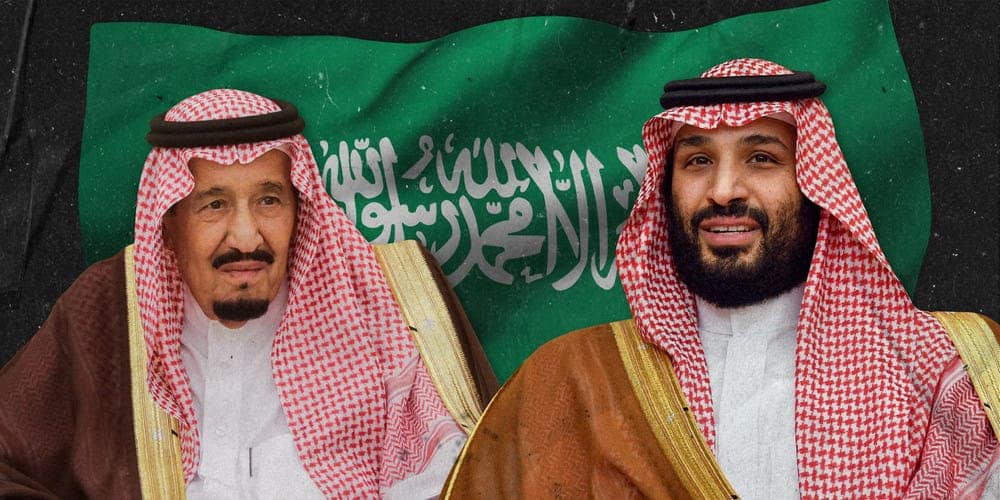


Riyadh, Saudi Arabia— Saudi Arabia’s powerful crown prince, Mohammed bin Salman, has been named prime minister, a post traditionally held by the king, in a government shuffle announced Tuesday.
The move effectively formalises power already wielded by Prince Mohammed, who has been the kingdom’s de facto ruler for several years, analysts said.
Saudi Arabia has for years sought to quell speculation over the health of the 86-year-old king, who has ruled the world’s top oil exporter since 2015.
King Salman has been hospitalised twice this year, most recently a one-week stay in May that involved tests including a colonoscopy, according to state media.
Sweeping changes
Prince Mohammed became defence minister in 2015, a key step in a swift consolidation of power.
In that role he has overseen Saudi Arabia’s military activities in Yemen, where the kingdom leads a coalition backing the internationally recognised government in its fight against Iran-aligned Huthi rebels.
He has also become the public face of a sweeping reform agenda known as Vision 2030.
Changes have included granting women the right to drive, opening cinemas, welcoming foreign tourists, defanging the religious police and hosting pop stars and high-profile heavyweight fights and other sporting events.
The spike in energy prices triggered by Russia’s invasion of Ukraine spurred a number of Western leaders to travel to Saudi Arabia to appeal for ramped-up oil production, notably then-UK prime minister Boris Johnson and Biden himself, who swallowed an earlier vow to make the Saudi leadership a “pariah”.
German Chancellor Olaf Scholz became the latest major leader to visit the kingdom this past weekend.
‘Overdue’ step
Making the crown prince prime minister is an unusual move, but it has happened before.
In the 1950s, Crown Prince Faisal al Saud became prime minister and assumed control of government operations.
This scenario is different, “formalising a de facto situation”, said Ali Shihabi, a Saudi analyst close to the government.
“It was overdue actually, since he has been CEO to the King’s chairman role for many years,” Shihabi said.
The crown prince “has already gone through the power struggle phase and won it over, so what’s happening now is more regularization of his authority,” said Umar Karim, an expert on Saudi politics at the University of Birmingham.
The move could also resolve thorny questions related to protocol, given Prince Mohammed has for years been meeting heads of state even though his administrative rank has been defence minister, Karim said.
Prince Mohammed is being replaced as defence minister by his younger brother, Khalid bin Salman, who was deputy defence minister.
Prince Khalid’s promotion “formalizes the key role he has in any case been playing in the ministry since 2019, but also makes the changes look more like a cabinet reshuffle for presentational purposes,” said Kristian Ulrichsen, a research fellow at the Baker Institute at Rice University.