
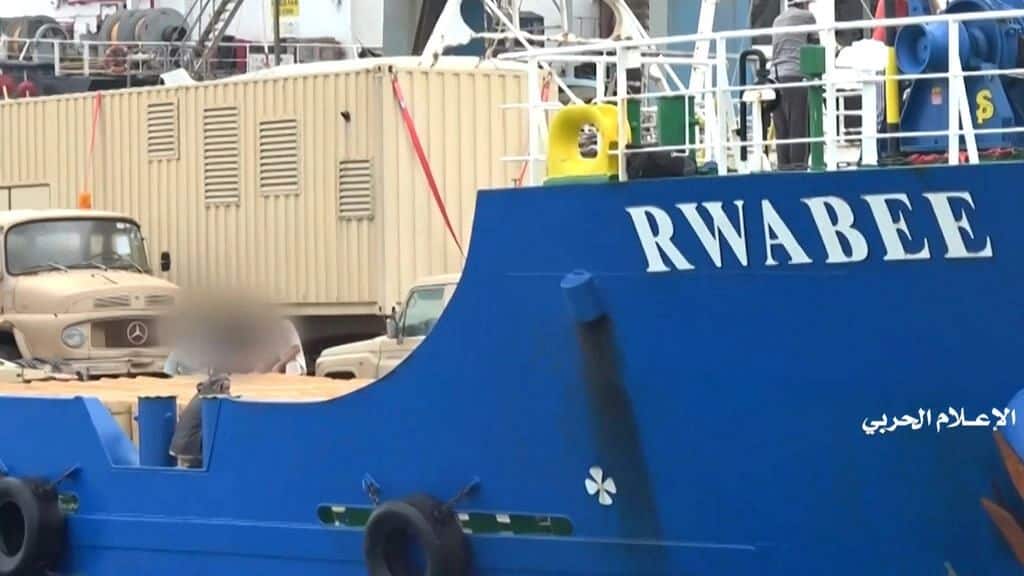


A Saudi-led military coalition on Saturday, January 8, accused Yemeni rebels and their Iranian backers of using two Red Sea ports for military purposes, after the Huthis seized an Emirati-flagged vessel.
They captured the Rwabee ship on Monday, off the key rebel-held Red Sea port of Hodeida, alleging it contained military materiel.
Saudi Arabia condemned what it called piracy against a civilian vessel that carried medical supplies.
The coalition has been fighting for nearly seven years in support of Yemen’s internationally-backed government against the Iran-backed Huthis.
The alliance has lately stepped up its accusations against the rebels and Iran, alongside an escalation in fighting.
In late December the coalition accused the Huthis of “militarizing” the airport in the rebel-held capital Sanaa.
Iran has repeatedly denied US and Saudi accusations that it arms the rebels.
The seized ship is being detained in the Huthi-held port of Salif, north of Hodeida — both of which are crucial entry points for aid supplies to Yemen’s largely rebel-held north, including Sanaa.
“Hodeida is the main port of arrival for Iranian ballistic missiles,” coalition spokesman Turki al-Malki told a news conference.
The coalition has enforced an air and sea blockade of rebel-held territory since 2016.
Showing images that he said demonstrated rebel military activity in the Red Sea, Malki said the vessel’s seizure was organized from Hodeida port and that Salif was used for the “manufacture” of military material.
On Tuesday, the coalition said Yemen’s rebel-held ports would be considered “legitimate military targets” unless the vessel was freed.
The Huthis on Saturday broadcast images on their Al-Masirah television channel that they said were taken on the seized vessel showing “armored vehicles”, “buses for soldiers”, and other equipment.
Early in the Yemen war, in August 2016, the UN aid chief said coalition airstrikes on Hodeida port contravened international humanitarian law.
The United States and the European Union at the time expressed concern over the bombing, which Washington said hit “critical infrastructure” at the port.
In 2018 the warring sides agreed on a ceasefire at Hodeida, supported by a United Nations mission with the aim of demilitarizing the ports including Hodeida and Salif.
The Huthis, who belong to a minority sect of Islam, fought six wars against Yemen’s government from 2004 to 2010.
Millions have been displaced by the current conflict, which has created one of the world’s worst humanitarian crises.