
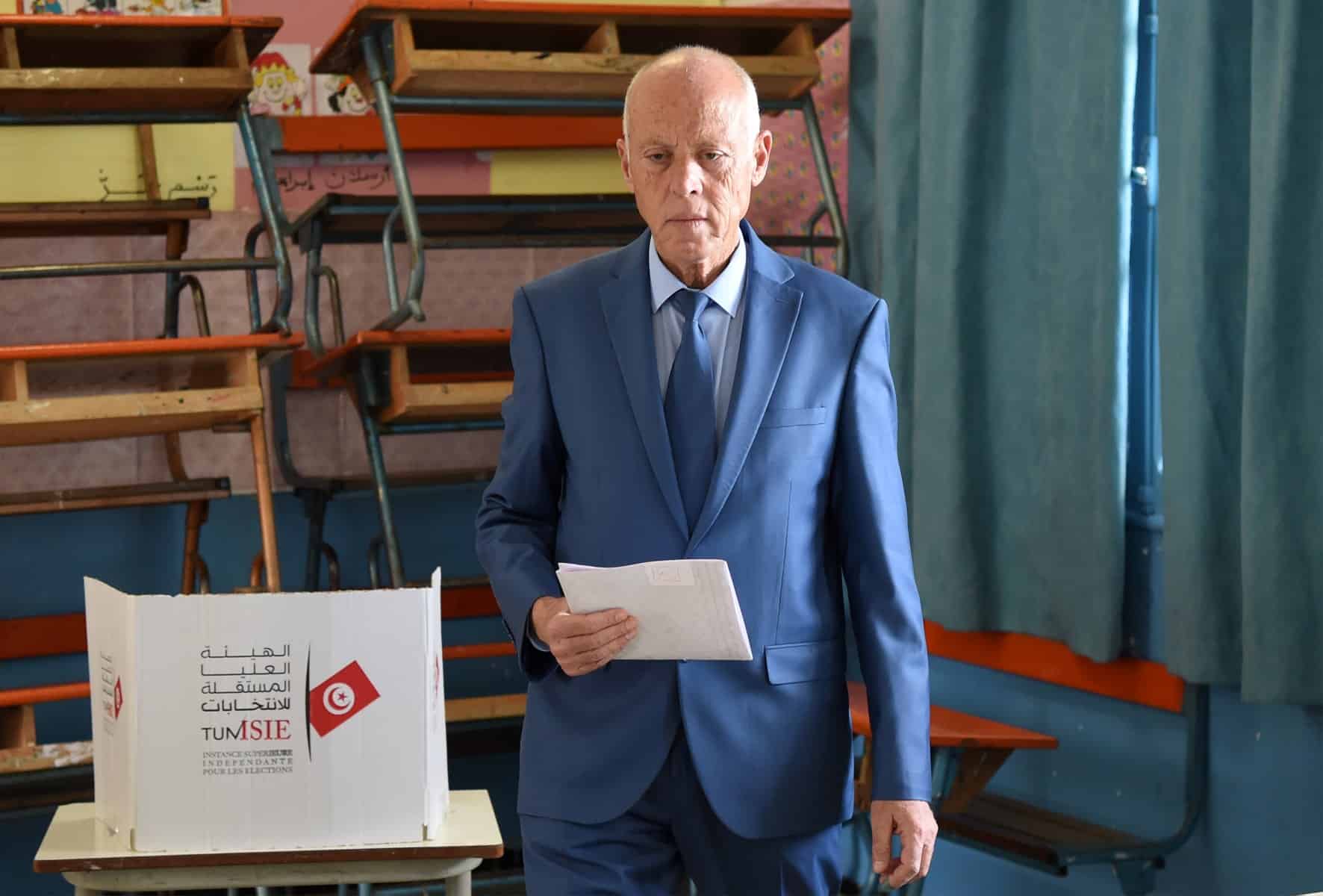


Tunis, Tunisia – A powerful Tunisian trade union called Wednesday for a road map to “save” the country from a slide back to autocracy, after voters largely shunned last week’s legislative elections.
Just 11.2 percent of voters cast ballots Saturday for a new parliament stripped of most its authority, the culmination of President Kais Saied’s power grab since last year.
This was the lowest turnout since the 2011 revolution that toppled dictator Zine El Abidine Ben Ali. Tunisia is the only democracy to have emerged from the Arab Spring uprisings.
The Tunisian General Labour Union (UGTT) “notes the very low level of participation in the elections, which destroys their credibility and legitimacy and clearly confirms the public’s rejection” of Saied’s programme, it said in a statement.
The current political situation “requires the UGTT to assume its national duty and take part, along with other national actors, in saving the country according to clear national goals and a solid road map”, the statement added.
Saied last year sacked the government, froze parliament and seized far-reaching executive powers, pushing through a new constitution in a referendum this July that installed a hyper-presidential system.
The UGTT said Saied was trying to establish a “closed presidential system that is fertile ground for oppression and one-man rule”.
The low turnout showed popular discontent with a “blundering process that has brought the country nothing but further crises”, the union federation added.
The UGTT has become one of the country’s most powerful political forces since Saied neutered parties under the new system.
The main opposition coalition, which had called for a boycott of the vote, demanded Sunday that Saied step down.
The president, who has defended his seizure of sweeping powers as necessary to end repeated political crises, hit back at his critics Monday and appeared unwilling to consider resigning.
Tunisia expert Youssef Cherif of the Columbia Global Centers said he doubted Saied would “even admit that these elections were a failure”.
The UGTT was one of four Tunisian organisations to jointly win the Nobel Peace Prize in 2015 for their contribution to the country’s democratic transition.