


Tunisia on Thursday published the draft of a new constitution giving vastly more powers to the president, a text set to go to referendum on July 25, a year after President Kais Saied’s dramatic power grab.
The new draft was published on Thursday evening in the official journal, less than a month before the referendum.
As widely expected, it provides for a presidential system in a split from the mixed presidential-parliamentary system under the country’s 2014 constitution.
Under the new document, “the president of the republic carries out executive functions with help from the government”, whose chief would be appointed by the president and would not face a confidence vote in parliament.
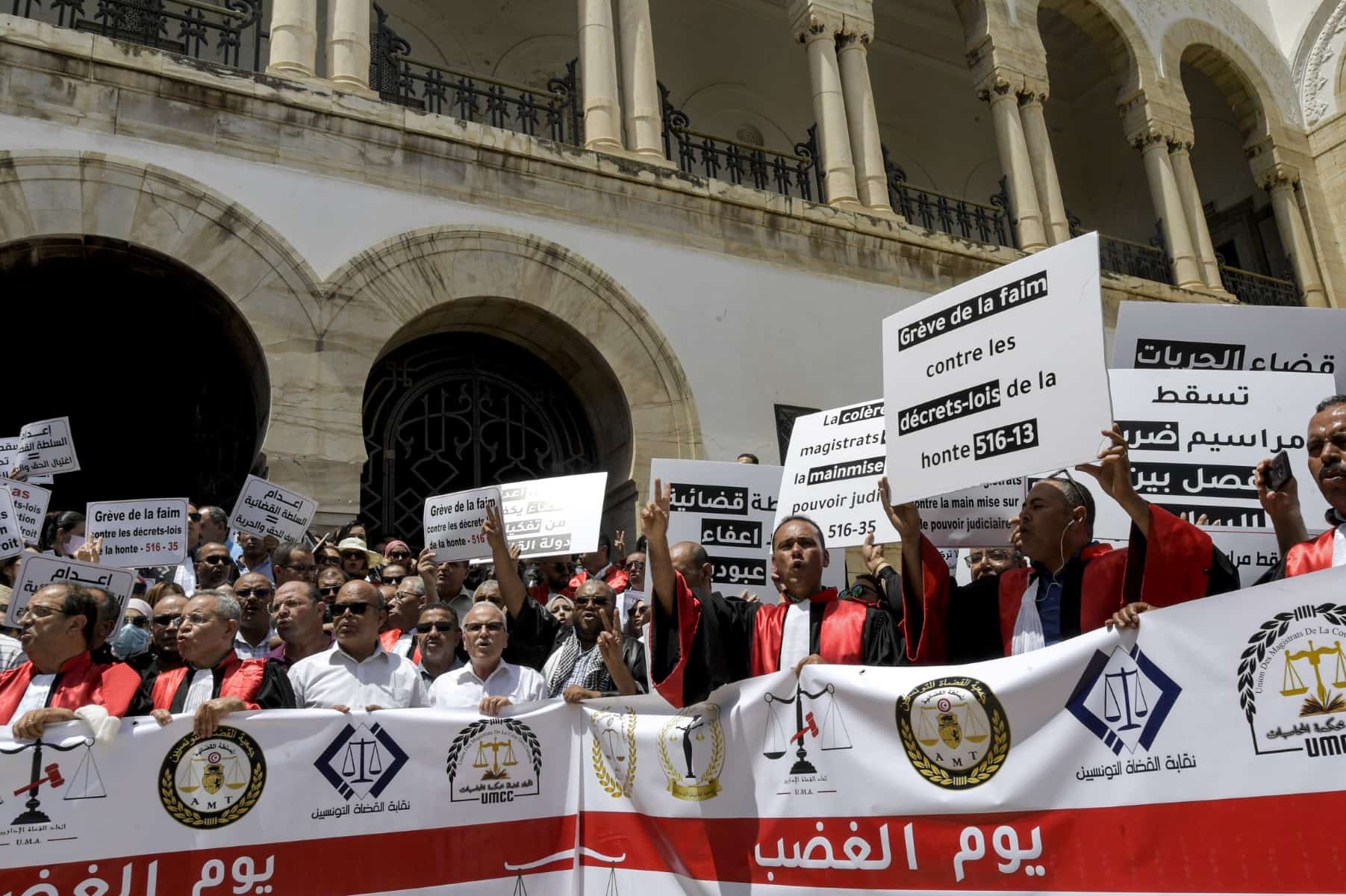
The president would be the head of the armed forces and be charged with naming judges, who would be banned from striking.
The document would also water down the role of parliament, creating a new parliamentary chamber for “regions and districts”, chiming with Saied’s long-held vision for a decentralisation of power.
The first article of the document removes references to both Islam and the civilian nature of Tunisia, simply saying that it is a “free, independent and sovereign state”, adding lower down that it “belongs to the Islamic Ummah” (worldwide community).
The head of the committee that wrote the draft, pro-Saied legal expert Sadeq Belaid, had sparked a heated debate in recent weeks by suggesting in an interview with AFP that the reference to Islam be removed in order to tackle religious extremism.
Saied last July sacked the government and froze parliament, later moving to rule by decree and extending his powers over the judiciary and the electoral board.
Some Tunisians welcomed his moves against the sclerotic system that emerged from the country’s revolt which had toppled dictator Zien El Abidine Ben Ali in 2011.
But others have warned that he is targeting political rivals and dragging the country back towards autocracy.
The International Commission of Jurists’ regional director Said Benarbia warned that the new draft constitution “defeats the very idea of separation of powers and checks and balances”.
“The proposed constitution provides for an unbridled presidential system, with an omnipotent President, a powerless Parliament and a toothless judiciary,” he told AFP.
The process by which the constitution was drafted has been widely criticised as simply rubber-stamping a new document made to measure for Saied himself.