
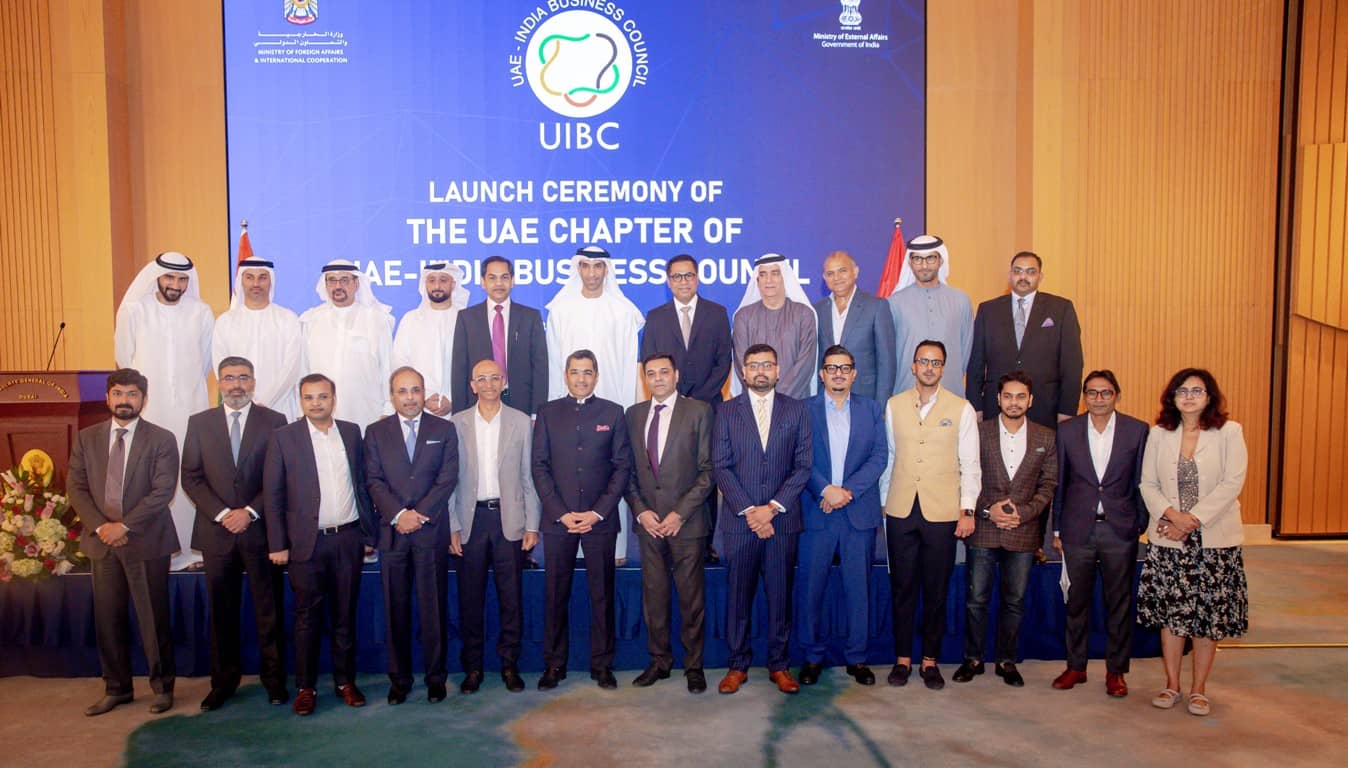


DUBAI, UAE – Minister of State for Foreign Trade Dr. Thani bin Ahmed Al Zeyoudi has marked the first anniversary of the signing of the landmark UAE-India Comprehensive Economic Partnership Agreement during two important events in the UAE.
On Friday, Al Zeyoudi received a delegation from the Federation of Indian Chambers of Commerce and Industry (FICCI) comprising over 100 exporters, start-ups and business owners.
The delegation had traveled to the UAE for a four-day visit to celebrate the anniversary of the CEPA and to also explore the market, meet with buyers and find potential new customers.
In his remarks to the delegates, Dr Al Zeyoudi praised the efforts of the Federation in helping to realize India’s economic ambitions over the last century and for forging the business relationships that paved the way for the CEPA last year.
He said, “The UAE-India Comprehensive Economic Partnership Agreement is another step on a journey that first began with our foundation as a united, independent nation in 1971. And it’s remarkable how far we have both come.”
He added, “There is, in my mind, no better model of international cooperation than this modern, flexible and mutually beneficial deal, and I look forward greater collaboration and innovation as we begin to realize its full potential.”
India’s Ambassador to the UAE, Sunjay Sudhir said, “This is truly the golden era of our relationship, which have in many ways run in parallel over the last half century. The CEPA underlined how important our economies are to each other, and how much we look to the other for inspiration, support and opportunity.”
He said, “The impact of the CEPA is already being felt, but it’s clear we are only at the very beginning of this exciting new chapter.”
Deputy Secretary General of FICCI Nirankar Saxena underscored the importance of the UAE to the Indian business community.
He said, “The relationship between the UAE and India is both long-standing and deeply intertwined and the Comprehensive Economic Partnership Agreement has now added an important new dimension.”
He added, “It has already opened the door to exciting new opportunities and is enabling the private sectors in both countries to innovate, scale and expand – not just regionally but globally.”
He later witnessed the launch of the UAE Chapter of the UAE-India Business Council in Dubai.
The UAE-India Business Council (UIBC) was established in September 2015 in New Delhi to serve as a catalyst for collaboration between the two countries’ private sectors and enable businesses from the UAE to seamlessly expand their reach into India’s growing market.
The UAE Chapter will, in turn, support Indian enterprises take full advantage of the many advantages and incentives offered by the UAE’s globally competitive ecosystem.
The UAE-India Comprehensive Economic Partnership Agreement was signed on February 18, 2022, in New Delhi in the presence of President Sheikh Mohamed bin Zayed Al Nahyan and Indian Prime Minister Narendra Modi.
This was the UAE’s first bilateral agreement and India’s first with a MENA nation.
Both nations believe that the UAE-India CEPA will push bilateral non-oil trade beyond US$100 billion by the end of 2030.