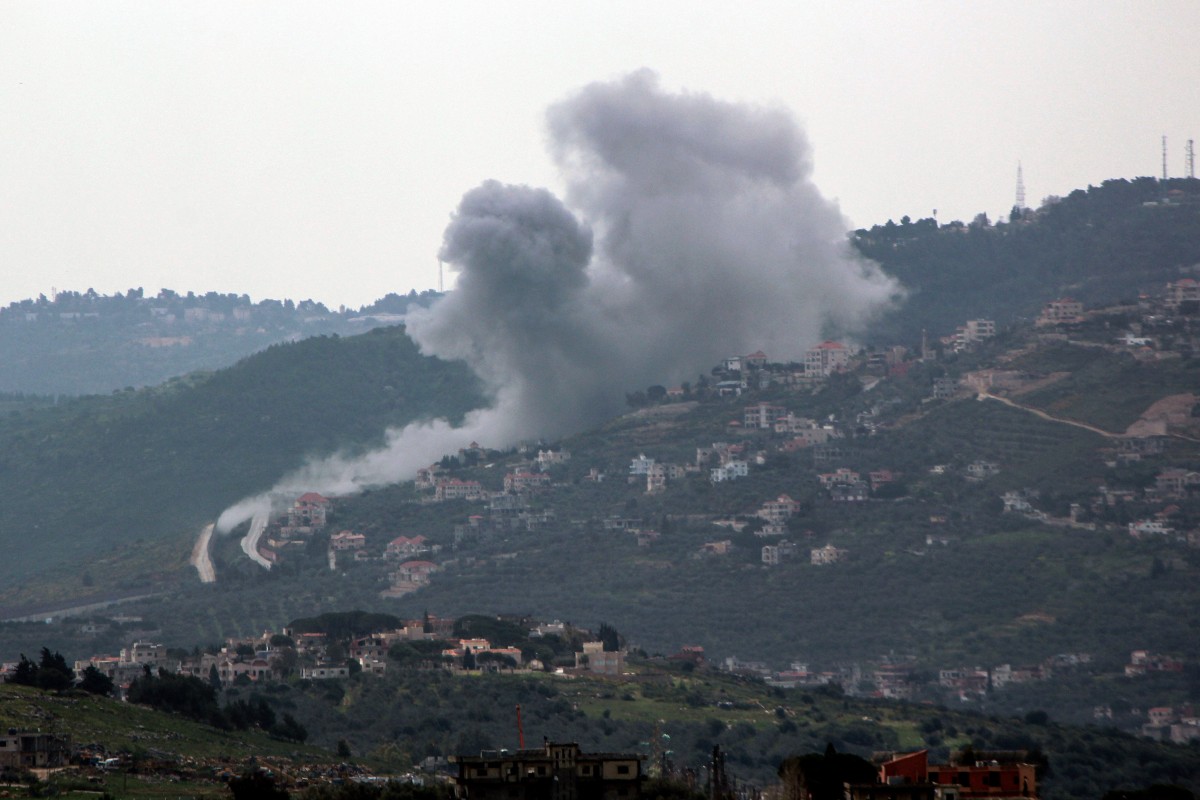

Beirut, Lebanon– United Nations peacekeepers said three military observers and a translator were wounded Saturday in a blast in southern Lebanon, where Israel and Hizbollah fighters trade frequent cross-border fire.
The military observers, from Australia, Chile and Norway, and a Lebanese language assistant had been on foot patrol around the so-called Blue Line — the UN-demarcated border between Israel and Lebanon.
The four “were injured when an explosion occurred near their location”, according to Andrea Tenenti, a spokesperson for the United Nations Interim Force in Lebanon.
The personnel were working for the UN Truce Supervision Organization, which supports the UN peacekeeping force.
They were “evacuated for medical treatment” and were in a stable condition, Tenenti said, adding the United Nations was “investigating the origin of the explosion”.
Israel and Lebanon’s Iran-backed Hizbollah have exchanged near-daily fire since Palestinian fighters group Hamas carried out an unprecedented attack on southern Israel on October 7, triggering war in Gaza.
Lebanon’s state-run National News Agency reported an “enemy (Israeli) drone” raided the Rmeish area of southern Lebanon where the incident is said to have occurred.
Lebanese Prime Minister Najib Mikati condemned what he called a “dangerous incident”, while his foreign ministry said the attack was “in violation of international law”.
The Israeli army told AFP in a statement: “We did not strike in the area.”
Hizbollah, which has a powerful arsenal of rockets and missiles, says its attacks on Israel are in support of Hamas.
‘Unclear’ circumstances
UN chief Antonio Guterres condemned Saturday’s blast and underscored “grave concern” over the frequent exchange of fire along the Blue Line, according to his spokesman Stephane Dujarric.
Norway’s defence ministry said the Norwegian UN observer was “lightly injured” and had been admitted to hospital.
“The circumstances surrounding the attack are unclear,” defence ministry spokesperson Hanne Olafsen told Norwegian news agency NTB.
In Canberra, a Defence Department spokesperson told AFP the Australian had sustained “non-life threatening blast injuries”.
The person was “transported to a health centre at a nearby military base for treatment and has now been released to recover”.
Tenenti said: “All actors have a responsibility under international humanitarian law to ensure protection to non-combatants, including peacekeepers, journalists, medical personnel and civilians.”
Cross-border fire since October has killed at least 347 people in Lebanon, mostly Hizbollah fighters, but also at least 68 civilians, according to an AFP tally.
The fighting has displaced tens of thousands of people in southern Lebanon and in northern Israel, where the military says 10 soldiers and eight civilians have been killed.
An uptick in deadly exchanges in recent days has fuelled concerns of an all-out conflict between Israel and Hizbollah, who last fought a war in 2006.
The UN Truce Supervision Organization was set up after the 1948 war that accompanied Israel’s creation to monitor armistice agreements reached with its Arab neighbours.
It also assists other UN peacekeeping operations in the region, including the United Nations Interim Force in Lebanon, which was established after Israel’s 1978 invasion of south Lebanon and expanded following the 2006 war.