This is a temporary backup site for TRENDS MENA while our primary website is being restored following a regional disruption affecting Amazon Web Services cloud infrastructure in the GCC.

Search Site

ADNOC Distribution 2025 dividend $700m

The company had reported EBITDA of $1.17 bn in 2025.

Empower okays $119.1m H2 2025 dividend

The dividend is equivalent to 43.75% of paid-up capital.

Alujain widens 2025 loss

The increase in loss is due to impairment charges, weaker prices.

Masar 2025 net profit $262m

Higher land plot sales boost revenue and operating income.

Tasnee’s 2025 losses deepen

The petrochemicals' company's revenue also fell 17.7 percent.

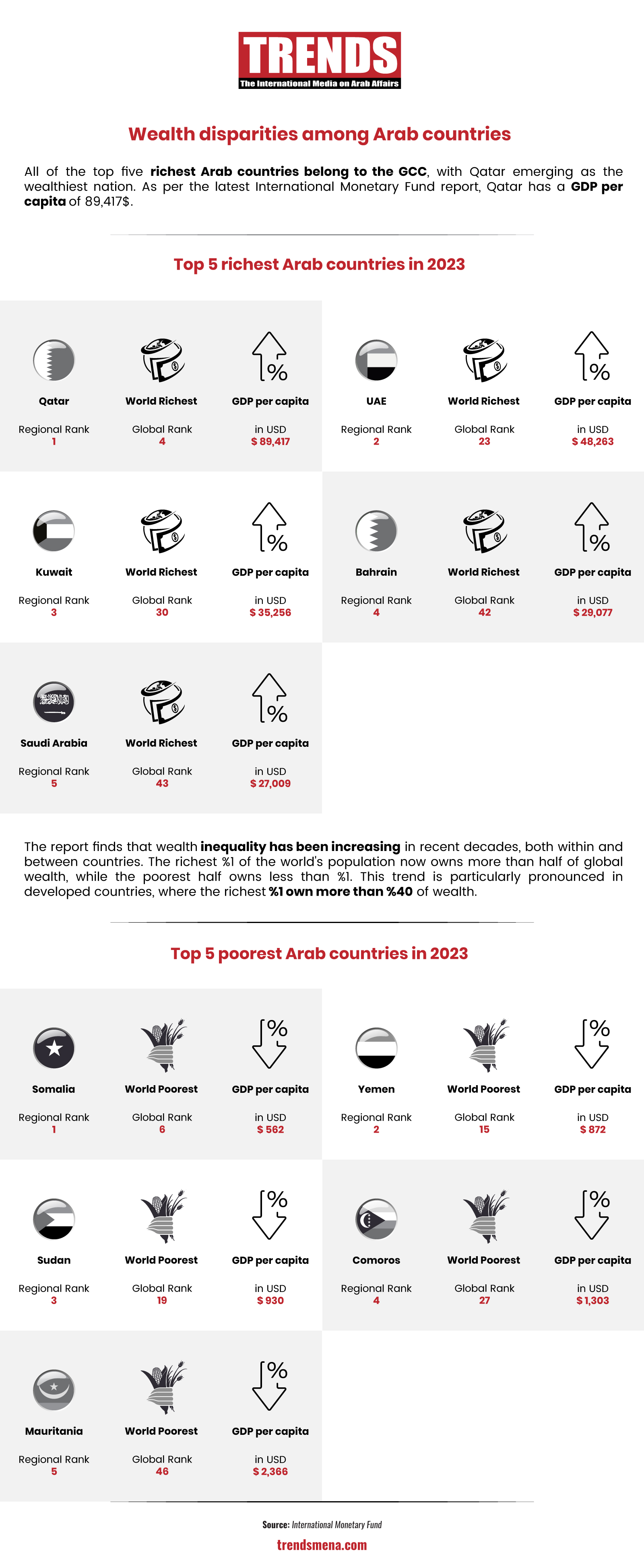
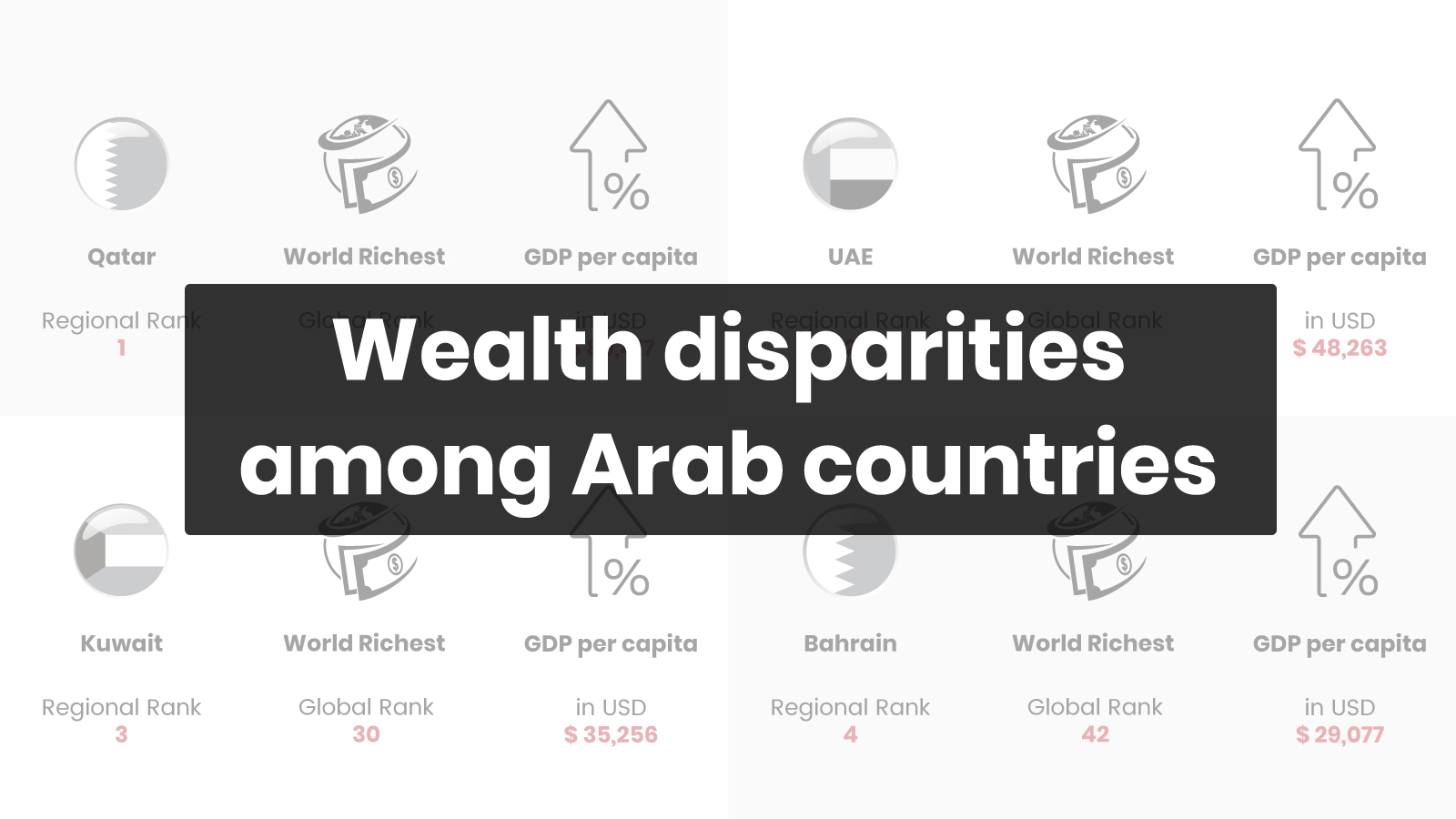
Qatar wealthiest Arab nation, Somalia poorest

  • The bottom 50 percent of earners in the Arab world control less than 12 percent of national income.
  • Political instability in some Arab countries, such as Yemen (the second poorest) has led to economic hardship.

Dubai, UAE — The Arab world is one of the most unequal regions in the world. According to the World Inequality Database, the top 10 percent of earners in the Arab world control more than 56 percent of national income, while the bottom 50 percent of earners control less than 12 percent. This means that the richest 10 percent of people in the Arab world are more than five times as wealthy as the poorest 50 percent. The disparity is the starkest when the GDP of the oil-rich Gulf states is compared with that of some African countries. In this infographic, TRENDS takes a look at the richest and the poorest Arab countries: