
The economies of the Gulf region are prone to disruptions, yet they are always ready to take risks in order to grow, says Tadeu Baldani Caravieri, the founding director of Prototypes for Humanity, a Dubai-based platform instrumental in transforming ideas into solutions and connecting some of the brightest minds in the world.
He talks to TRENDS about how the region is navigating the world of innovation.
What does a mature knowledge and innovation economy look like to you—and what are some key steps you believe Gulf nations should prioritize now to reach that stage?
What constitutes a mature knowledge and innovation system is now Nobel Prize material. This year’s Nobel Economics awardees have been studying this for years.
Institutions and knowledge-production mechanisms are the two cornerstones of any country pursuing innovation. Local institutions, of course, include governments and their policies that enable innovation.
The second is the ability to produce innovation. Then there are accessory elements that are needed, for example capital. You can have the two former elements, but if you lack capital you cannot scale up.
The Gulf countries have been investing heavily in research, education and innovation. What are the most promising recipients of this investment?
The most promising areas are those where you can link strong public–or private-sector entities with scientific innovation or knowledge.
Many Gulf countries have thriving industrial sectors that hold promise of innovation as well, such as tourism and finance.
The more successful policies for innovation and sustainable growth allow a smooth integration of those sectors with new knowledge. Successful initiatives tend to be the ones that leverage the existing infrastructure and the sectors of the economy to accelerate the development of new solutions.
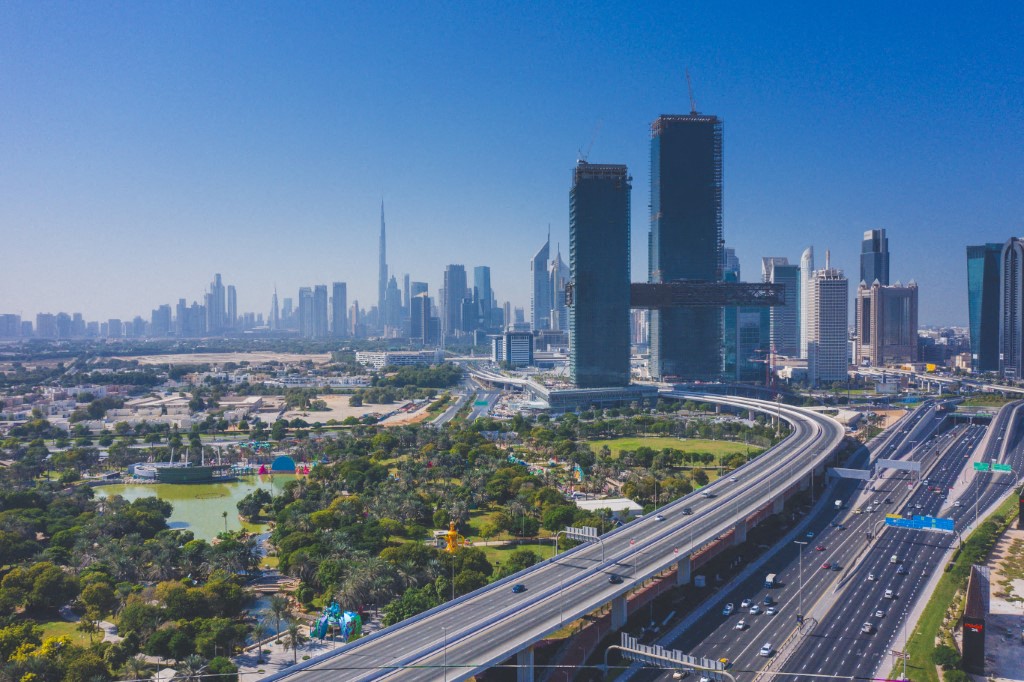
Take Dubai as an example, an excellent centre for financial innovation. And it’s not a coincidence that a lot of the growth in the city is being driven by FinTech.
How can Gulf universities better connect academic research with industrial needs and startup creation? How does Prototypes of Humanity help in this direction?
The first part of the question is a century-old question—why industry and academia don’t work together. There are many explanations. But I think it always boils down to misaligned interests or misaligned base and final objectives.
The first step for educational institutions, therefore, is to align their curricula with industry needs and challenges. The second one is to be less resistant to the imperatives of economy, something which is changing at global scale—the idea that academics and the markets have completely different interests is sort of disappearing.
There seems to be the need for entities and organizations that operate between these two universes. That is where we step in. At Prototypes for Humanity, we are creating those mechanisms by doing pilots, by co-building ventures.
And I think governments, private sector and educational institutions have to build more bridging mechanisms.
Can you identify impediments in this path?
There are some obvious ones: research not addressing the industry’s concerns.
But I think regulation sometimes gets in the way—stops innovation from academia being developed and piloted by the industry; stops industry from exploring and experimenting with new solutions.
At the same time, we need regulation to protect society and the planet. Therefore, I think we need more sandboxes as we call them in Dubai—environments that are ring fenced, where regulation allows for more experimentation.
Are there some effective models globally which you think can be replicated here and which can circumvent some of these regulations?
In some ways, the region is already ahead in tackling these bottlenecks. Dubai has a programme for building sandboxes in areas that are critical for economic development: sandboxes for healthcare, for example.
Broadly, the models that work internationally tend to find ways to channel private funds into projects that benefit society in general. That is quite often translated through tax rebate mechanisms.
This is the area the GCC region could focus on—what are incentives that can be given to companies, to corporates to channel more of their resources into R&D? Because currently there aren’t so many mature models yet here.
Failure, you have been emphasizing, is an inevitable part of the innovation process. How sensitive are Gulf economies to failure?
I think it is, generally speaking, more open to disruption than most of the mature economies. Dubai is definitely a city that is willing to experiment.
And I think we see also in neighbouring cities and countries that the vision is very ambitious. And that requires disruption.
A part of the reason why the region is prosperous is because it is willing to take the risks associated with disruption.
You often highlight diversity as a key driver of innovation. In today’s highly polarized world, it’s remarkable that this region not only embraces multiculturalism but also thrives on it. Yet, much of the innovation in the Gulf is driven by large expatriate communities — which raises the question: can the Arab world truly call this innovation its own?
Diversity is pivotal to innovation because solutions to issues as complex as decarbonization, access to healthcare, smart agriculture by definition need to bring a lot of sciences together.
The region can very confidently say that it is a significant part of the journey of many of those solutions.
For example, at Prototypes of Humanity, we see that if someone graduating from a university anywhere does the very first pilot in the city, the pilot is the first step towards scalability. Therefore, the city has made a very meaningful contribution to that journey.
Also, the city is generating its own IP, and in that case it’s 100 percent home-born.