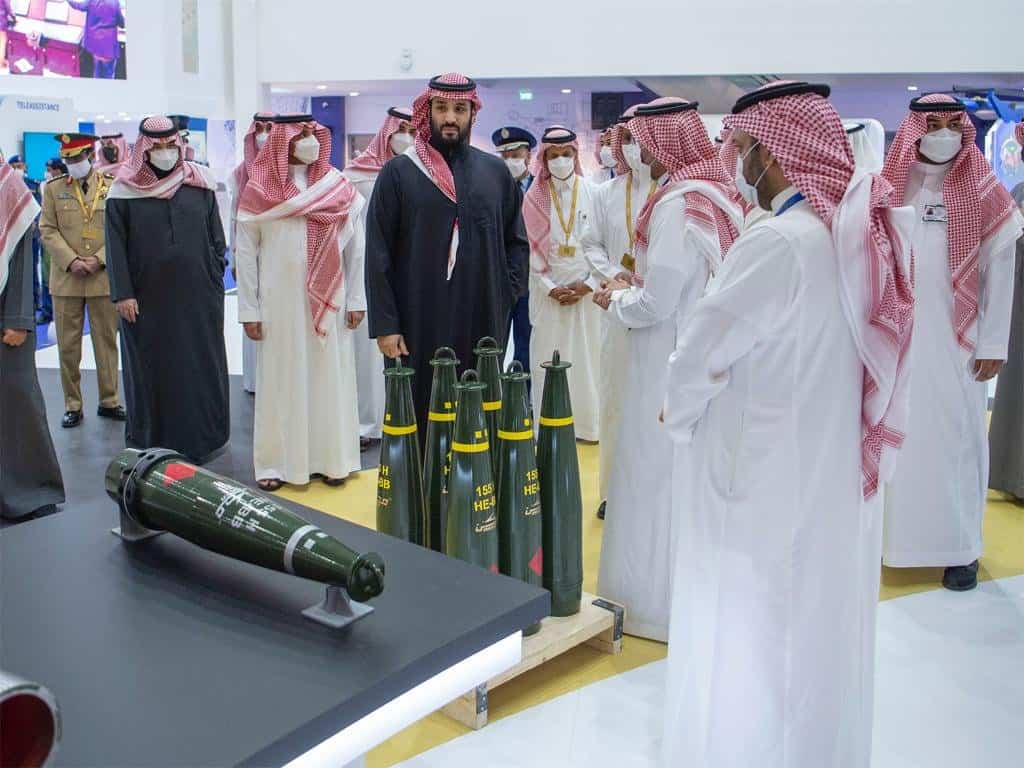

Saudi Arabia announced a deal Monday with US firm Lockheed Martin to manufacture elements of the missile defences of the Gulf state, the target of frequent cross-border attacks by rebels in Yemen.
Its military industries authority, cited by state news agency SPA, approved two projects to produce launchers and other equipment used in the THAAD anti-missile defence system.
The announcement, which did not disclose the value of the deal, comes on the sidelines of an international arms show which opened Sunday in the Saudi capital.
The United States, the oil-rich kingdom’s top ally, deployed THAAD and Patriot defence systems in Saudi Arabia in October 2019 at a time of heightened tensions with Riyadh’s regional rival Tehran.
According to the US military, the system intercepted an air strike in January by Yemen’s Iran-backed Huthi rebels on the United Arab Emirates.
The UAE is part of a Saudi-led military coalition fighting the Huthi rebels.
According to the coalition, more than 850 explosive-laden drones and 400 ballistic missile attacks have killed 59 civilians in Saudi Arabia over the past seven years.
Saudi Arabia has set itself the target of manufacturing 50 percent of its defence needs by 2030, from an officially recorded level of 11.7 percent at the end of 2021.