
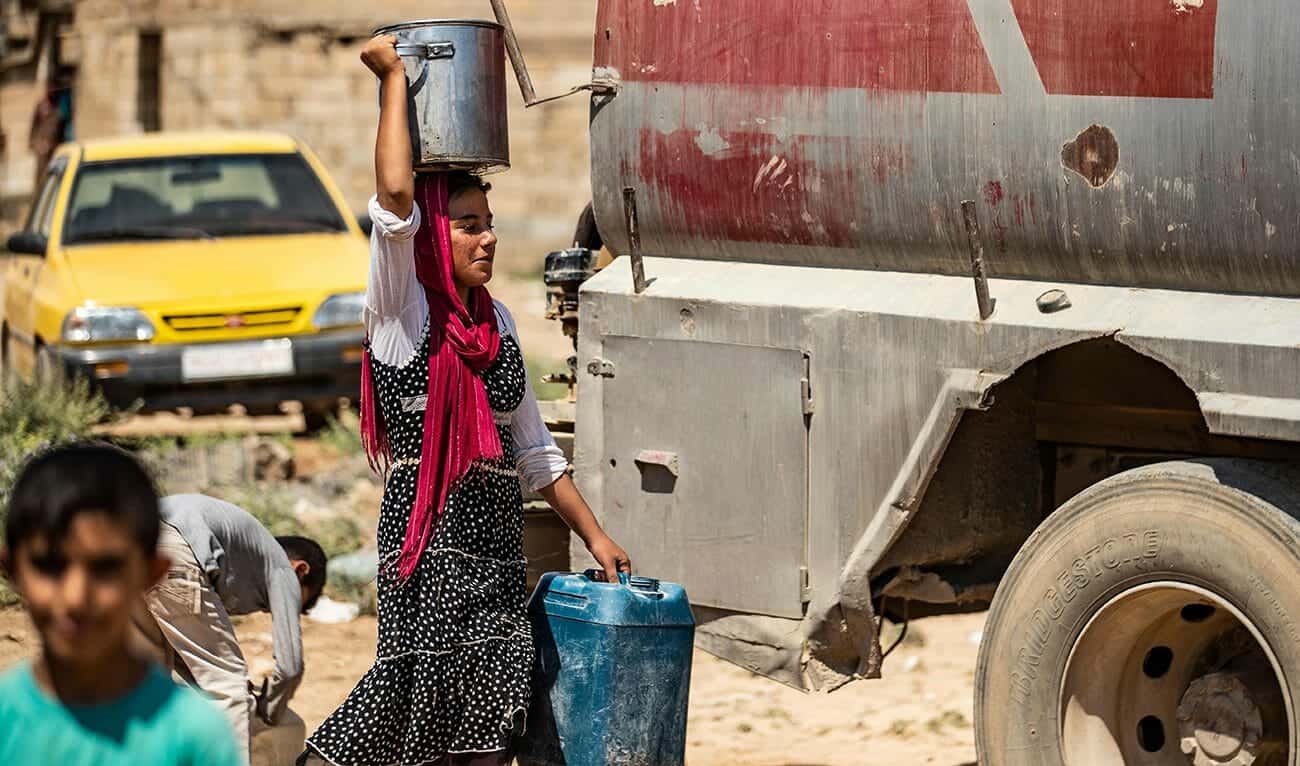


Global non-profit Doctors Without Borders — originally Médecins Sans Frontières or MSF — said on Tuesday, September 28, that limited access to clean water in northern Syria was causing a rise in illnesses.
This, it said, was undermining the battle against Covid-19 in the country.
The medical aid group blamed the “acute water crisis” in recent months on a decrease in funding for water, sanitation and hygiene operations as well as the destruction of water and sanitation infrastructure during a decade of civil war.
“We are regularly confronted with the health impact of poor water quality, which often brings waterborne diseases and other health issues into the camps, such as diarrhea, hepatitis, impetigo, scabies, and many others,” MSF’s Ibrahim Mughlaj said.
The crisis is most acute in northwestern Syria, the country’s last major rebel stronghold, where more than three million people live in squalid conditions.
Water and sanitation aid operations are funded at only a third of last year’s levels, MSF said, adding that much less water was being trucked in.
“In July 2021, our teams noticed rising diarrhea cases in more than 30 camps in Idlib governorate and also detected frequent scabies cases,” it added.
“Since the beginning of the year, 28 percent of the total consultations in an MSF-supported hospital in Idlib governorate were reported as acute watery diarrhea cases.”
The water crisis has also made it more difficult to contain the Covid-19 pandemic, with infections surging in the northwest, Mughlaj said.
The situation is also dire in northeastern Syria, largely controlled by an autonomous Kurdish administration.
The region struggles to access safe water because of repeated sustained disruptions from the Alouk water station, which is under the control of Turkish authorities, MSF said.
The problem is compounded by a severe reduction in the volume of water flowing in the river Euphrates, which is the region’s most significant source.
An MSF-supported primary healthcare center in the city of Raqa reported that the number of diarrhea cases in May 2021 was 50 percent higher than the previous year, the group said.
The medical charity said it was trying to ease the crisis but said its means were limited.
“People’s health is at risk, and they cannot survive if they don’t even have access to the basics,” MSF field coordinator Benjamin Mutiso was quoted as saying.