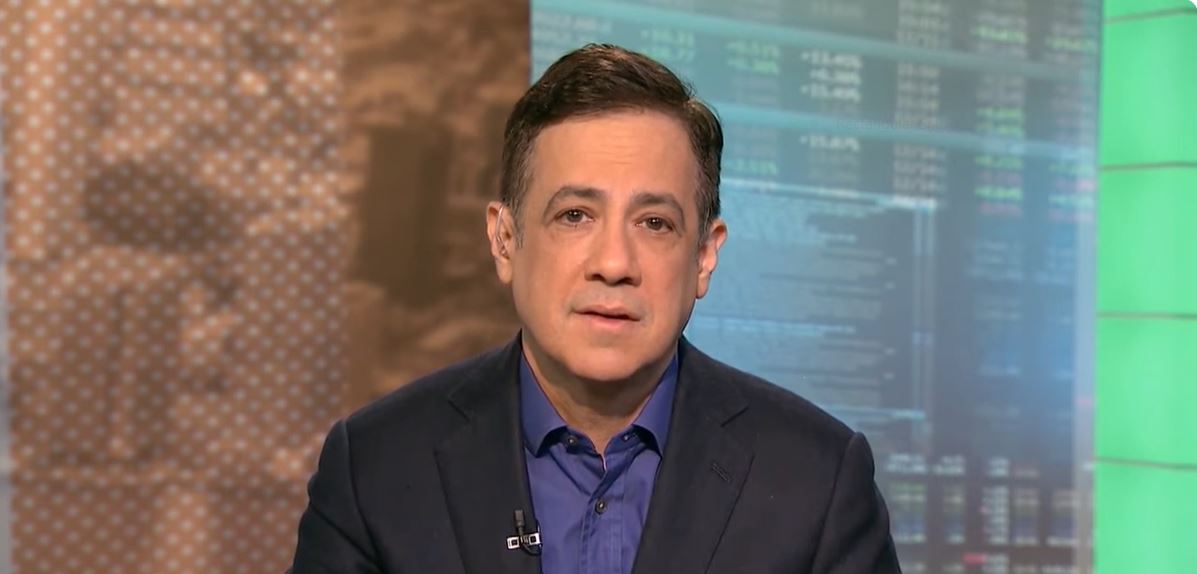

In a discussion with TRENDS, Michael Wolf, Co-Founder and CEO Activate Consulting, outlines how AI, media, and consumer behaviour are converging to reshape the next knowledge economy. He identifies the rise of “super users” as the single most important shift companies are underestimating, and warns that firms without a super-user strategy risk falling behind.
Excerpts from the interview:
What do you believe will be the defining architecture of the next knowledge economy?
I think that AI is going to be important. But we really can’t ignore the fact that a great deal of the creation of the knowledge economy is going to come from people. It’s going to come from journalists. It’s going to come from analysts. So a great deal of this is going to be AI, but it’s going to be AI built on the interventions and critical thinking of experts, creators, journalists, producers of television, writers, and directors.
Why have AI capabilities and data partnerships become essential for companies looking to capture the next wave of value?
What’s truly non-negotiable is reimbursing and paying fairly to the journalistic outlets that are contributing to the core knowledge and information that is used in AI today. AI can’t go out and report about what’s happening on the front lines in Ukraine. AI cannot do a review of a Broadway show. AI can’t do an investigative report. Despite the trillions of dollars being poured into AI today, very little of that investment is actually being set aside to pay for information, journalism, or creative content.
What’s the single biggest shift in technology, in media, or consumer behavior that most people are currently underestimating?
It’s less about what they’re underestimating. It’s more about not recognizing the importance of it. For example, the ability to create video and interactive environments inside games is becoming crucial. Today, we have roughly 400 million people spending a great deal of their lives in interactive games such as Roblox and Minecraft, and Grand Theft Auto, where they are not necessarily playing the games but interacting in those environments. The term Metaverse was very hot a couple of years ago, and now it’s not. And yet the Metaverse continues to grow, and it’s not just about VR and AR headsets. It’s much more about experience. People are interacting with friends. They’re doing activities together. A great example is in Grand Theft Auto. There’s a casino. It’s a make-believe Casino. In the future, it’s going to be a place where people will actually be able to bet. In Minecraft, you can find Minecraft doctors in the future. This is where you’re going to be able to have an interaction with your doctor. But AI becomes the Metaverse accelerant, the technology where people can have those kinds of experiences,
Where will AI actually move the productivity curve?
I think it’s less about one single area and more about the fact that my firm focuses on both media, entertainment, and journalism, and at the same time, enterprise technology—so we’re going to see impacts on both sides. In the creation of filmed entertainment, for instance — films and series — AI is simply going to speed up the process and make it more economical. At a time when people are spending more and more of their time with video, especially longer-form video, AI offers a way to create really engaging action more efficiently. The stories will always be created by people, but AI provides a fast track to delivering great experiences around those stories and narratives.

In terms of the B2B, it’s about everything that AI does to enable basic processes. So if you’re a lawyer, it helps you create a legal brief. If you’re an accountant, AI will help you with accounting. By the way, I don’t believe that AI truly eliminates jobs. AI today is much better at reading X-rays than a radiologist, and yet, we have more radiologists today, not fewer. Part of that is because more people are getting X-rays and scans. AI enables so much, and it’s going to continue doing so. Yes, some jobs will disappear in certain sectors, but in many others, it will simply make people more productive.
What will the world look like five years from now?
There’s no doubt people will spend more time on entertainment, technology, and media, because many of the routine, utility-type tasks people do today now take far less time. The apps have become more efficient. If I want to call a taxi, I don’t have to go out and do that. It’s freeing up people’s time to spend with technology, the internet, media, entertainment, and watching sports. So I think that is the most important thing in the future, from a people perspective and from a company perspective. And I can’t emphasize this enough: it’s the growing importance of what we call super users. These are the roughly 28 percent of people who account for almost three-quarters—depending on the business—of the time spent, and in many cases, nearly three-quarters of the money spent as well. In the past, companies grew simply by scaling with the internet, and once they had scale, they could build new applications and create new information. But today we’re moving into a world where companies will need to focus much more on these users—these fans, these consumers—who spend more time and have a greater ability to pay. And our belief is simple: if you don’t have a super-user strategy, you don’t have a strategy.