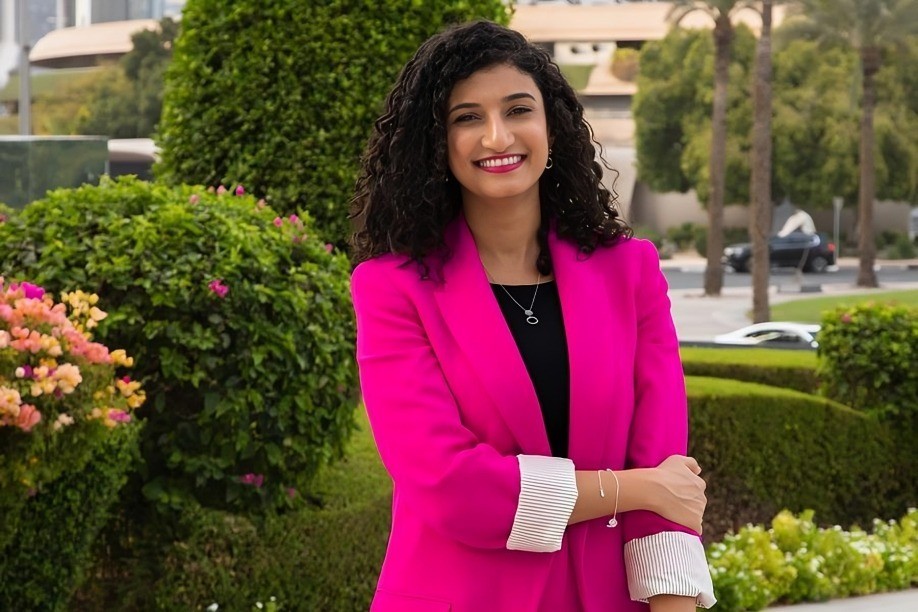

The brisk advance of artificial intelligence (AI) across corporate boards and beyond is posing a key question: how do we scale such an expansion with responsibility? Nuha Hashem is the co-founder and chief technology officer (CTO) of Cozmo AI, and she may have the answer to this key question. Bridging her roots in the Middle East North Africa (MENA) region with her leadership of a US-based AI workforce company, she develops voice-native AI employees for regulated sectors such as fintech, insurtech, and healthcare.
Speaking with TRENDS, she reflects on how the region’s engineering talent and adaptability continue to fuel innovation worldwide, and why accountable AI systems will shape the next decade of sustainable growth across borders.
Do you see fintech and AI broadening access to financial services, and can they drive digital inclusion among youth and underserved communities in the MENA region?
AI is changing how financial systems understand and serve people. In the MENA region, that means real inclusion, designing digital services that speak local languages, respect cultural context, and meeting young people where they already are.
The next phase of fintech isn’t about adding more features; it’s about removing friction. With the right AI models, banks and startups can tailor education, payments, and savings tools to individual behaviors, not demographics. That’s how digital access becomes personal, not just available.
What, according to you, are the most promising innovation trends emerging in fintech and AI that could define the next phase of growth for the region?
The most exciting movement is toward explainable, context-aware systems. In fintech, that means AI doesn’t just automate transactions but understands the regulatory and ethical environment behind them.
MENA has an opportunity to lead in designing AI that’s both high-performing and transparent, a model the rest of the world is still struggling to achieve.
What sort of an effect will such an evolution have on productivity and business efficiency, and what impact will it have on the employment ecosystem in emerging markets?
AI employees change the shape of work more than the number of workers. In emerging markets, where human talent is abundant but repetitive processes dominate, automation can lift capacity without removing opportunity.
When an AI employee handles thousands of routine calls or claims flawlessly, the humans behind those processes can move to higher-value work: relationship-driven, analytical, creative. The real productivity gain comes from shifting people toward judgment and innovation, not replacing them.
How can companies like Zywa and Cozmo AI contribute to empowering young entrepreneurs and building knowledge-driven economies?
Through example. When startups from the region succeed globally, they signal to young engineers and founders that the leap is possible.
At Cozmo, we’ve built our core engineering culture around mentorship and open problem-solving. That mindset—treating every technical challenge as shared learning—builds more than a product. It builds a generation of thinkers who can compete anywhere in the world.
What type of challenges do you see fintech and AI-driven businesses encountering in emerging markets, and how can they be overcome to foster innovation-led growth?
The hardest challenge is building trust among regulators, investors, and users. Many emerging-market founders can build …excellent products, but proving reliability and compliance at scale takes resources and patience. The path forward is partnership: regulators providing clearer frameworks, investors valuing responsible growth, and companies maintaining transparency in how AI systems make decisions. Innovation lasts when it’s trusted.
Looking ahead, how do you envision the role of human capital and talent development in sustaining the momentum of digital transformation?
Human capital is the multiplier. You can build models anywhere, but maintaining and improving them requires people who understand both technology and its consequences.
Regions that invest in interdisciplinary skills—engineers who grasp policy, analysts who understand systems—will sustain digital transformation long after global trends shift.