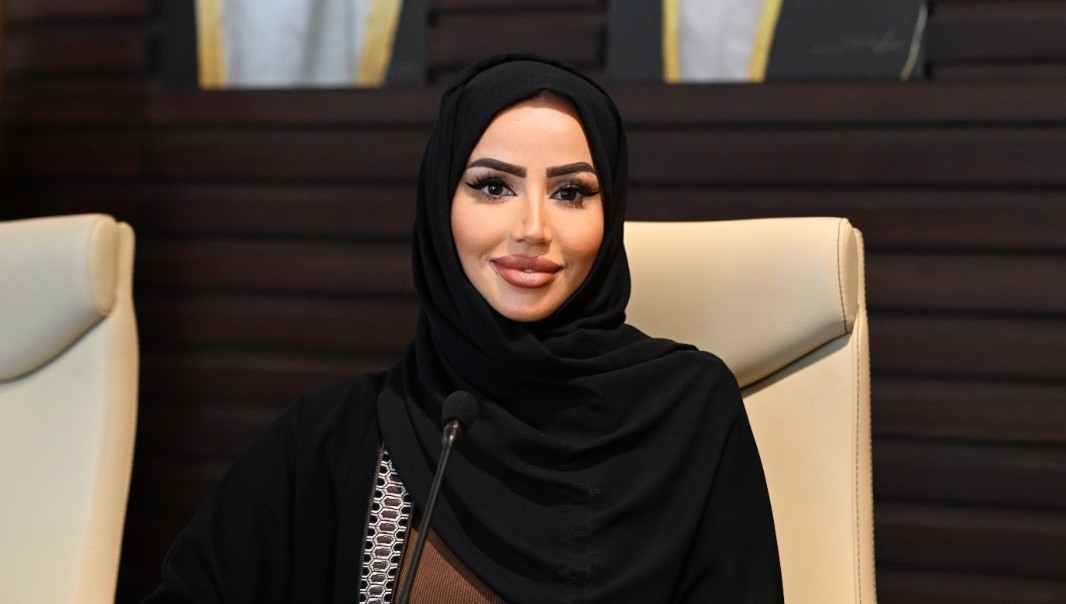

Dr. Lolowa AlMarzooqi, Associate Vice Provost at New York University Abu Dhabi, tells TRENDS that the UAE’s real competitive edge lies in its people—and explains how the country’s approach to talent, leadership, and lifelong learning is shaping its next phase of growth.
What is the UAE doing right in its journey toward building a knowledge-based society, and where do you see the biggest areas of momentum today?
The UAE is getting the fundamentals right by treating knowledge not as a sector, but as a national asset. What distinguishes the country’s trajectory is the clarity of intent: investing in human capital, embracing innovation early, and building institutions that are agile enough to keep pace with global change. From advanced technology adoption to deep investments in education, research, and entrepreneurship, the state is creating an ecosystem where ideas translate into impact at remarkable speed.
The strongest momentum today is in the convergence of sectors, where government, academia, and industry are co-creating solutions. You see it in food security, AI, sustainability, and the creative economy. The UAE’s ability to integrate these efforts, backed by visionary leadership and bold policymaking, continues to fuel its transformation into a knowledge-driven society.
How do you see the national talent pool evolving, from early childhood development to executive leadership, and what shifts are you observing in skills, mindsets, and aspirations?
We are witnessing a profound generational shift. At the early childhood level, today’s learners are growing up in an environment that encourages curiosity, problem-solving, and bilingual fluency—skills that form the foundation of a competitive knowledge economy.
By university and early-career stages, Emirati youth are more globally aware, digitally confident, and purpose-oriented than ever before. They no longer aspire only to stable roles; they seek meaningful impact, entrepreneurial pathways, and positions that demand creativity and leadership.
At the executive level, we see a deliberate pivot. Leaders are embracing data-driven decision-making, multidisciplinary thinking, and a stronger appetite for innovation. Across the entire pipeline, the most significant shift is in mindset—moving from risk avoidance to opportunity creation. This evolution will define the UAE’s next phase of nation-building.
What does it take to truly empower the next generation of leaders in a fast-changing innovation landscape?
Empowerment requires more than training. It requires trust, exposure, and real responsibility. Future leaders need three things.
First, access to global experiences, cutting-edge tools, and environments where they can learn from success and grow from failure. Second, agency—the opportunity to lead, take risks, and experiment within supportive frameworks. Third, accountability, which means clear expectations, mentorship, and feedback mechanisms that push individuals to grow.
In a world where knowledge evolves daily, the leaders who thrive will be those who can learn quickly, understand nuance across converging fields, and lead with clarity amid uncertainty. As sectors collaborate more closely, it is the leader who takes a broad view of stakeholders, learns from diverse experiences and perspectives, and integrates those insights to create resilient solutions. Our role is to build systems that allow emerging leaders to stretch, question, innovate, and ultimately lead with confidence and integrity.
How can the UAE further strengthen continuous education and upskilling across different stages of life and sectors?
The UAE has already established a strong foundation, but the next frontier is making lifelong learning a national culture rather than a standalone program. To strengthen it, we need flexible learning pathways that allow people to upskill without leaving the workforce; the integration of micro-credentials and modular learning into both public- and private-sector development plans; and stronger partnerships between academia, industry, and government to ensure skills align with real market needs.
We also need incentives—financial, professional, and social—that make continuous learning the norm.
Education cannot end at graduation. In a dynamic economy, the capacity to evolve becomes a competitive advantage for both individuals and institutions. Teaching people how to learn—not just what to learn—enables them to adapt quickly and thrive within an interconnected ecosystem of stakeholders.
What experiences have most shaped your views on talent, leadership, and the knowledge economy?
My perspective has been shaped by working at the intersection of government, academia, and national development. In these roles, I have seen firsthand how talent flourishes when institutions create space for experimentation, when leaders invest in people, and when policies are designed with both ambition and empathy.
Engaging with emerging leaders—whether through national programs, academic initiatives, or cross-sector collaborations—has reinforced my belief that the UAE’s true strength lies in its people. Their curiosity, resilience, and sense of purpose continue to shape my understanding of what effective leadership and a robust knowledge economy require: clarity, courage, and a deep commitment to human potential.
Is there a growing need to upskill, learn, and unlearn in an AI-driven landscape, especially when empowering a multigenerational talent pool?
Absolutely. AI is reshaping the rules of work, leadership, and value creation. In this environment, adaptability is the most critical skill. We must learn continuously while critically examining which ideas are worth preserving and which must evolve. Rather than simply “unlearning,” we should approach knowledge as contextual and historically situated—fostering a metacognitive mindset that builds understanding, compassion, and resilience.
For a multigenerational workforce, this shift presents both challenges and opportunities. Younger generations bring digital fluency, while older generations contribute judgment, experience, and institutional memory. The UAE’s advantage lies in harnessing both.
This is not about erasure; it is about valuing what each learner brings while helping them develop new perspectives. Upskilling must therefore be inclusive, accessible, and tailored to diverse needs—ensuring that every individual, at every stage of life, can participate in and contribute to an AI-enabled future.
The countries that succeed in the AI era will be those that treat learning as a lifelong responsibility and innovation as a shared mission. The UAE is well-positioned to lead this shift.
(This interview was originally published in the special Knowledge Economy issue of Trends in Dec. 2025)