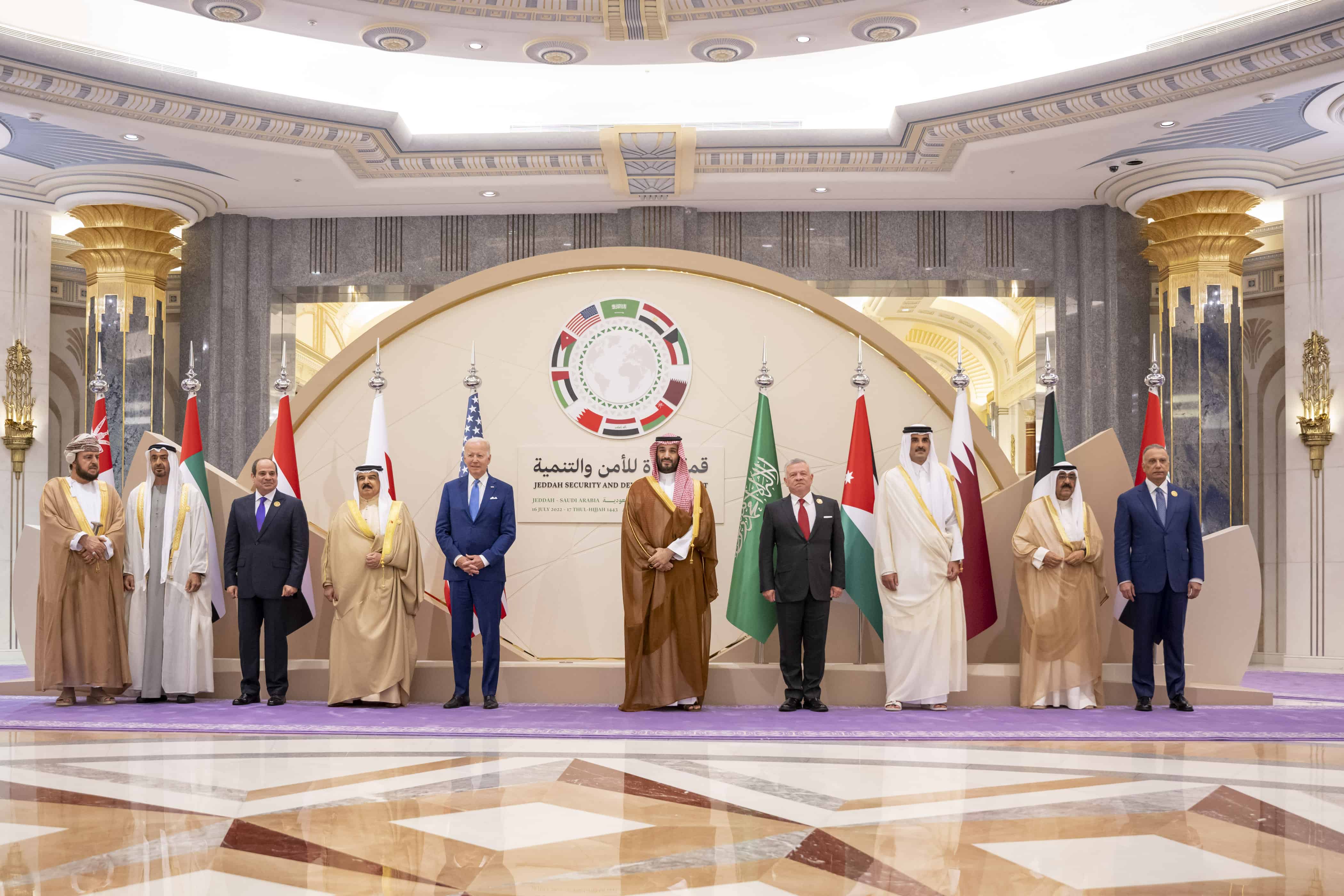

Riyadh, Saudi Arabia – The US-GCC Working Group on Iran held its third meeting on Tuesday with the participation of senior officials from the Gulf Cooperation Council (GCC) and the United States.
The meeting was co-chaired by Sheikh Ahmed bin Hashel Al-Maskari, Head of the Omani Foreign Ministry’s GCC Department and Head of the current session and Robert Malley, US Special Envoy for Iran, with the participation of representatives of the GCC countries and the GCC Secretariat General.
The GCC Assistant Secretary for Political Affairs and Negotiations, Dr. Abdulaziz Hamad Al-Uwaisheg, said that this meeting comes within the framework of the strategic partnership between the GCC and the USA, through which several joint working groups were established to discuss issues of interest to both sides, including the working group on Iran.
“Building on March Working Groups, the United States and GCC member states welcomed opportunities to continue their work together to advance integrated deterrence in the region,” read a part of the statement by the US Department of Defence. “Due to the clear threat to regional security and stability, preventing Iran from holding the region at risk through its proliferation and direct use of advanced ballistic missiles, maritime weapons, and unmanned systems is of the utmost importance.”
Both Saudi Arabia and the US share a difficult relationship with Iran that goes back decades. Even though the 2015 landmark Vienna nuclear deal had finally made a working relationship between the US and Iran possible, then US president Donald Trump unilaterally withdrew from it in 2018 and Iran later backed away from its own commitments, renewing the hostile relationship.
Similarly, Saudi Arabia and Iran have in recent years been engaged in repairing their estranged ties without much success.