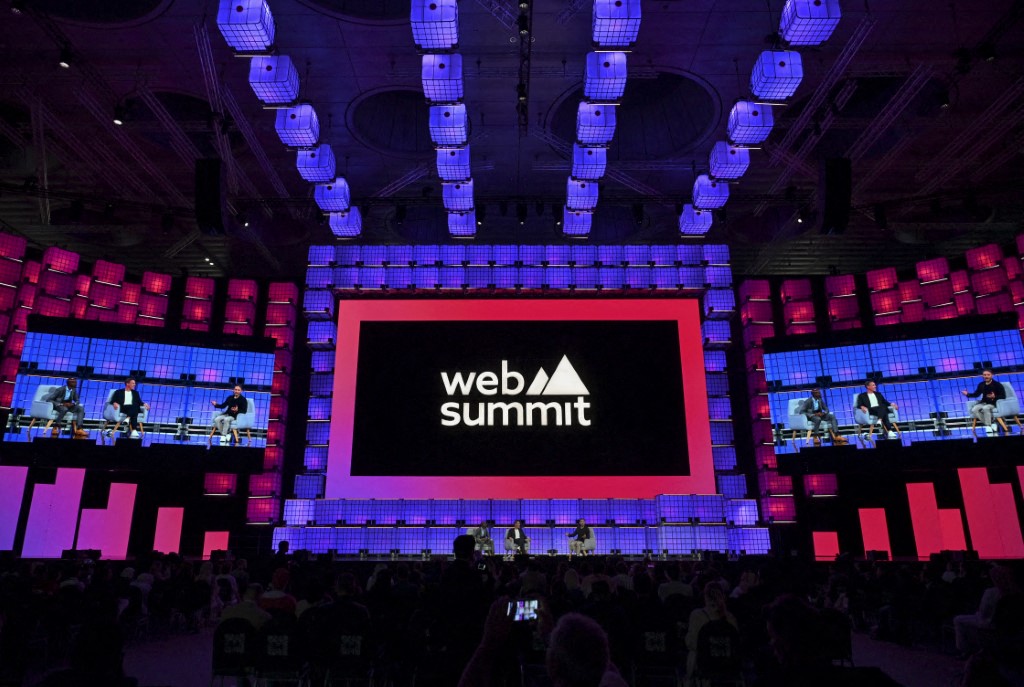

As Doha prepares to host Web Summit Qatar 2026, the region’s technology and investment landscape is entering a new phase of acceleration. The inaugural Web Summit Qatar, held in 2024, marked the platform’s first expansion into the Middle East, drawing more than 15,000 attendees and hundreds of startups, according to Web Summit’s official recap. The 2025 edition only strengthened this momentum, positioning Qatar as an emerging global anchor for digital entrepreneurship, venture capital deployment, and cross-border innovation. The anticipation surrounding the 2026 summit signals not just another major tech gathering, but a broader economic story about how Gulf economies are weaponizing innovation to drive diversification and attract global talent and capital.
Web Summit’s move into Qatar was driven by a clear strategic shift. Qatar’s rising ambition to become a global tech hub, the country’s young population, high digital adoption, and fast-growing startup support ecosystem made it the summit’s natural destination. The Government Communications Office (GCO) was the architect of the Web Summit Qatar edition. GCO and the Qatar Investment Authority (QIA) have reinforced that ambition with a series of long-term national programs designed to attract entrepreneurs and global firms.
Early signals hint that Web Summit Qatar 2026 will be its biggest edition yet, with participation expected to outpace the inaugural year and draw more global investors seeking exposure to fast-scaling MENA startups. The Middle East remains one of the world’s fastest-growing venture markets, even amid fluctuating global VC sentiment. Data from MAGNiTT shows that while global venture investment declined sharply in 2023 and 2024, GCC funding bucked the global downturn, surging to a record $2.77 billion in the first nine months of 2025, with Saudi Arabia, the UAE, and Qatar continuing to attract substantial early-stage and growth-stage capital. For international investors increasingly seeking diversification away from crowded markets such as the US and Western Europe, the Qatar summit offers a gateway into an ecosystem flush with sovereign-backed funds, government incentives, and access to wider Gulf markets.
A defining business theme for 2026 will be the expanding presence of corporate venture capital (CVC). Several global companies used the 2024 and 2025 summits in Doha to announce new MENA-focused innovation funds, partnerships, and accelerators. Web Summit’s own partner announcements document the rising number of Fortune 500 companies participating in the Qatar edition. With more corporations embedding venture and innovation units within their Middle East operations, Web Summit Qatar 2026 is expected to broaden its corporate footprint, creating deeper pipelines between multinationals seeking AI, fintech, climate-tech, and cybersecurity solutions and the startups building them. Qatar’s own entities—such as the Digital Incubation Center (DIC) and Qatar Science & Technology Park (QSTP)—have long signaled their intent to scale this engagement, offering incentives, grants, testbeds, and soft landing support for global founders looking to base operations in the country.
Artificial intelligence is set to dominate the 2026 agenda, following the trajectory of global tech forums over the past two years. The boom in generative AI, cloud infrastructure, and enterprise automation continues to reshape strategic priorities for both governments and corporations. Qatar has already embedded AI as a national priority through the Qatar National AI Strategy, which outlines a framework for talent development, data infrastructure, industrial AI integration, and research capacity development.
Another area set to receive heightened attention is sports-tech, where Qatar has a unique competitive edge. After the success of the 2022 FIFA World Cup, which deployed advanced digital security, biometric entry systems, and AI-enabled crowd-flow management, Doha has transformed into a testbed for smart-stadium technologies, fan engagement platforms, AI-assisted event management tools, and digital content innovations. Global sports-tech is formally a track of interest for Web Summit. IBM Sports Tech Challenge is an avenue for sports-tech startups to present solutions.
Climate-tech and sustainability will also form a critical part of the 2026 agenda. Global investment in climate-tech reached record levels in 2024 despite broader downturns in venture capital. Qatar’s growing focus on carbon management, green hydrogen, renewable energy efficiency, and desert-agriculture technology positions it at the centre of the region’s evolving climate-tech landscape. ESG-focused investors and sovereign funds such as QIA have announced increased allocations toward sustainability-linked projects in recent years.
A preview of Web Summit Qatar 2026 would be incomplete without acknowledging the region’s rapidly evolving regulatory environment. Qatar has spent the past five years modernising its digital laws, including personal data protection rules, fintech licensing structures, and cybersecurity frameworks. These alignments with global standards have strengthened the appeal for startups seeking operational stability and investor confidence. The Qatar Financial Centre (QFC) remains central to this push, offering competitive licensing, full foreign ownership, tax incentives, and regulatory clarity to global firms. This combination of policy support and frictionless business setup has elevated the economic stakes of the summit.
If the trajectory of the last two years is any indication, Web Summit Qatar 2026 will reinforce Doha’s emergence as a central node on the global innovation map. Its significance extends beyond the panels and startup showcases: the summit is reshaping how global investors view the Middle East and how global founders assess the region’s expanding opportunities. As Qatar deepens its technological and economic ambitions, the 2026 edition promises to be one of the defining innovation events of the year—one where capital, talent, and ideas converge to shape the next chapter of the region’s digital economy.