
Dubai, UAE — The United States carried out a fresh round of strikes against Iranian military infrastructure early on Thursday, escalating a conflict that has increasingly drawn in Gulf states and raised concerns over the security of one of the world’s most important energy corridors.
U.S. Central Command said American forces had completed a second wave of attacks targeting Iranian surveillance systems, communications networks and air-defence sites across the country.
The operation followed strikes launched a day earlier after a U.S. Army Apache helicopter was shot down off the coast of Oman. Washington described both operations as acts of self-defence aimed at protecting U.S. forces and international shipping near the Strait of Hormuz.
President Donald Trump said Iran had taken too long to negotiate and would “have to pay the price”, while defending the military response as necessary following the helicopter’s downing.
Despite the escalation, Trump suggested diplomacy remained possible, saying a broader Middle East agreement could still be reached within days.
Iran hits Gulf targets in response
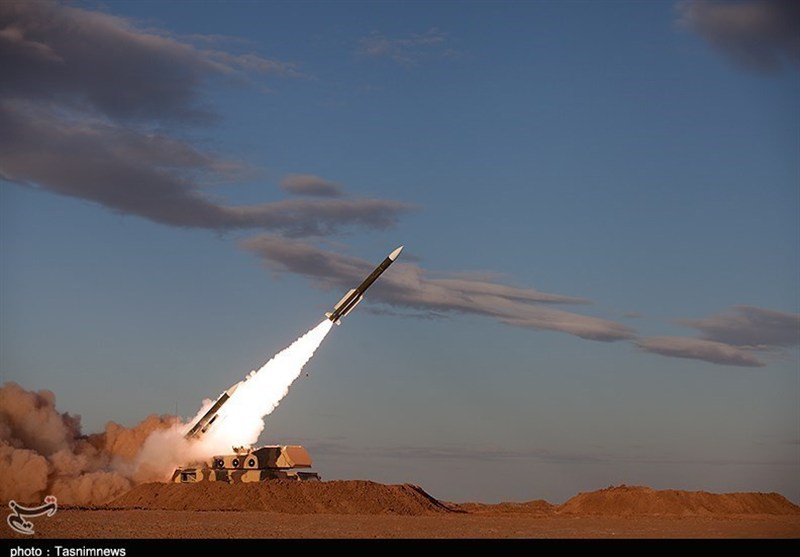
Iran responded by launching missiles and drones against what it described as U.S. military assets across the region.
The Islamic Revolutionary Guard Corps said it targeted air bases in Bahrain and Kuwait in two waves of attacks, while Iranian media reported strikes against the U.S. Fifth Fleet’s facilities in Bahrain.
The Guards also said missiles were fired at the U.S.-linked al-Azraq air base in Jordan, expanding the conflict’s geographic scope.
Foreign Minister Abbas Araghchi condemned the U.S. attacks and warned that Iran’s armed forces would leave “no attack or threat unanswered”, while urging foreign militaries to withdraw from the region.
Iranian media reported explosions near Bandar Abbas and Qeshm Island following the U.S. strikes, while authorities said civilian infrastructure, including telecommunications and water facilities, had been damaged.
Gulf states move to bolster defences
The attacks prompted Gulf countries to heighten security measures.
Kuwait said its air-defence systems were engaging hostile aerial targets and later announced the closure of its airspace. Bahrain activated missile warning sirens as Iranian retaliation unfolded.
Jordan said its forces intercepted several missiles headed toward the al-Azraq area.
The developments underscored growing concerns that a conflict initially centred on U.S.-Iran tensions could evolve into a broader regional confrontation involving multiple Gulf states.
Hormuz tensions raise energy concerns
The latest fighting has sharpened attention on the Strait of Hormuz, through which roughly a fifth of global oil consumption passes.
Iran’s military command announced the closure of the waterway and warned that vessels attempting to transit it could be targeted. Iranian state media reported attacks on two ships in the area.
The U.S. military rejected Iranian claims that the strait had been shut, saying commercial traffic continued to move through the waterway and that no U.S. warships had been struck.
The conflicting claims added to uncertainty in global energy markets already unsettled by three months of hostilities between Iran, Israel and the United States.
Diplomatic tensions deepen
Iran dismissed reports that its officials had contacted Trump following the strikes, rejecting comments by the U.S. president that Iranian leaders had sought an end to the bombing campaign.
Meanwhile, 22 countries including the United States and several European allies issued a joint statement accusing Iran of attacks and intimidation activities on foreign soil, calling for such actions to cease immediately.
Lebanon conflict continues
The regional escalation unfolded alongside continuing violence in Lebanon.
Israeli forces reported detecting launches from Lebanon toward northern Israel, triggering warning sirens and precautionary shelter orders in several communities.
Lebanese authorities have said Israeli strikes near the southern city of Tyre killed at least three people this week, while the death toll from Israeli attacks since March has risen to 3,637, with more than 11,000 wounded.
A French soldier serving with the U.N. peacekeeping mission in Lebanon was also killed by what the French military described as accidental gunfire.