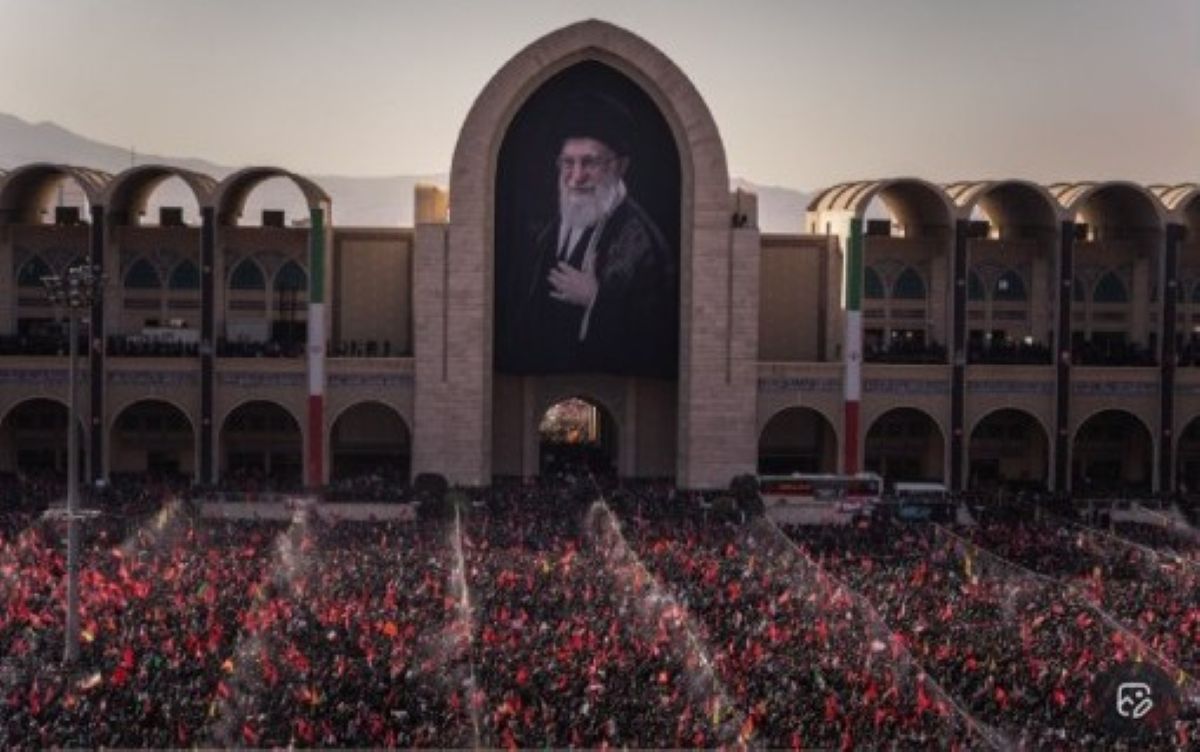

Dubai, UAE — Thousands of mourners flooded the streets of Tehran on Monday as Iran began the funeral procession for slain Supreme Leader Ali Khamenei, marking the culmination of days of state mourning after he was killed in US-Israeli air strikes during the war with Israel.
State broadcaster IRIB announced that the procession had begun from Tehran’s Grand Mosalla mosque, where Khamenei’s body had lain in state for two days, describing a “massive crowd” accompanying the funeral cortege through the capital.
Organisers said the procession is expected to last between 10 and 12 hours along a roughly 10-kilometre route passing through Tehran’s central squares and avenues before Khamenei’s body is flown to the holy city of Qom for further funeral rites.
Images from the procession showed mourners carrying portraits of Khamenei and his successor, Supreme Leader Mojtaba Khamenei, alongside Iranian flags and banners condemning the United States and Israel. Some demonstrators carried placards reading “Kill Trump” and signs depicting US Vice President JD Vance, US Defence Secretary Pete Hegseth and Israeli Prime Minister Benjamin Netanyahu alongside the words “There will be blood”.
The funeral procession follows two days of public mourning in Tehran, during which tens of thousands of people filed past Khamenei’s coffin while senior Iranian officials, military commanders and foreign delegations paid their respects.
Among those attending Sunday’s funeral prayers were senior officials from Saudi Arabia, Russia, Iraq, Kuwait, Kazakhstan, Algeria and Oman, reflecting the regional and international significance Iran sought to project during the ceremonies. Leaders and representatives of Tehran’s allied groups, including Lebanon’s Hezbollah, Iraq’s Popular Mobilisation Forces and Yemen’s Houthis, also attended.
Separately on Monday, Supreme Leader Mojtaba Khamenei reappointed Gholam-Hossein Mohseni-Ejei as Iran’s judiciary chief, in one of the first major official decrees issued during the funeral ceremonies.
Ayatollah Ali Khamenei was killed on February 28 in US-Israeli air strikes that launched the conflict between Iran and Israel. His son, Mojtaba Khamenei, assumed the role of supreme leader in March following a swift leadership transition.