
US Vice President JD Vance said all options remained on the table against Iran and ruled out talks unless Tehran halts attacks on commercial shipping in the Strait of Hormuz.
Vance said he would not describe the conflict as a war despite continuing clashes, according to France 24.
Iran’s First Vice President Mohammad Reza Aref threatened an “asymmetrical” and “multi-layered” response to US attacks.
Israeli Prime Minister Benjamin Netanyahu said overthrowing Iran’s leadership was the next main mission and claimed the goal was within reach.
Pressure builds around Iran
Iranian Petroleum Minister Mohsen Paknejad said the country’s oil industry continued to “circumvent” the US blockade, describing the task as difficult but manageable.
US Treasury Secretary Scott Bessent said the European Union had officially joined Washington’s economic pressure campaign against Iran, which he called “Operation Economic Outcast.”
Oil prices rose as renewed US-Iran hostilities heightened concerns about Middle East supply risks. Brent crude rose 0.2 percent to $95.67 a barrel, while West Texas Intermediate gained 0.3 percent to $91.56.
Brent was up 7.1 percent for the week and WTI 9.8 percent, their biggest weekly gains since the week ending July 20.
Hormuz navigation concerns
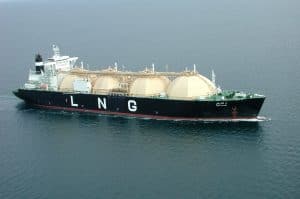
South Korea is reviewing practical options, including military measures, to support freedom of navigation through the Strait of Hormuz.
A Blue House official rejected claims that Seoul had provided no assistance, while saying South Korea-US security talks were not currently progressing. Semiconductors were among the issues discussed.
Regional tensions spread
Iranian authorities said they had captured a significant weapons cache after clashing with armed smugglers along the border with Pakistan.
The cache included RPG-7 launchers and projectiles, as well as thousands of AK-47 and M4 rounds, according to Iran’s Fars news agency. Tehran said the weapons were being smuggled in to carry out sabotage and create insecurity.
In Yemen, government forces said they repelled Houthi attacks in areas west of Taiz and shot down three drones. The internationally recognized government said it had regained some territory previously held by the Houthis.
West Bank: raids, arrests and settlement expansion
Two Palestinian teenagers, Khalil Rasem Khalil Shahada, 16, and Omar Mohammad Naji al-Nassan, 19, were buried after being killed by Israeli forces in Al-Mughayyir, east of Ramallah.
Palestinian authorities said the teenagers were killed by the Israeli army, while the Israeli military said its forces opened fire during a “violent riot.”
Israeli forces also raided several West Bank areas, arrested at least 19 Palestinians and issued demolition orders for four homes near Jenin.
In southern areas, settlers continued attacks on Palestinians and their land, while Israeli authorities inaugurated the Ma’ale Arugot settlement in the Gush Etzion bloc.
Gaza and Lebanon
The death toll from a US attack on a wedding party in Sirik rose to five.
Israeli media reported that the Israeli military could be preparing attacks on Lebanon, while the Israeli military confirmed killing two Palestinians in northern Gaza. A separate drone attack in Gaza City killed one person and wounded several others.
US Congresswoman Delia Ramirez called on Congress to pass the “Block the Bombs Act,” saying US bombs were killing civilians in Palestine and Iran.