


US President Donald Trump has signalled the possibility of further military action against Iran, saying Washington has already inflicted heavy damage on the country but could go further, as tensions over the Strait of Hormuz and stalled diplomatic efforts raise the risk of renewed conflict.
“We’ve knocked the hell out of them, and we may do it a little bit further,” Trump told reporters outside the White House on Thursday.
He said the United States could not allow Iran to obtain a nuclear weapon, while acknowledging the domestic political costs of the war ahead of the November 3 midterm elections.
“In another way, maybe they don’t. There’s a price to pay, which I knew immediately when I did it, but we can’t let Iran have a nuclear weapon,” Trump said.
His remarks came amid reports of possible US-Israeli strikes in the coming weeks, although Washington has not announced a decision to resume attacks. The US deputy press secretary, Anna Kelly, told Al Jazeera that the United States would not strike Iran before the midterm elections, even as reports of military coordination and deployments in the region fuel uncertainty.
Israeli Prime Minister Benjamin Netanyahu said Trump had backed him to “finish the job” against Iran, adding that any new Iranian attack would be met with force.
Iran, meanwhile, has warned that any renewed US attack would trigger a forceful response. The chief of staff of the Iranian armed forces, Ali Abdulahi, said Tehran was ready to deliver a “crushing and decisive response”.
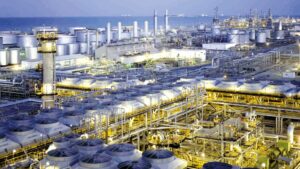
Mohsen Rezaei, secretary of Iran’s Supreme National Security Council, has also warned that Iran could target oil facilities, undersea cables, artificial intelligence facilities and data centres across the Gulf if open warfare resumes.
A senior Iranian lawmaker, Mohammad-Saleh Jokar, has called for authorities to permit the use of nuclear weapons if the United States attacks again. Iran is not known to possess a nuclear weapon, and its former supreme leader, Ali Khamenei, had prohibited their development in a religious edict.
Seven ships damaged as Hormuz tensions deepen
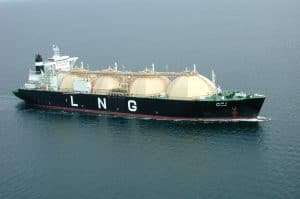
Iran says seven oil tankers were damaged in the Strait of Hormuz in a single day, in what it described as a major escalation in the conflict.
The Islamic Revolutionary Guard Corps said four vessels were directly attacked over alleged illegal oil transfers, while three others struck mines. The claims have not been independently verified.
The IRGC has threatened to attack US military bases across the Middle East if American warships continue escorting vessels through the strategic waterway. It has also warned that Iran would respond offensively to what it considers American aggression, including the US naval blockade.
The US Central Command said its blockade had reached 100 days, claiming it had halted Iran’s seaborne trade apart from humanitarian aid authorised by US forces. It said the operation had prevented Iran from exporting at least $25 billion worth of crude oil.
Shipping activity remains heavily disrupted. The UK Maritime Trade Operations agency said at least 14 vessels were attacked between October 8 and 17, while traffic through the strait remained 70 percent below pre-war levels.
Trump has disputed claims that the waterway is experiencing a severe disruption, saying more oil is passing through Hormuz than before the war. He has blamed Iran for driving up oil prices ahead of the US midterm elections.
Brent crude was trading at $112.96 a barrel early on Friday, down 0.2 percent, while US West Texas Intermediate fell 0.3 percent to $98.12. Brent had gained 4 percent on Thursday, reaching its highest closing level since early May.
The disruption has increased the importance of alternative export routes. Saudi Aramco chief executive Amin Nasser said the capacity of the kingdom’s East-West pipeline, which bypasses Hormuz, had risen from two million to seven million barrels per day.
Houthi attacks raise Saudi security concerns
Yemen’s Houthis have continued attacks on Saudi Arabia as the wider regional conflict intensifies. Saudi-led coalition forces said they intercepted a ballistic missile launched towards Riyadh, while another missile directed at Najran was also reported intercepted. The coalition separately said it had destroyed two drones targeting southern Saudi Arabia.
The attacks have prompted fresh travel warnings. Canada advised its citizens to avoid King Khalid International Airport in Riyadh and King Fahd International Airport in Dammam, citing military activity and disruption caused by missile and drone attacks. Italy urged its citizens to postpone travel to Saudi Arabia and avoid using airports in the kingdom.
Saudi Civil Defence issued emergency alerts in Riyadh, Abha, Khamis Mushait and Najran, later announcing that the danger had passed in the affected locations.
Iraq’s foreign minister, Fuad Hussein, condemned attacks on Saudi Arabia in a call with his Saudi counterpart and reiterated Baghdad’s position that Iraqi territory must not be used to launch attacks against Saudi Arabia or other regional countries.
UN Secretary-General Antonio Guterres also called for restraint, condemning Houthi attacks on civilian targets in Saudi Arabia and urging a political solution to Yemen’s conflict.
The escalation comes as Yemen’s internationally recognised government pursues an offensive against the Houthis under the banner of “Operation Dawn of Yemen”. Military media said government forces had carried out 780 targeted operations against Houthi fighters in 24 hours, claiming at least 512 fighters had been killed and 330 vehicles destroyed. These figures have not been independently verified.
Yemen’s military has released footage it said showed drone strikes against Houthi barracks and combat vehicles in the northern al-Jawf region, as well as attacks on positions along southern fronts.
The conflict has also produced confusion over threats to civilian gatherings. Yemen’s defence minister apologised after his ministry described Houthi-organised tribal gatherings as potential “legitimate military targets”, calling the statement wrong and unacceptable. He ordered an investigation and said government forces would not target tribal gatherings or other civilian assemblies.
Yemen’s humanitarian crisis deepens
The renewed fighting is compounding an already severe humanitarian emergency. The World Health Organization said 42 health facilities in Taiz were facing acute shortages of fuel, oxygen, medicines and medical supplies, putting lifesaving treatment at risk.
Fuel shortages have also disrupted water pumping and sanitation services, increasing the risk of cholera and other diseases among displaced people. The WHO called for safe and sustained humanitarian access and urgent funding to replenish essential supplies.
The agency reported that at least 1,574 people had been killed and 6,939 injured in Yemen since the beginning of August, bringing the recorded toll to 8,513 casualties. The figures cover more than three months of fighting.
The International Monetary Fund said Houthi attacks had so far had a limited economic impact on Saudi Arabia, with oil shipments continuing and domestic demand remaining strong. However, it forecast that Saudi Arabia’s economy would contract by 3.3 percent this year, largely because of the US-Israeli war against Iran. The regional economy is projected to shrink by 4.8 percent in 2026.
Qatar’s prime minister and US Secretary of State Marco Rubio discussed diplomatic efforts to reduce tensions, including ensuring freedom of navigation and reaching a comprehensive agreement to end the Iran war.
The diplomatic push comes as military threats continue on multiple fronts, with attacks on shipping, Iran’s warnings of retaliation and Houthi operations against Saudi Arabia adding to uncertainty across the region.