
Tunisians are to vote Saturday on a parliament largely stripped of its powers, the final pillar of a hyper-presidential system installed by President Kais Saied after a power grab last year.
Over a decade since the country’s revolution that unseated dictator Zine El Abidine Ben Ali, opposition parties have urged a boycott of the poll, which they say is part of a “coup” against the only democracy to have emerged from the 2011 Arab Spring uprisings.
The election for the new 161-seat assembly comes after Saied froze its predecessor on July 25 last year, following months of political crisis exacerbated by the coronavirus pandemic.
He later dissolved the body, long dominated by his nemesis the Ennahdha party.
Saied on Wednesday defended his decision, saying: “Tunisian people wherever I went were all asking to dissolve the parliament.”
“The country was on the brink of civil war,” he told US Secretary of State Antony Blinken in Washington.
The previous legislature had far-reaching powers, in the mixed presidential-parliamentary system enshrined in the North African country’s post-revolt constitution.
In July this year, Saied used a widely shunned referendum to push through a new constitution, stripping parliament of any real clout and giving his own office almost unlimited powers.
‘Rump parliament’
Analyst Hamadi Redissi said the aim of Saturday’s polls was “to complete the process that started on July 25” last year.
The resulting parliament “won’t have many powers — it won’t be able to appoint a government or censure it, except under draconian conditions that are almost impossible to meet”.
Saied’s new system essentially does away with political parties and electoral lists, meaning candidates will be elected as individuals with no declared affiliation.
The assembly’s final make-up is not expected to be determined until March next year, after any second-round run-offs have been completed.
The vote aims “to increase the legitimacy of the presidency”, Redissi said, adding that the result would be “a rump parliament without any powers”.
Almost all the country’s political parties, including Ennahdha, have said they will boycott the vote, labelling Saied’s moves a “coup”.
The powerful UGTT trade union federation, which did not openly oppose the initial power grab, has called the poll meaningless.
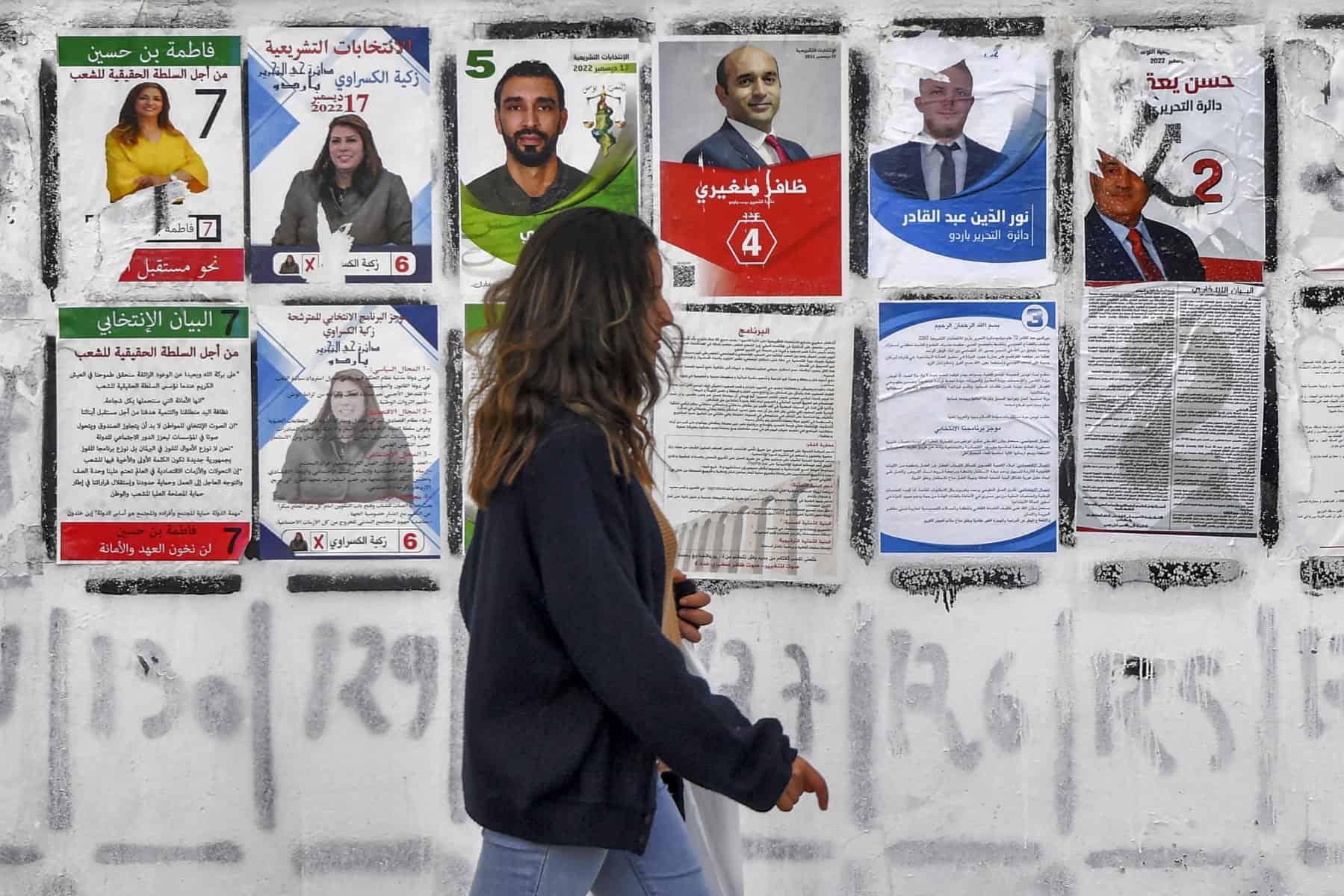
Most of the 1,058 candidates are unknowns.
The Tunisian Observatory for Democratic Transition says some 26 percent are teachers, and a further 22 are mid-level public servants.
The election result will likely see a drop in the representation of women, with just 122 female candidates.
‘Bad to worse’
Few of the country’s nine million registered voters expected to turn out.
Several young people told AFP they had little interest in the election or desire to know more about the candidates.
Marwa Ben Miled, a 53-year-old shopkeeper, told AFP the country was “going from bad to worse”.
“What happens on the political scene doesn’t interest me anymore,” she said. “I don’t trust anyone.”
Saied’s electoral law forbids candidates from speaking to the foreign press, a stance the North Africa Foreign Correspondents’ Club said would make it difficult for journalists to do their jobs.
Saied has made several public appearances, meeting market traders in the Old City of Tunis in the run-up to the vote.
Some social media users have posted satirical images ridiculing the vote.
In one video, a mock candidate appears with a cigar and smelling a posy of jasmine, before giving a donation to a pair of musicians who then shout pro-Saied slogans.