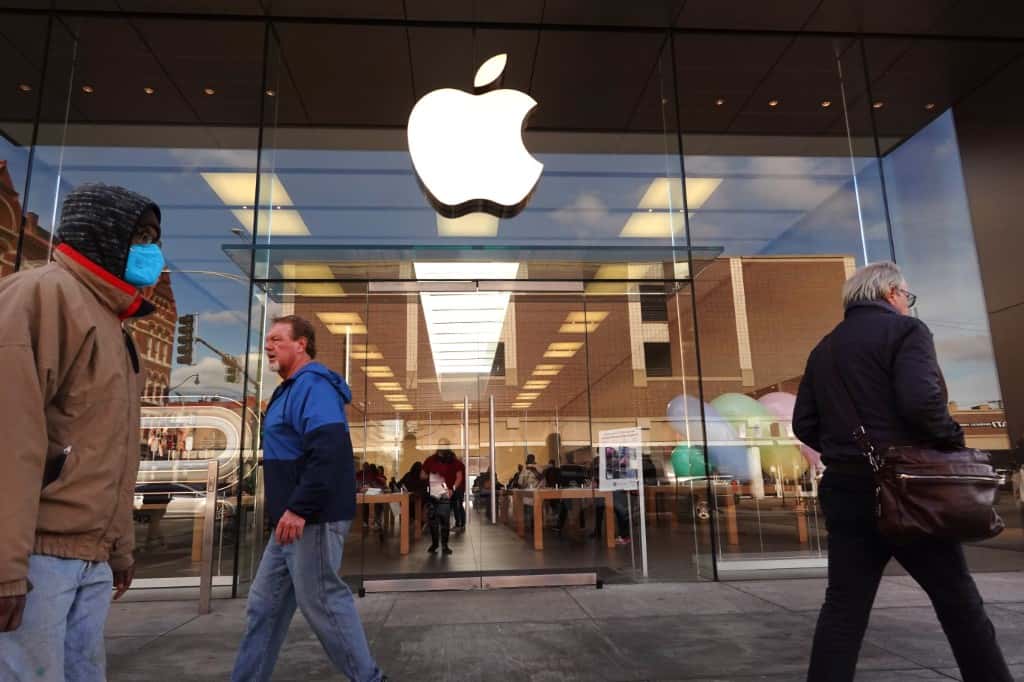

Frankfurt, Germany – US tech giant Apple said Thursday it would spend an additional one billion euros ($1.1 billion) on expanding its microchip design hub in the German city of Munich.
The investment, to be spread over the next six years, comes on top of an earlier one-billion-euro commitment announced in 2021, when Apple made Munich the European headquarters of its “Silicon Design Centre”.
“Our Munich engineering teams are on the cutting edge of innovation, helping imagine new technologies at the heart of the products we make,” said Tim Cook, Apple’s CEO.
The move is part of Apple’s strategy to develop its own chips for iPhones, iPads, MacBooks and other products, in order to reduce reliance on outside suppliers.
Supply chain changes during the pandemic caused a global semiconductor shortage, hampering important industries and prompting Europe and the United States to look at ways to become less dependent on Asian production.
Apple said its latest investment would fund the creation of three new research and development sites at the existing Munich hub, housing some 2,000 engineers.
The R&D teams in Munich would contribute to developing products that deliver “greater performance, efficiency, and power savings,” said Johny Srouji, Apple’s senior vice president of hardware technologies.
Apple has around 4,500 employees in Germany and has had a presence in Munich since 1981.