
Dubai, UAE — The International Monterey Fund (IMF) has projected global growth to remain at 3.3 percent this year and the next, before slowing to just above 3 percent over the next five years, well below the historical average.
IMF Managing Director Kristalina Georgieva said that growth in the Middle East and North Africa is expected to rebound to about 3.6 percent in 2025, driven by a recovery in oil production and an easing of regional conflicts.
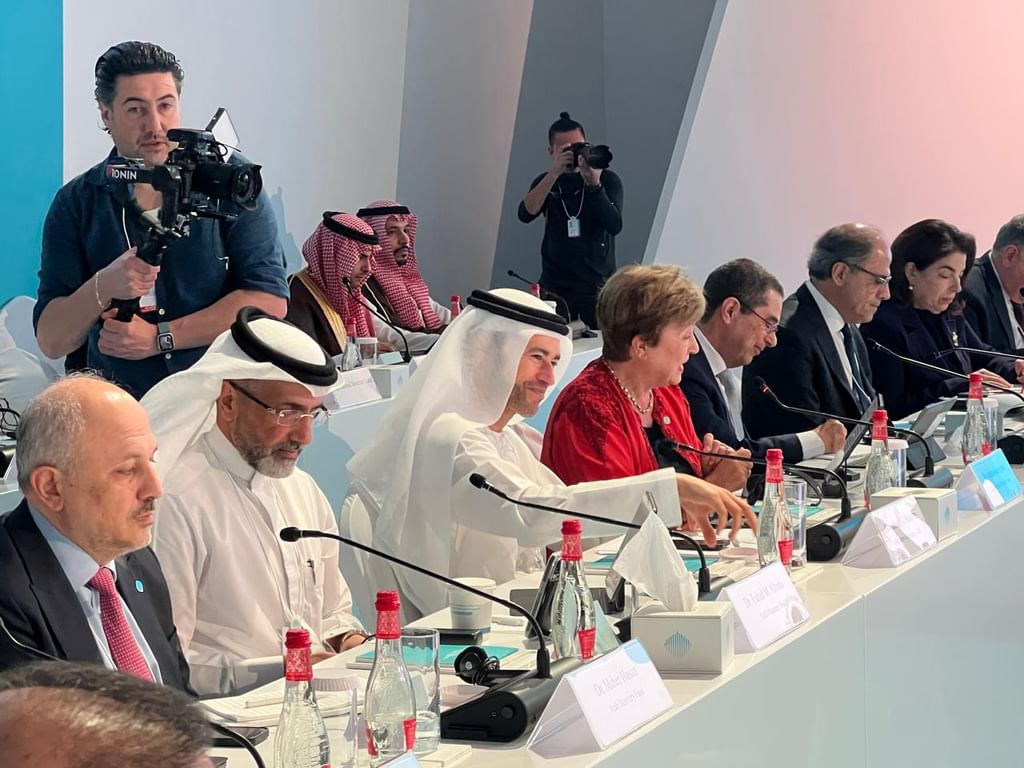
“Policymakers have generally succeeded in taming inflation, but not everywhere, with inflation picking up again in some countries. This could lead to a divergence in interest rates across countries and higher borrowing costs for emerging market and developing economies,” Georgieva said at the 9th Arab Fiscal Forum, part of the World Governments Summit 2025 preliminary day in Dubai.
She warned that global public debt is projected to hit 100 percent of global GDP by 2030. “Many countries in this region face similar pressures, with debt levels exceeding 70 percent of GDP. This poses the risk of them becoming trapped in a low-growth, high-debt scenario,” she added.
Georgieva highlighted the challenges faced by governments, including job creation, strengthening social safety nets, adapting to national security and reconstruction needs, building resilience to natural disasters and supporting economic diversification.
She also noted, “Digital innovation, with AI technologies, is expected to raise UAE’s GDP significantly by 2030. More R&D spending will further enhance productivity.”
Jihad Azour, Director of the Middle East and Central Asia Department at the IMF, noted the disparity in growth rates between emerging economies and middle-income countries, with some facing significant slowdowns due to financial and geopolitical pressures.
He emphasized the continued role of the IMF in providing financial and technical support to developing nations and strengthening structural reforms to stimulate sustainable growth.