
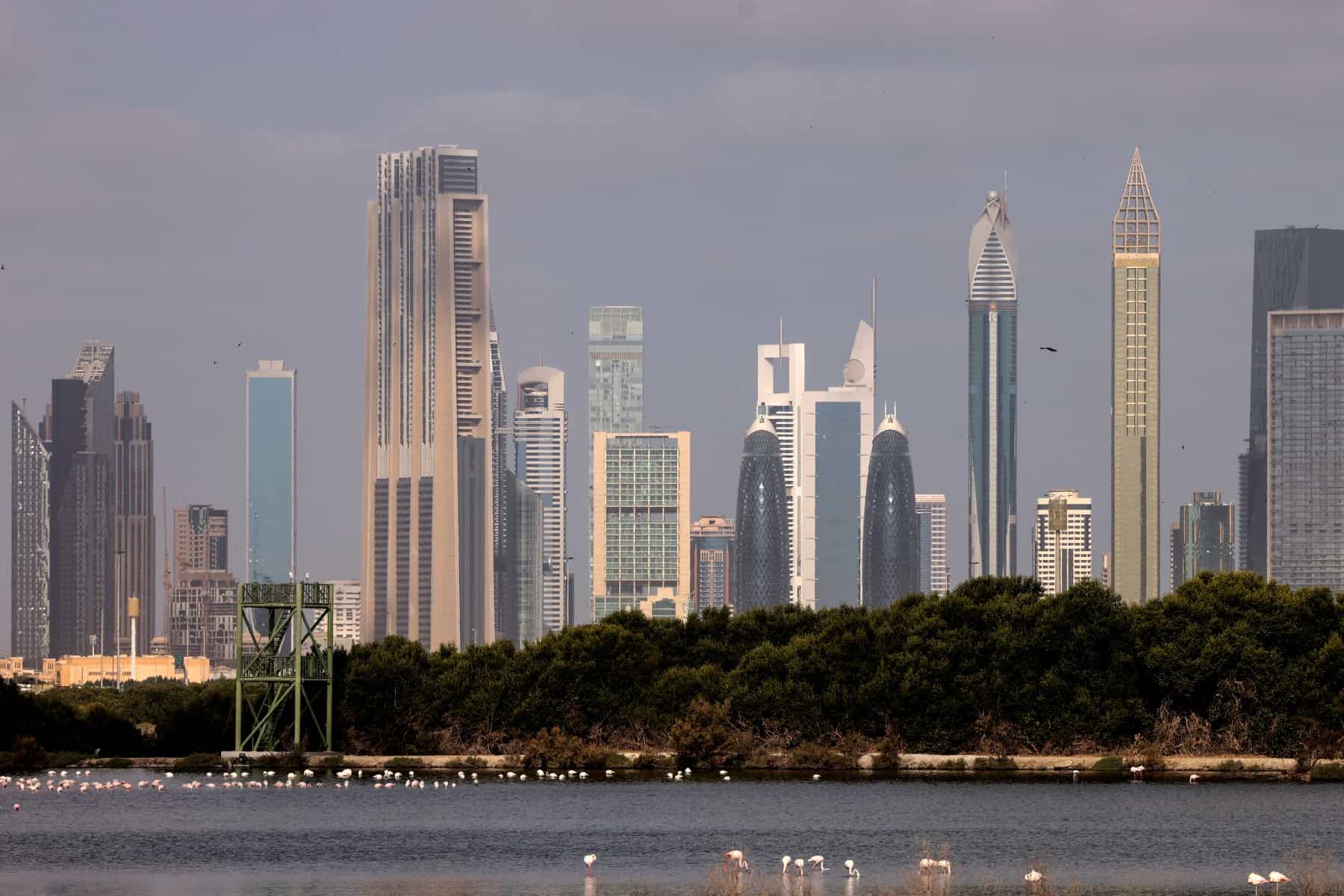


Dubai, UAE — The United Arab Emirates’ real estate sector delivered a record first-quarter performance in 2026, signaling sustained investor confidence in the market’s stability and long-term growth prospects.
Property markets across the federation — including Dubai, Abu Dhabi, Sharjah and Ajman — posted strong gains in the first three months of the year, reinforcing the UAE’s position as a global hub for real estate investment.
In Dubai, the Dubai Land Department reported 718,160 real estate transactions, including 60,303 disposals, up 6% from a year earlier. The total value of transactions rose 31% to about $68.6 billion (AED252 billion).
The number of investments reached 57,744, up 7% year-on-year, with a combined value of roughly $47.1 billion (AED173 billion). The investor base expanded to 48,448, an 8% increase, including 29,312 new investors, up 14% from the same period in 2025.
Abu Dhabi recorded its highest quarterly performance on record, according to the Abu Dhabi Real Estate Centre, with transaction values surging 160.7% to about $18.0 billion (AED66 billion), compared with AED25.31 billion a year earlier.
The number of transactions in the emirate more than doubled to 13,518 from 6,896 in the first quarter of 2025, underscoring accelerating growth and its appeal to global investors.
In Sharjah, real estate trading volume climbed 40.7% year-on-year to approximately $5.0 billion (AED18.5 billion), data from the Sharjah Real Estate Registration Department showed. Total transactions rose 18.9% to 29,235.
Investor diversity also increased, with participants from 113 nationalities, compared with 97 a year earlier. UAE nationals accounted for about $2.45 billion (AED9 billion) across 10,099 properties, while Gulf, Arab and other foreign investors contributed roughly $2.6 billion (AED9.5 billion) across 19,136 properties.
In Ajman, total real estate transactions reached about $1.7 billion (AED6.22 billion) across 3,890 deals, marking a 12% annual increase. Trading volume stood at approximately $1.15 billion (AED4.24 billion) from 3,128 transactions.
The broad-based growth reflects the sector’s resilience amid regional shifts, supported by government policies aimed at strengthening economic diversification and maintaining investor confidence.