
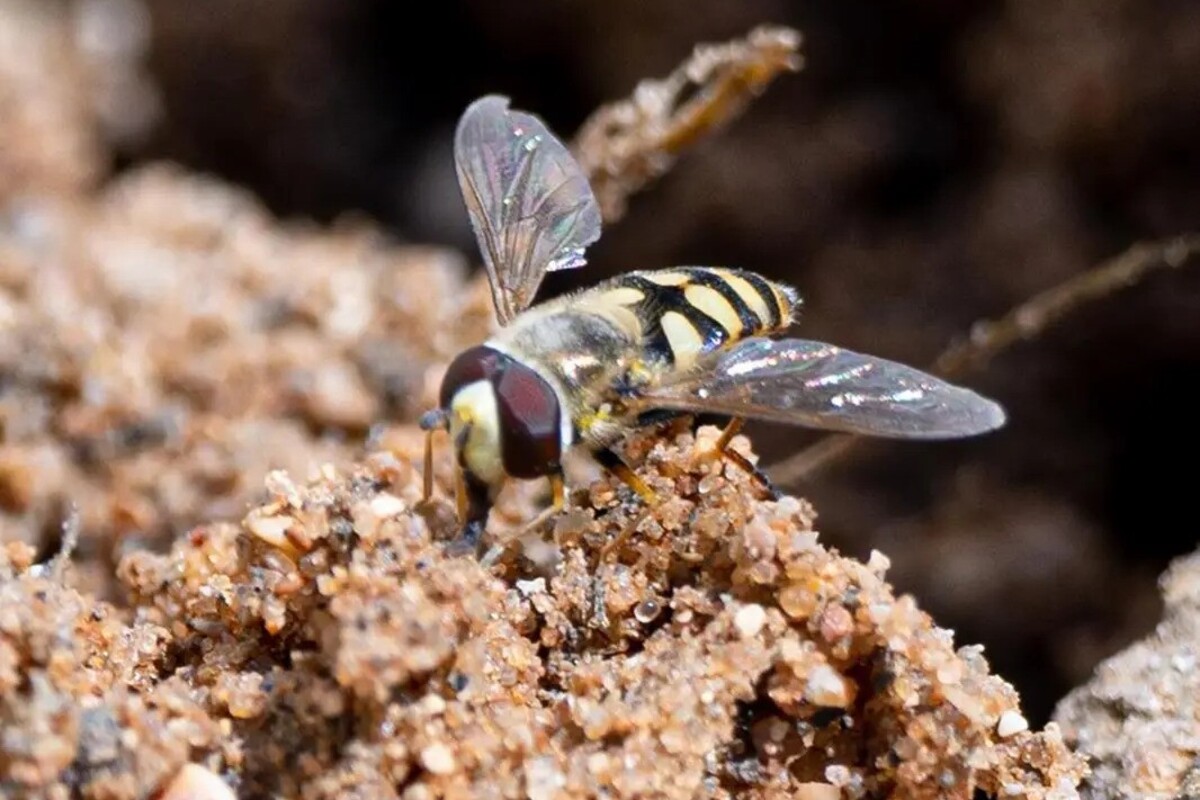


Arar, Saudi Arabia – The proliferation of flower flies, also known as hoverflies, has been observed across several natural and urban locations in Northern Borders Region, a positive indicator of improved ecological balance and enhanced biodiversity in the area.
Flower flies of the Syrphidae family play a vital role in plant pollination and pest control. Their larvae feed on harmful insects such as aphids, helping protect crops and natural vegetation while significantly reducing the need for intensive pesticide use.
The presence of these insects reflects a highly suitable environment rich in flowering plants and green spaces, contributing to overall environmental sustainability within local cities and agricultural zones.
Ranking among the most important natural pollinators after bees, flower flies move between blossoms in search of nectar and pollen, a vital activity that facilitates the pollination process and improves the yield of various agricultural and wild plants.