
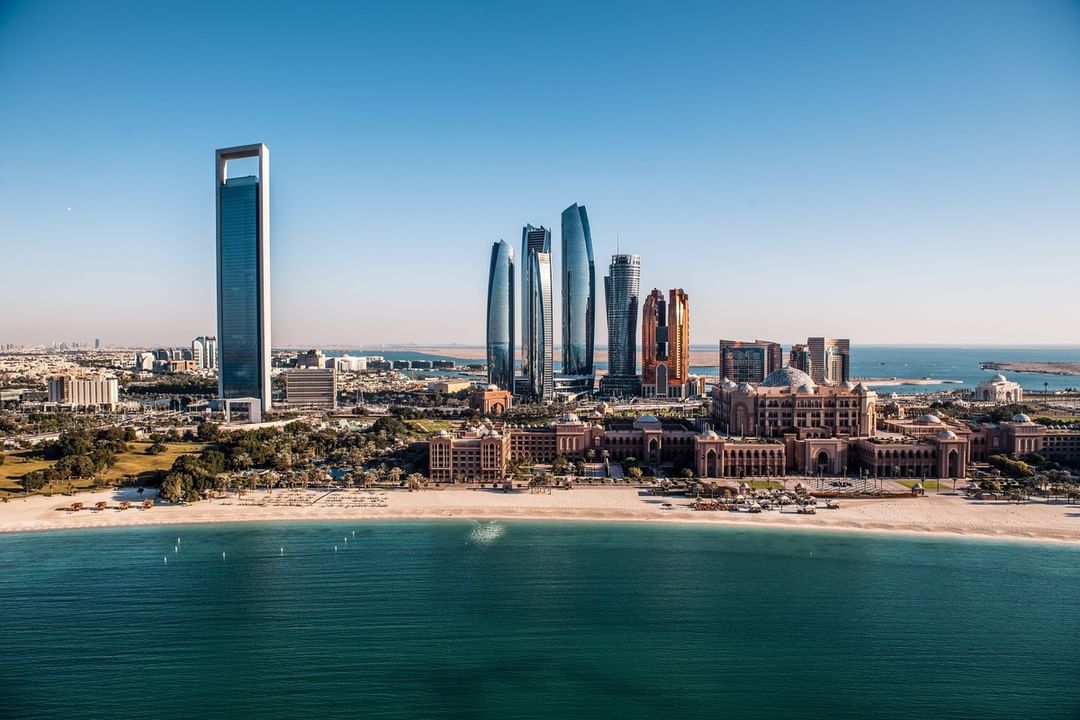


Abu Dhabi’s residential real estate market recorded a historic year in 2025, with property sales reaching a record AED73.2 billion ($19.9 billion) and total transactions rising 55% year-on-year to 22,400, according to property consultancy Cavendish Maxwell.
Off-plan properties dominated the market, accounting for 71% of total sales activity, supported by new project launches and attractive payment plans from developers. Off-plan sales surged 68% to 15,900 transactions in 2025, compared with 9,400 in 2024, while ready property sales increased by 31%.
Around 7,000 new homes were delivered in Abu Dhabi during 2025, bringing the total residential supply in the emirate to about 315,000 units. A further 15,900 units are scheduled for completion in 2026, although historical trends suggest that actual handovers could range between 6,500 and 9,000 units.
Andrew Laver, Director at Cavendish Maxwell Abu Dhabi, said: “The UAE capital’s residential real estate market reached historic highs in 2025, reflecting robust buyer demand and increased investor confidence. While Abu Dhabi’s residential market enters 2026 from a position of strength, geopolitcal tension in the wider region could influence investor sentiment and capital flows. However, Abu Dhabi’s strong sovereign buffers and diversified economy are expected to provide meaningful insulation, hleping to sustain market confidence and stability.
“The strength of off-plan and ready transactions in parallel indicates a broad market base. This balance is important as it shows that growth is sustainable across both segments and is not concentrated in one.
“While sales and rental prices in Abu Dhabi are likely to rise further in the near term, the pace of growth will vary from area to area as new supply enters the market. In addition, based on previous handover trends, the number of handovers could be lower than initially projected, with a measured pace of supply expected to support pricing momentum and prevent market imbalances.”
The report found that apartment prices rose more than 15% year-on-year, while villa prices increased 12.2%. Rental rates also climbed, with apartment rents up 12.5% and villa rents rising 5.5%.
Apartments dominated the sales market, accounting for 66% of transactions, reflecting strong developer activity in the segment. About 14,800 apartment deals were recorded in 2025, marking a 58% increase compared with the previous year. Off-plan apartments accounted for 10,100 sales, while the ready apartment market grew nearly 36% to 4,700 transactions.
Villa and townhouse sales also rebounded strongly, with about 7,600 units sold in 2025—almost 50% higher than in 2024. Off-plan villas led the growth with 5,800 transactions, up 63%, while the ready villa market grew 19% to 1,800 deals.
In terms of locations, Al Reem Island emerged as the top area for apartment sales, recording 5,100 transactions in 2025—an increase of 75% from the previous year. It was followed by Yas Island with around 1,000 sales, while Fahid Island emerged as a notable newcomer with 725 sales. Together with Saadiyat Island, these locations accounted for more than 75% of all apartment transactions.
For villas and townhouses, Al Bahyah led the market with 339 transactions, followed by Al Hidayriyyat (137), Yas Island (135), Al Reem Island (123) and Zayed City (122). These five districts together accounted for more than 48% of total sales in the segment.
Developers also saw strong performance during the year. Aldar Properties remained the leading developer for the second consecutive year, recording 5,300 sales and holding almost a third of the market share. Modon registered the strongest growth, jumping from 485 sales in 2024 to 2,700 in 2025 and capturing nearly 17% of the market. Reportage Properties also posted strong growth, more than tripling transactions to 1,300 from 400 in the previous year. Bloom Holding and Radiant Real Estate held market shares of 4.8% and 4.5% respectively.
Looking ahead, the consultancy said Abu Dhabi’s residential inventory could reach around 371,800 units by the end of 2028, supported by a robust development pipeline. Around 15,900 units are expected in 2026, followed by 16,800 in 2027 and 22,300 in 2028, although actual deliveries may fall short of projections based on past handover trends.