
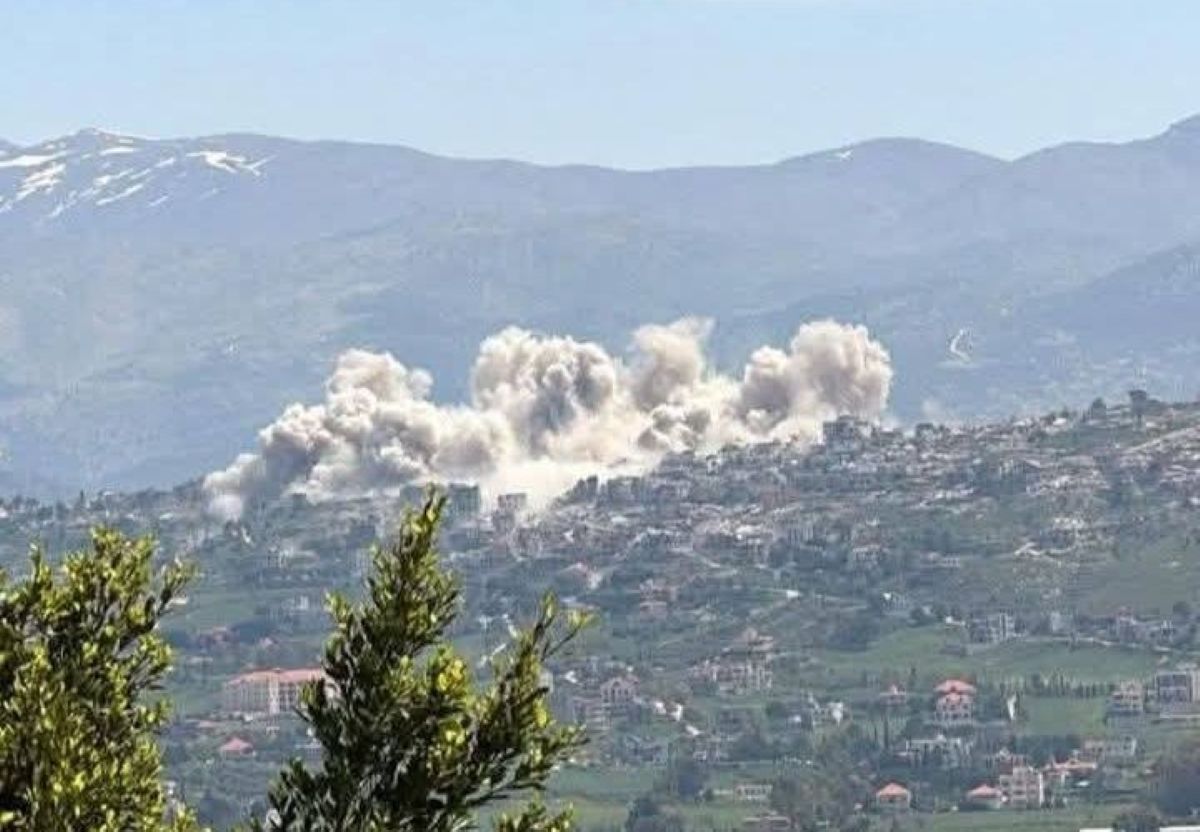


Lebanon’s Hezbollah warned on Sunday that it would respond to what it called repeated Israeli violations of a ceasefire, rejecting Israeli Prime Minister Benjamin Netanyahu’s accusation that the Iran-backed group was endangering the truce.
The exchange came as regional tensions remained high and Iran intensified diplomatic efforts to secure a broader halt to hostilities, dispatching Foreign Minister Abbas Araghchi to Pakistan and preparing for talks in Moscow.
Lebanon ceasefire under strain
Hezbollah said Israeli military actions in southern Lebanon amounted to repeated breaches of the ceasefire agreement reached late last year. It described its own attacks on Israeli forces inside Lebanese territory as a “legitimate response” to those violations.
The group rejected Netanyahu’s assertion that Hezbollah was undermining the truce, saying Israel bore responsibility for escalating tensions along the border.
Meanwhile, Lebanon’s health ministry said the death toll from Israeli strikes since March 2 had risen above 2,500. Lebanese state media reported fresh Israeli strikes in the south on Sunday after the Israeli military issued evacuation warnings for seven locations.
The renewed violence has raised concerns about the durability of the fragile ceasefire, which had largely halted months of cross-border fighting.
Iran pursues diplomatic track
As fighting continued, Araghchi returned to Islamabad on Sunday for a second round of consultations in as many days, part of a broader diplomatic push involving Pakistan and Oman to revive ceasefire negotiations.
According to Iranian state media, Araghchi was expected to brief Pakistani officials on Tehran’s position regarding a framework for ending the conflict. He had traveled to Oman after an earlier visit to Pakistan, while other Iranian envoys returned to Tehran for consultations.
On Monday, Araghchi is due to travel to Moscow, where Iran’s ISNA news agency said he would meet Russian President Vladimir Putin. Discussions are expected to focus on ceasefire efforts, recent negotiations and the broader regional situation.
U.S. leaves door open to talks
U.S. President Donald Trump said on Sunday that Iran could contact Washington by phone if it wished to negotiate an end to the conflict.
In an interview with Fox News, Trump said he had cancelled a planned trip by envoys Steve Witkoff and Jared Kushner to Islamabad, saying telephone diplomacy would be sufficient for now.
“We’re gonna do it by phone,” Trump said.
The comments suggested Washington remains open to dialogue, even as direct high-level engagement has stalled.
Shipping concerns mount
The conflict’s economic repercussions are also growing. British Prime Minister Keir Starmer and Trump discussed the need to restore shipping through the Strait of Hormuz, a critical artery for global energy supplies.
A Downing Street spokesperson said the two leaders agreed on the urgent need to reopen the waterway, warning of severe consequences for the global economy and living costs if disruptions persist.