
By Charles Philion
UBS’s 2025 index ranks Dubai fifth among twenty-one cities for bubble risk. We read that as a measure of how fast Dubai has recovered, not how fragile it is. A cash-heavy buyer base and positive real yields argue against the disorderly outcome the headline implies.
UBS placed Dubai fifth on its 2025 Global Real Estate Bubble Index — behind Miami, Tokyo, Zurich and Los Angeles, ahead of Amsterdam and Geneva — and flagged it for the single largest rise of any city it tracks. For an institutional reader, the question is not whether the number is right. It is. The question is what it actually measures.
The index scores the distance between current prices and their historic relationships with local rents, incomes and mortgage debt. A city climbs when prices pull away from those anchors quickly. That gauges imbalance well. It says little about how a correction, if one came, would actually manifest itself — and on that second question, Dubai’s structure answers far more favourably than its ranking suggests.
City Score UBS risk band
Miami 1.73 Bubble risk
Tokyo 1.59 Bubble risk
Zurich 1.55 Bubble risk
Los Angeles 1.11 Elevated
Dubai 1.09 Elevated · largest score increase
Amsterdam 1.06 Elevated
Geneva 1.05 Elevated
(Source: UBS Global Real Estate Bubble Index 2025. Scores and bands per the published report.)
The scores matter more than the actual position. At 1.09, Dubai sits a full band below the three genuine bubble-risk markets — Miami at 1.73 is a different world — and nearer the moderate-risk cohort than the cities with which it is grouped. Much of its fifth-place finish is simply the arithmetic of a fast rebound off a long post-2020 trough, not evidence that values have detached from what buyers can support.
Why a correction here wouldn’t cascade
The mechanism that turns a price fall into a crash is leverage: prices slip, borrowers fall into negative equity, lenders force sales, and forced sales drive prices lower still. That sequence depends on a heavily mortgaged buyer base. Dubai does not have one to the same degree — a large share of transactions clear in cash, and the mortgages that do exist sit under conservative UAE Central Bank loan-to-value limits. A cash buyer is not margin-called into a soft market. Less leverage means less of the forced-selling mechanism that converts a decline into a downfall.
The demand behind the repricing is structural, not speculative. Long-term residence visas, corporate relocations and family-office inflows bring occupiers and holders rather than flippers — a solid floor that a purely speculative cycle never has. And the defining tell of a genuine bubble is the absence of income; Dubai fails that test in the right direction. Gross apartment yields run well above the gateway cities ranked alongside it and stay positive net of service charges. An asset that pays you to hold it rests on more than a simple belief in the next buyer. The post-2008 regime reinforces the point: RERA escrow rules ring-fence off-plan money and the Oqood system registers off-plan sales, taking much of the disorderly froth out of the pipeline.
Where the risk is genuinely real
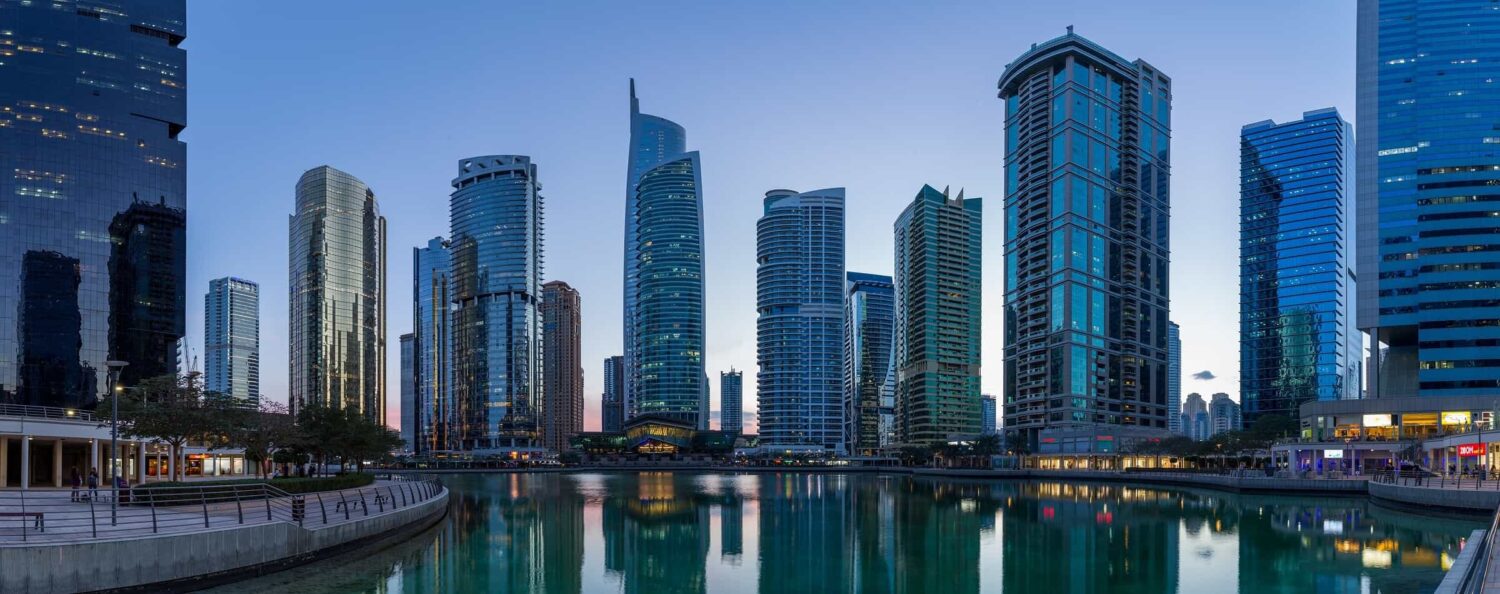
None of this makes Dubai risk-free. Our own second-quarter work flagged Jumeirah Village Circle, Business Bay and Jumeirah Lake Towers for real exposure to yield compression and a heavy supply pipeline. These districts skew towards foreign investors over owner-occupiers, and when short-let units are pushed back onto the long-term market, rents there can come under pressure. The honest reading is by segment: pockets of speculative supply risk sitting inside a structurally sound city. The UBS index, by design, scores the city rather crassly as a single entity and cannot draw that line.
The bottom line
Fifth place measures how far and how fast Dubai has repriced, not how fragile it is. The drivers that turn a ranking like this into a crash elsewhere — heavy leverage, thin yields, a speculative buyer base, and weak oversight — are precisely the four areas where Dubai is comparatively strong. The realistic downside is an orderly cooling, concentrated primarily in the over-supplied districts named above, not a credit-driven fall across the city. For lenders and allocators, that is a materially different proposition from the one the headline implies and should be considered and viewed as such.
(The author is the Co-Founder of Pure Value)