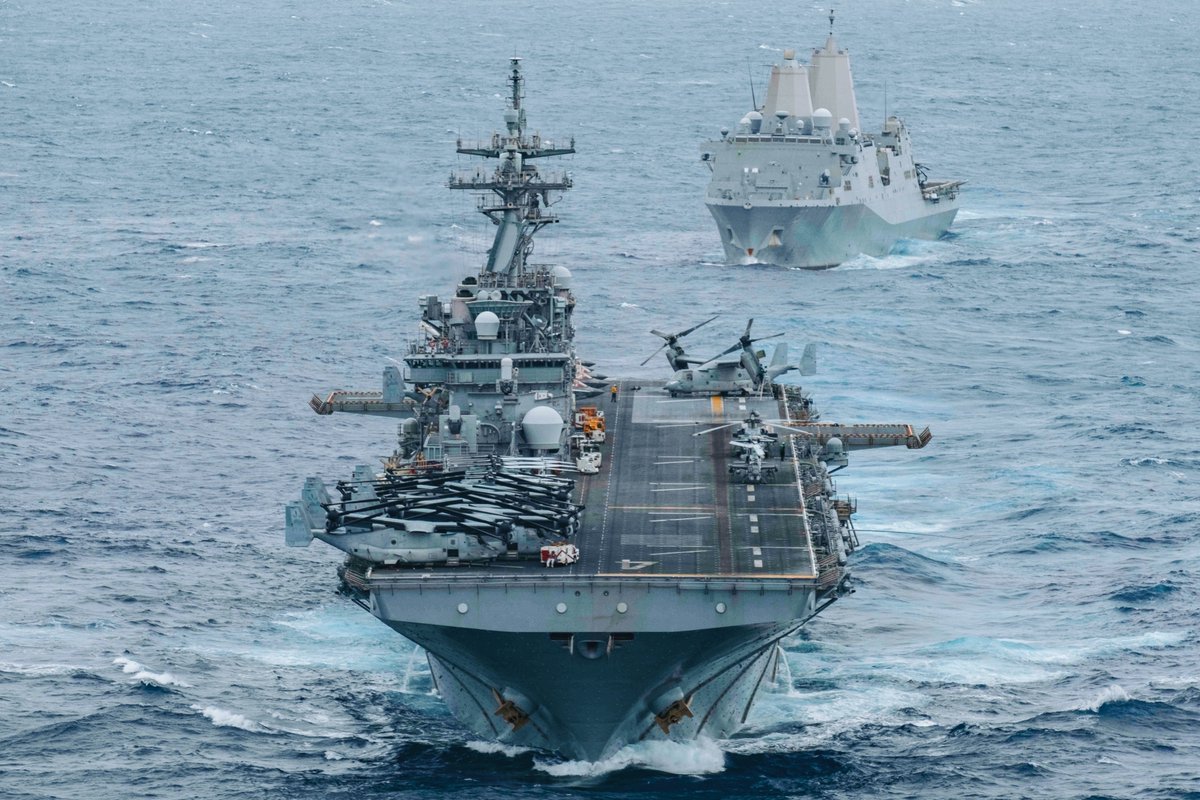

Dubai, UAE — Oil prices rose after the United States threatened to maintain a naval blockade of Iran indefinitely, reviving concerns over crude supplies and further escalating tensions around the Strait of Hormuz.
US Treasury Secretary Scott Bessent said that Washington is going to apply measures that have “never been seen” on Iran, media reports said.
“Watch this space for more announcements coming next week because we are going to apply measures like have never been seen in the history of economic isolation on a country,” Bessent said during an interview on Newsmax’s Rob Schmitt Tonight programme.
“It will be a combination of economic isolation like the world has never seen before, and the continued blockade in the Strait of Hormuz that will keep anything from going in or out of the Iranian ports,” he added.
Brent crude rose 90 cents, or 1.03 percent, to $87.97 a barrel by 06:53 GMT, while US West Texas Intermediate gained 91 cents to $82.16.
Both benchmarks were on track for weekly gains of about 4 percent after falling more than 2 percent in the previous session.
Hormuz traffic remains below average
Nine commodity vessels passed through the Strait of Hormuz on Thursday, up from five the previous day, according to maritime tracking firm Kpler data cited by Reuters.
The number remained below the August daily average of 12. Five vessels entered the Gulf and four headed towards the Gulf of Oman, primarily through the Iranian shipping channel.
Nineteen commodity vessels also passed through the Bab al-Mandeb strait on Thursday with active transponders, compared with 20 the previous day.
The figures do not include vessels sailing with their transponders switched off.
A tanker was also struck by an uncrewed aerial vehicle while transiting the Strait of Hormuz, according to the United Kingdom Maritime Trade Operations agency. The vessel sustained minor damage and all crew members were safe.
Egypt condemned the targeting of two Emirati ships affiliated with ADNOC, calling it an act of aggression that threatened maritime navigation and freedom of movement.
Pressure mounts over US naval deployments
The USS Abraham Lincoln has been deployed for nearly nine months, with US lawmakers demanding answers about conditions aboard the aircraft carrier.
Democratic Senator Richard Blumenthal said the ship, carrying more than 5,000 sailors and Marines, had been continuously at sea for nearly seven months, longer than any previous US carrier deployment without a port stop.
Other lawmakers have called for a congressional delegation to inspect the vessel.
Retired senior naval officer Harlan Ullman told Al Jazeera that prolonged deployments erode a carrier’s readiness because advanced maintenance cannot be fully carried out at sea.
The United States has begun moving another carrier, the USS George Washington, towards the Middle East. The move comes amid reports of mental health and supply concerns aboard the Abraham Lincoln.
The US military has also announced its first multinational, multi-domain attack drone task force, Task Force Falcon Strike, involving US and regional partner forces.
Economic fallout adds pressure
Lancaster University professor Simon Mabon told Al Jazeera that the economic consequences of the Iran war were creating growing domestic and international pressure on US President Donald Trump.
He said disruption was affecting oil, diesel, fertiliser and global shipping routes, while higher shipping costs and insurance premiums were ultimately being passed on to consumers.
Norwegian Foreign Minister Espen Barth Eide said the war had failed to achieve its initial objectives and had strengthened hardliners in Iran.
Eide said ending the war and reopening the Strait of Hormuz were now imperative, arguing that freedom of navigation should return as close as possible to pre-war conditions.
Israel intensifies attacks in Lebanon
Israeli forces have continued bombing and destruction operations across southern Lebanon, according to Lebanon’s National News Agency.
Large explosions were reported in Mashaa al-Mansouri, Beit Yahoun, Haddatha and Qounine, alongside Israeli tank movements and advances towards Haddatha.
Machine-gun fire was also reported around Majdal Zoun and al-Mansouri, while Israeli warplanes and drones continued flying overhead.
An Israeli drone also dropped a bomb on a house in Kafra in southern Lebanon, causing material damage.
Israel’s warplanes separately struck communal land in al-Mansouri in the Tyre district.
Human Rights Watch urged the UN Security Council to extend the UNIFIL peacekeeping mission beyond the end of 2026, arguing that an international force was needed to protect civilians and deter abuses.
Gaza diplomacy resumes
US Middle East envoy Jared Kushner is expected to travel to Israel and Egypt next week with former British Prime Minister Tony Blair and former UN envoy Nikolay Mladenov for talks on Gaza.
The meetings in Jerusalem are expected to discuss the next steps for implementing President Donald Trump’s 20-point peace plan.
A Board of Peace official told Al Jazeera that Washington and Israel agreed Hamas must be demilitarised.
The delegation is also expected to travel to Cairo to meet Egyptian officials and other mediators, with reconstruction in Gaza cited as the ultimate goal.
Meanwhile, Turkish Foreign Minister Hakan Fidan accused Israel of seeking to expel Palestinians from Gaza and urged greater pressure on Israeli Prime Minister Benjamin Netanyahu.
Israel’s military separately said it had killed Hamas commander Mohammed Bassam Mohammed Mushtaha in northern Gaza on July 30, alleging he was involved in holding Israeli captives. Al Jazeera said it could not independently verify the claim.