
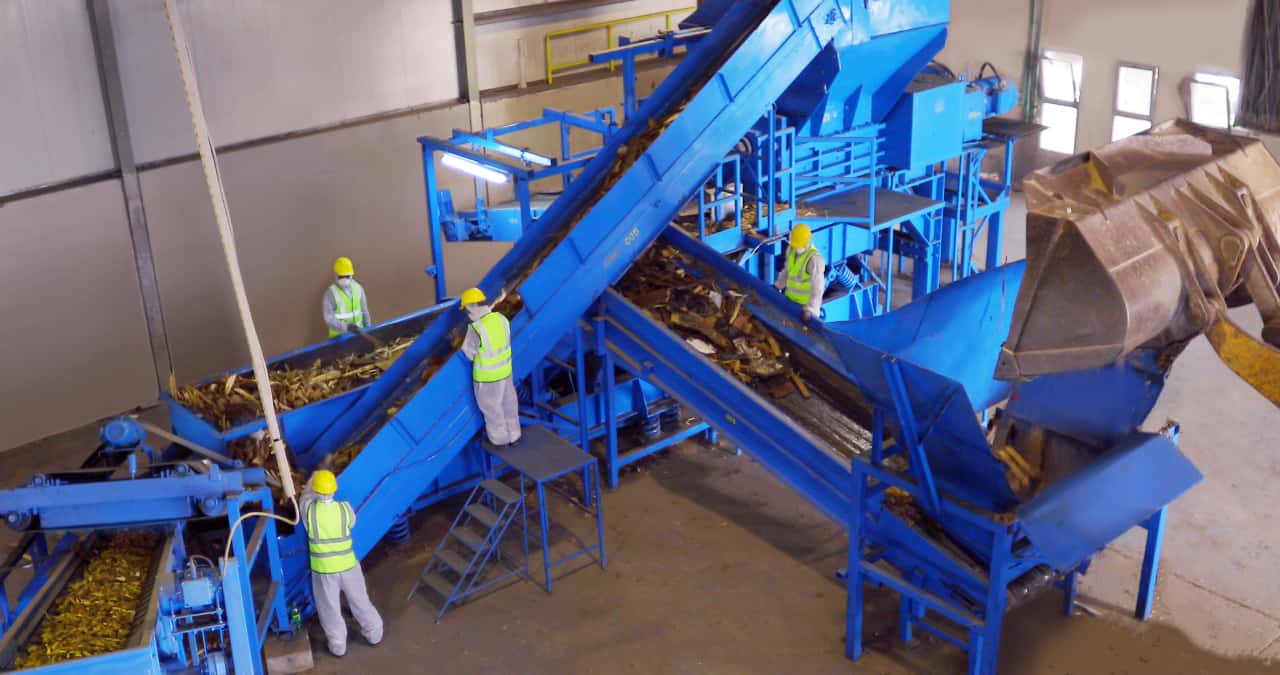

The Gulf Cooperation Council’s waste management market is projected to exceed $104.06 billion by 2031, up from an estimated $68.3 billion in 2025, as governments expand waste treatment, recycling and resource recovery infrastructure.
The sector is forecast to grow at a compound annual growth rate of 7.29 percent between 2025 and 2031, according to a GCC statistical report released on Sunday.
The region collected 283.5 million metric tonnes of waste in 2024, an increase of 20.4 percent from the previous year. Treated waste volumes rose 6.2 percent to 69 million tonnes over the same period.
Non-hazardous waste accounted for 97.1 percent of total collected waste, while hazardous waste made up 2.9 percent. However, hazardous waste represented 11.7 percent of treated volumes in 2024, compared with 9.9 percent in 2023.
Technical methods, including physical and chemical treatment, resale and reuse, accounted for 61.1 percent of hazardous waste treatment. Recycling represented 21.6 percent, environmentally sound landfilling 15.5 percent and incineration 1.9 percent.
The report highlighted the GCC’s performance in solid waste management, with the UAE, Qatar, Oman and Kuwait each scoring 100 out of 100 in Yale University’s Environmental Performance Index for sustainable solid waste management. Bahrain scored 98.51, while Saudi Arabia recorded 92.27.
Agricultural waste collection increased by a cumulative 79.9 percent between 2017 and 2024. The UAE recorded the region’s highest collected agricultural waste volume at 2.4 million tonnes in 2024, followed by Kuwait with 600,000 tonnes.
Municipal waste collection reached 48.8 million tonnes in 2024, representing cumulative growth of 5 percent from 2017. Household waste accounted for more than 45 percent of collected municipal waste, while organic waste represented between 30.6 percent and 47 percent.
Construction and demolition waste recorded the fastest annual increase, rising 26.5 percent to 226.6 million tonnes in 2024, compared with 179.1 million tonnes in 2023.
Industrial activity was a major source of hazardous waste, generating 6.4 million tonnes in 2024, equivalent to 77.6 percent of the GCC’s total hazardous waste generation. Industrial hazardous waste generation increased 19.5 percent year on year.
The region had 28 specialised facilities for recycling hazardous industrial waste and recovering metals and metal compounds, while 43 accredited facilities handled used-oil re-refining and reuse, the report said.
Hazardous medical waste generation reached 134,600 tonnes in 2024, up 14.3 percent from the previous year. GCC countries operated 27 dedicated incineration facilities with a combined design capacity of 176,100 tonnes.
The report also said GCC countries exported 800,000 tonnes of hazardous waste in 2024. Of this volume, 72.6 percent was designated for recycling or metal recovery, while 9.8 percent was intended for recovering other inorganic materials.