
Iran has launched a wave of missile and drone attacks against US military positions across the Middle East following a new round of US strikes on Iran.
The Islamic Revolutionary Guard Corps (IRGC) claimed it launched a “heavy” ballistic missile attack on Prince Hassan airbase and a US Marine base in Jordan. Iran also said it targeted US facilities in Iraq and Bahrain.
Iranian military spokesman Colonel Ebrahim Zolfaghari said the attacks would continue until the United States “regrets its crimes”, warning that further US strikes would trigger “heavier, broader and more destructive” responses.
The IRGC claimed its attacks caused casualties and damage to US facilities, but those claims have not been independently confirmed.
Jordan said 13 Iranian missiles entered its airspace, with 10 intercepted and three falling in remote areas without causing casualties.
Bahrain said its air defences intercepted Iranian drones and issued repeated warnings urging residents to seek shelter.
Kuwait also reported its air defences responding to hostile drones.
Khamenei vows ‘unforgettable lessons’
Iran’s Supreme Leader Mojtaba Khamenei said the country’s armed forces had “unforgettable lessons” in store for Washington in his first message since the latest US strikes.
His comments came after US President Donald Trump warned Tehran against retaliation, saying Iran would face attacks “at a much harder and higher level” if it responded.
Trump later said the United States had “almost total control” of the Strait of Hormuz and described Iran’s economy as collapsing.
He also warned that there would be “very little left” of the Islamic Republic if Iran continued to escalate.
US says strikes target military capabilities
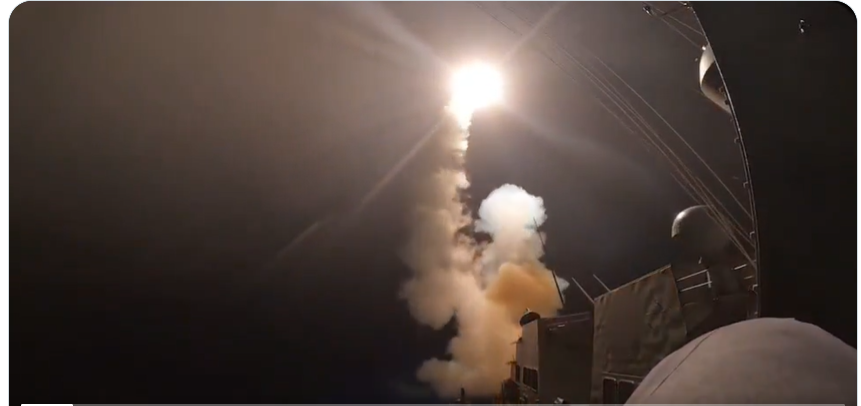
US Central Command said its latest wave of strikes on September 1 had been completed, describing the targets as Iranian military capabilities linked to attacks on commercial shipping and US forces.
The United States said it struck air-defence sites, radar systems, maritime assets and mine-laying capabilities.
Iranian state media reported strikes near the southern port city of Sirik, as well as locations in Khuzestan province.
Wedding party hit in Sirik
Iran said at least four people, including a child, were killed when a US strike hit a wedding gathering near Sirik.
The Iranian Health Ministry said 50 others were injured.
Iranian officials accused the United States of targeting civilians, while Washington said its strikes were directed at military targets.
Iranian state media separately reported seven deaths and eight injuries from US strikes at three locations in Khuzestan province, including areas near Ahvaz and Aghajari.
Hormuz remains flashpoint
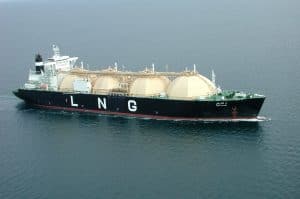
The latest escalation has intensified concerns over shipping through the Strait of Hormuz, a critical route for global energy supplies.
Preliminary Kpler data showed just four vessels transited the strait on Tuesday, below the 10-day average of about 13 vessels.
US Energy Secretary Chris Wright, however, said 17 million barrels of oil crossed the waterway on Monday, the highest crude flow since the war disrupted shipping.
The contrasting figures reflect the limitations of vessel-tracking data, particularly when ships switch off their transponders.
Oil prices rise, bonds under pressure
Brent crude rose 87 cents, or 0.92 percent, to $95.52 a barrel, while US West Texas Intermediate gained 80 cents to $91.02.
The latest attacks also deepened a global bond selloff, with borrowing costs reaching multi-year highs in the United States, Japan and Australia as investors assessed the risks of higher energy prices, inflation and government debt.
Israel strikes southern Lebanon
The conflict is also spilling into the wider region.
Israeli forces launched two air strikes on the outskirts of Kfar Reman and Arab Salim in southern Lebanon, according to correspondents on the ground.
Israel also said it intercepted a “suspicious aerial target” that likely crossed from Lebanon, after sirens sounded in northern Israel. No injuries were reported.
Houthis warn US allies
The Houthi-run Foreign Ministry expressed solidarity with Iran and warned countries hosting US forces that they could face repercussions.
An IRGC official separately urged Arab states to expel US forces, specifically warning Kuwait, Bahrain and Jordan that Iranian attacks could target US military facilities on their territory.
Washington faces pressure over escalation
Analysts said the latest escalation could remain limited because of US operational constraints and a shrinking pool of military targets.
Harlan Ullman, a retired senior US naval officer, said Washington was likely seeking to contain the conflict while relying on economic pressure against Iran.
Another analyst, Negar Mortazavi, said the renewed conflict followed what Tehran viewed as Washington’s failure to honor commitments under a June memorandum of understanding.
She said Iran wanted to return to the agreement, including commitments on the wider regional war, frozen Iranian assets and maritime security in the Strait of Hormuz.
US carrier reaches Thailand
The USS Abraham Lincoln arrived in Thailand after more than 200 consecutive days at sea.
Reuters reported that the carrier will dock for five days following its lengthy Middle East deployment, amid concerns over deteriorating conditions aboard the vessel and the strain on sailors and Marines.
Peru cuts ties with Iran
Peru severed diplomatic relations with Iran, citing Tehran’s role in escalating violence in the Middle East and disruption to international trade through the Strait of Hormuz.
The two countries had maintained diplomatic relations since 1973.