

US Secretary of State Marco Rubio has warned that reaching a peace agreement with Iran remains extremely difficult, as Washington maintains economic pressure on Tehran over attacks on commercial shipping in the Strait of Hormuz.
Rubio told CNBC that the United States would continue its pressure campaign until Iran stopped targeting vessels in the strategic waterway. He said shipping through the strait had recovered to more than 80 percent of pre-war levels, a figure Tehran has disputed.
Iranian Foreign Minister Abbas Araghchi, meanwhile, said the Strait of Hormuz would remain closed until Washington accepted Tehran’s conditions, while indirect negotiations continued through Pakistan and Qatar.
The conflicting positions underscore the challenges facing diplomatic efforts to end the conflict, with both sides insisting on conditions the other has yet to accept.
Pakistan pushes mediation as Tehran sets conditions
Pakistan’s army chief, Field Marshal Asim Munir, arrived in Tehran for talks with Iranian officials as Islamabad sought to prevent a renewed escalation between the United States, Israel and Iran.
Munir met Iranian President Masoud Pezeshkian, parliament Speaker Mohammad Bagher Ghalibaf and other senior officials. Pakistan’s Interior Minister Mohsin Naqvi accompanied him on the visit, according to Iranian state media.
Pezeshkian said Washington must remove economic pressure, threats and sanctions before negotiations could proceed, arguing that Tehran did not trust the United States and feared it could launch further attacks during diplomatic engagement.
Ghalibaf said Washington would need to implement Iran’s seven conditions presented in New York to rebuild trust. He also accused the Trump administration of violating commitments under an Islamabad memorandum of understanding.
Iranian officials have rejected proposals to transfer the country’s estimated 400 kilograms of enriched uranium to Russian custody. Security chief Mohsen Rezaei said none of Iran’s enriched nuclear material would leave the country.
Araghchi said Washington had expressed agreement with Iran’s proposed seven-day plan, which envisaged reopening the strait on the sixth day, but wanted additional provisions related to earlier negotiations. He insisted that the United States fulfil its existing commitments before discussions moved to other issues.
Washington signals restraint but keeps military option open
The White House has said the United States will not attack Iran before the November 3 midterm elections, despite rising tensions and concerns about a possible resumption of hostilities.
Deputy White House Press Secretary Anna Kelly told Al Jazeera that Washington had no plans to attack Iran before the elections. President Donald Trump has also said the war would end quickly, one way or another, and predicted that oil prices would fall sharply once fighting stopped.
However, Defence Secretary Pete Hegseth said the United States was prepared to take further military action if Trump ordered it, reiterating Washington’s objective of preventing Iran from acquiring a nuclear weapon.
Hegseth’s comments followed an unannounced visit to Israel, where he met Prime Minister Benjamin Netanyahu. The Israeli leader has argued that toppling Iran’s government would weaken Hezbollah and pave the way for peace with Lebanon.
Iran’s armed forces chief of staff, Major-General Ali Abdollahi, warned that any new attack would trigger a more forceful response. He said Iran had expanded its drone-production capabilities and developed equipment to counter advanced weapons using lower-cost systems.
Meanwhile, a Reuters report citing unnamed senior Iranian officials said Tehran was preparing for renewed US and Israeli attacks rather than expecting an agreement, and was determined not to give Trump a political victory ahead of the midterms.
Hormuz standoff keeps energy markets on edge
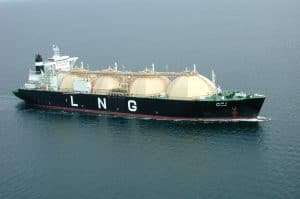
The confrontation over the Strait of Hormuz continues to threaten global energy supplies, with Iran insisting the waterway is closed while Washington says oil shipments are still moving through it.
The Islamic Revolutionary Guard Corps said a supertanker carrying more than two million barrels of oil caught fire after striking a naval mine in the strait, alleging that the vessel had ignored Iranian warnings. The US Central Command disputed Iranian claims about tankers hitting mines, saying they were incorrect.
Brent crude rose to around $110 a barrel on Wednesday, while US West Texas Intermediate reached about $99, amid concerns over Middle East supply disruptions and risks to shipping.
Despite the tensions, Gulf oil exports have reportedly exceeded pre-war levels. The Wall Street Journal, citing ship-tracking firm Kpler, reported that regional oil flows averaged more than 24 million barrels per day in the week ending October 18, compared with 23.3 million barrels per day before the war.
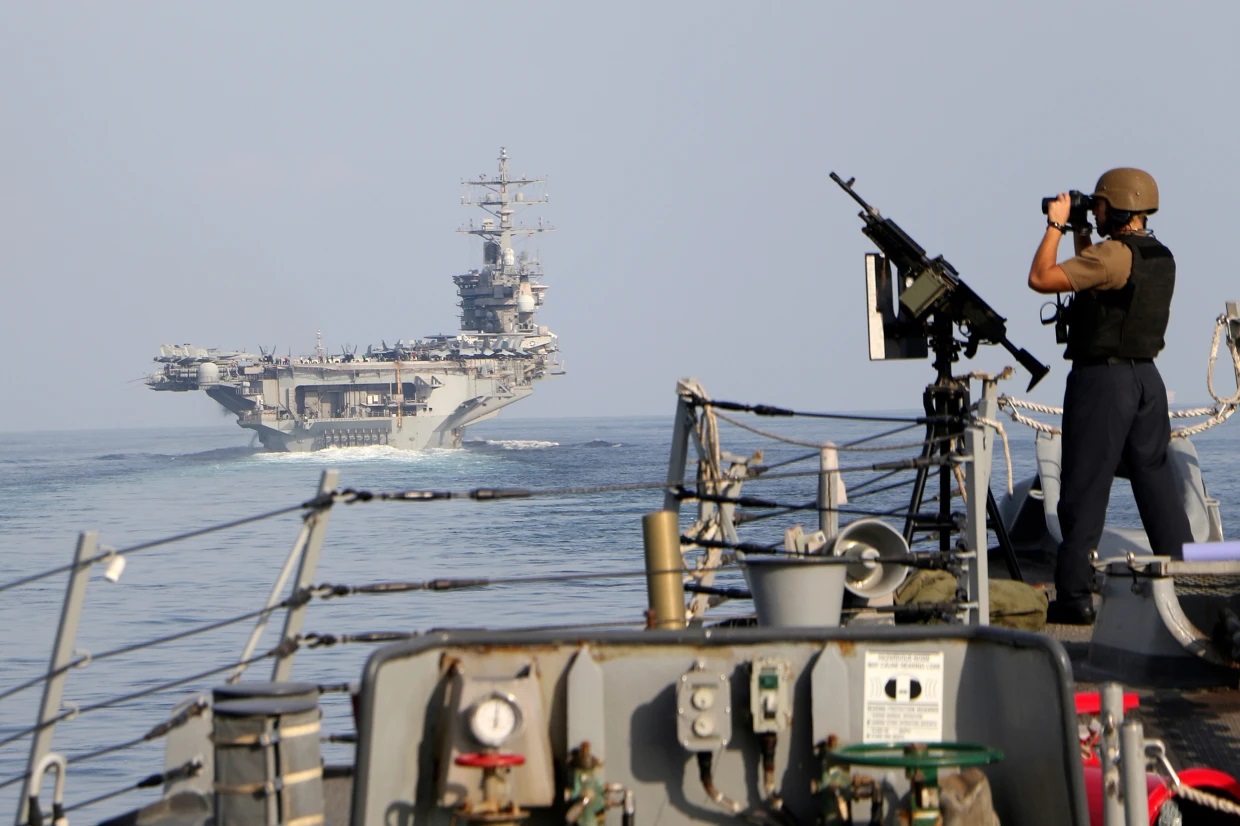
Alternative pipelines through Saudi Arabia and the United Arab Emirates, ship-to-ship transfers and US military protection have helped sustain exports. However, about 30 incidents involving ships were reported this month, according to the report.
The disruption is also affecting import-dependent economies. Japan recorded a trade deficit of 2.81 trillion yen ($17.8 billion) in the first half of its fiscal year, as imports rose 20.4 percent year on year, partly reflecting higher energy costs.
US economic pressure mounts as Iran rejects collapse claims
Washington says its naval blockade and restrictions on Iranian oil exports are intensifying pressure on Tehran’s economy and military.
US Central Command chief Brad Cooper said the United States had blocked at least $25 billion in Iranian oil exports and helped freeze about $350 million in cryptocurrency assets. He also claimed Iran-aligned armed groups were withholding payments to fighters to redirect money to the Islamic Revolutionary Guard Corps.
Iranian Central Bank chief Abdolnaser Hemmati dismissed claims that the economy was nearing collapse, calling them an illusion. However, the World Bank has projected that Iran’s economy will contract by 7.7 percent in the 2026-27 fiscal year.
Trump has defended the economic costs of the war, describing higher oil prices as a small price to pay to prevent Iran from obtaining a nuclear weapon.
Separately, British counterterrorism police rearrested two men in an investigation into a suspected plot involving RAF Fairford, a base used by the United States for bomber missions against Iran. Prime Minister Andy Burnham has said the alleged plot was almost certainly directed by Iran’s Revolutionary Guard, although investigators have yet to announce charges.