

US President Donald Trump has ruled out an immediate strike on Iran, saying there would be no attack on Monday, as Washington maintains military pressure on Tehran and diplomatic efforts gather pace amid warnings of renewed conflict.
Asked whether US strikes could resume as soon as Sunday, Trump responded dismissively before ruling out an attack that day.
“The answer is no, there will not be a strike today,” he told reporters as he departed the White House for Michigan.
The statement came after Trump warned on Friday that Washington could launch “another little Epic Fury”, referring to the US-Israeli war against Iran that began on February 28. Reports have also indicated that US Central Command has prepared military options for possible renewed air strikes, pending White House approval.
The prospect of further attacks has prompted fresh warnings from Iranian officials, who say Washington cannot force Tehran to accept its demands through military threats.
Iranian Parliament Speaker Mohammad Bagher Ghalibaf said the United States had entered a “quagmire” because of its own miscalculations and must take the necessary steps to extricate itself.
He rejected the idea that media pressure or military threats could force Iran to submit, describing the country as determined to resist foreign dictates.
Foreign Minister Abbas Araghchi also warned that another round of fighting would not produce a different outcome from previous attacks. Iran’s policies would remain unchanged whether or not the war resumed, he said.
Tehran has also insisted that negotiations cannot progress unless Washington accepts its conditions. Abbas Gouzardi, a spokesman for the Iranian parliament speaker, said talks would be meaningless until Iran’s seven stated conditions were met.
Iranian officials have accused Washington of derailing negotiations and demanded that European countries distance themselves from the United States and Israel.
Qatar seeks to ease tensions as Tehran keeps diplomatic door open
A Qatari delegation travelled to Tehran on Sunday as part of renewed efforts to reduce regional tensions, according to a senior Iranian official who spoke to Al Jazeera.
The visit came amid mounting threats of renewed US-Israeli attacks and continuing disagreement over the terms of a diplomatic settlement.
The Iranian official described the visit as part of routine exchanges between Tehran and Doha, while accusing Washington of refusing to accept Iran’s demands and repeatedly reneging on commitments.
Iranian Foreign Ministry spokesman Esmaeil Baghaei said Tehran had not abandoned diplomacy and remained prepared for any scenario.
“We have never walked away from the negotiating table or closed the door to diplomacy,” Baghaei said, adding that messages were being conveyed through mediators.
He accused Washington of insisting on unilateral demands, including what Iran describes as a call for its complete surrender.
Qatar’s role, however, remains constrained by the positions of the two principal parties. Sheikha Alanoud Hamad Saud Al Thani, a fellow at the Middle East Council on Global Affairs, said mediators could encourage de-escalation but could not impose a settlement on Washington or Tehran.
She also warned that the possibility of unilateral Israeli action could undermine diplomatic efforts and trigger another round of fighting.
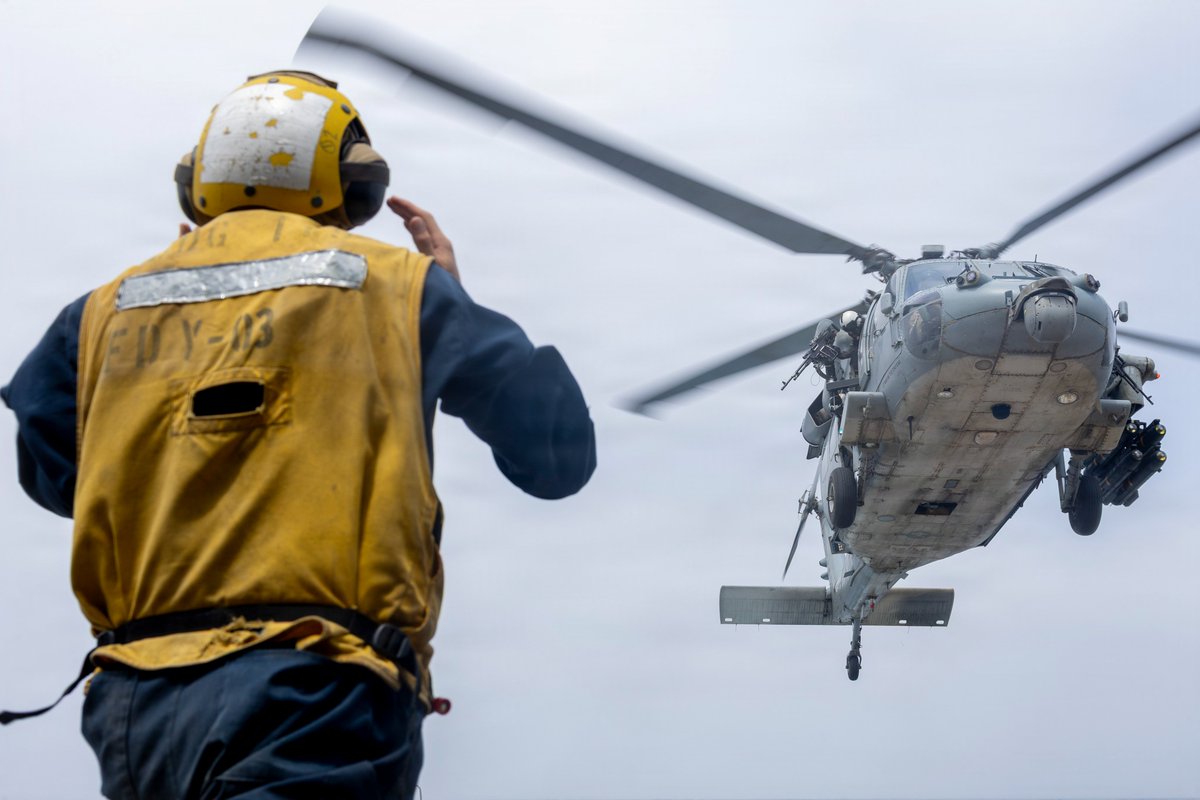
Meanwhile, CENTCOM commander Admiral Brad Cooper visited US personnel in the region and flew over the strategically important Strait of Hormuz, underscoring Washington’s commitment to maritime operations.
CENTCOM said US forces had helped Gulf partners export more than 1.5 billion barrels of crude oil since the summer. It also said more than 3,000 commercial vessels had crossed the strait with US assistance over six months, although independent confirmation of the figures was not available in the report.
The United States maintains that the waterway remains open, while Iran asserts control over it. The dispute continues to complicate efforts to restore confidence in regional shipping.
Houthi attacks widen regional security concerns
The conflict in Yemen has intensified alongside the standoff over Iran, with the Houthis claiming fresh missile and drone attacks against Saudi targets and positions held by forces opposed to them.
Houthi spokesman Yahya Saree claimed a ballistic missile attack on King Khalid International Airport in Riyadh, as well as drone attacks on crude oil pumping stations in eastern and western Saudi Arabia. Saudi authorities said a missile launched towards Riyadh had been intercepted and destroyed.
The Saudi-led coalition subsequently said it had struck two ballistic missile launchers in Sanaa, including one allegedly used in the attack on Riyadh. The coalition said its operations were aimed at dismantling the Houthi missile network.
The Houthis also claimed attacks on positions and weapons depots in Yemen’s Aden and Lahij governorates. The claims followed a period of escalating exchanges across several fronts.
Saudi Arabia reported that debris from missile interceptions in Khamis Mushait and Ahad Rafidah injured two people and damaged residential buildings and vehicles. The United States has ordered non-essential embassy staff and their families to leave Saudi Arabia, citing security risks and the potential for hostilities to escalate rapidly.
The attacks have prompted condemnation from Gulf governments, including the UAE, Kuwait and Bahrain, after Saudi Arabia reported attempted strikes on the holy cities of Mecca and Medina. The Houthis denied targeting the two cities.
In Yemen, government forces reported intensified operations against Houthi positions, while the Saudi-led coalition continued air strikes. The competing military claims could not all be independently verified.
The fighting has also deepened an already severe humanitarian crisis in Taiz, where a Houthi blockade has restricted access to food, water and medical assistance. A Yemeni rights group said the siege and attacks had contributed to the closure of nearly 52 percent of hospitals and medical centres in the area.
Pope Leo XIV called for an end to hostilities, expressing concern about civilians facing shortages of essential supplies. Yemen’s internationally recognised government welcomed the appeal and urged the international community to press the Houthis to lift the siege.
With diplomatic channels still open but military preparations and regional attacks continuing, the risk of renewed confrontation remains high across the Gulf and Yemen.