
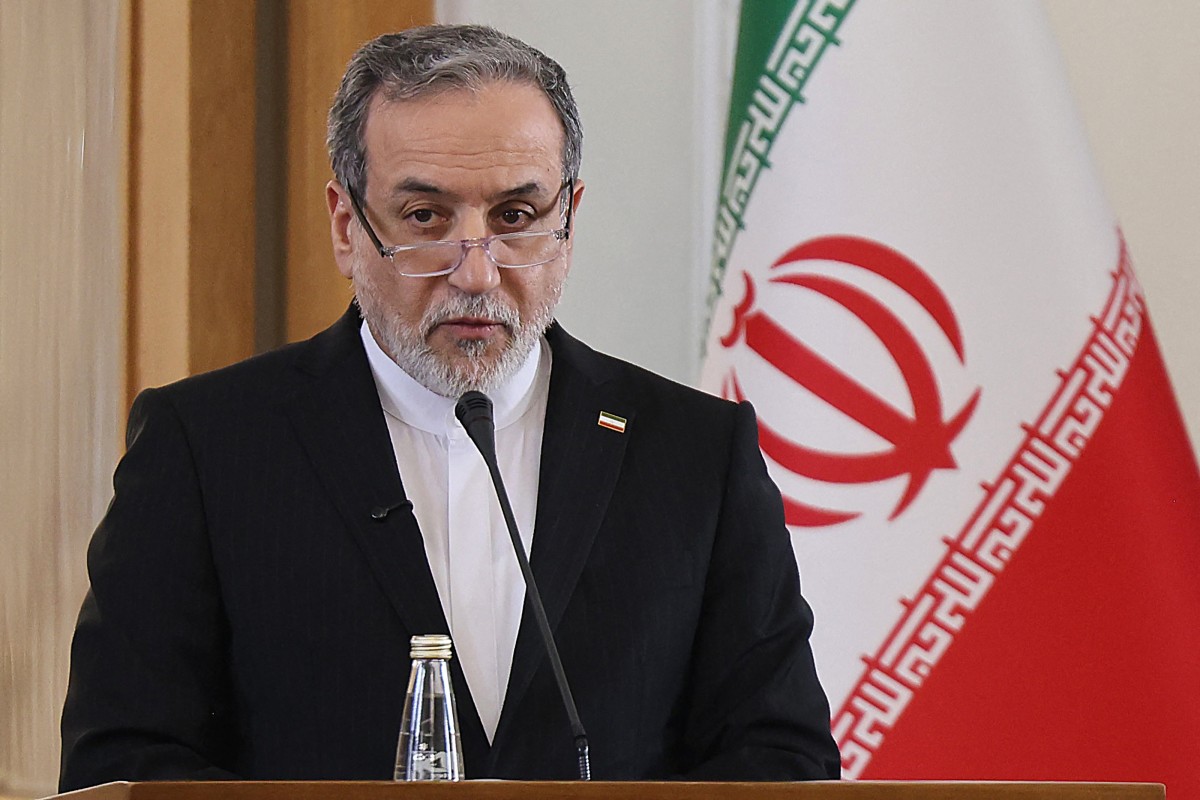

Iranian Foreign Minister Abbas Araghchi said Tehran remained in close contact with mediators to advance its seven-day proposal to reopen the Strait of Hormuz, as diplomatic efforts to end the war continued amid reports that Washington was preparing Gulf allies for possible renewed military action.
“While our Brave Armed Forces are fully prepared to defend the Homeland, Iran continues to give diplomacy a chance to succeed,” Araghchi said in a post on X on Wednesday. He added that Tehran was reviewing ideas with intermediaries to implement the plan in less than a week.
The proposal, presented to Washington through Qatari intermediaries in September, offers a potential route to restoring commercial shipping through the strategic waterway and restarting negotiations on a broader settlement. But the two sides remain divided over the order in which their demands should be addressed, with Tehran insisting that Washington meet its conditions before negotiations move to other issues.
The renewed diplomatic activity comes as the United States reportedly warns regional allies to prepare for possible strikes against Iran after the November 3 midterm elections. President Donald Trump has not made a final decision on renewed military action, according to diplomats cited by The Associated Press.
Under the proposal, Washington would take agreed steps during the first four or five days, including ending hostilities, lifting its naval blockade on Iranian ports, easing restrictions on Iranian oil exports and releasing frozen Iranian assets estimated at $12 billion.
Iran would then restore normal commercial shipping through the Strait of Hormuz, with negotiations on a comprehensive agreement beginning on the seventh day, according to details reported by Anadolu Agency.
Araghchi has said the plan could be implemented in less than seven days if Washington agrees to the conditions. Tehran has also emphasized that the duration is less important than whether its demands are met and whether any agreement carries firm guarantees that both sides will honor their commitments.
The central obstacle remains the sequence of concessions. Iran wants the immediate focus to be on ending hostilities, lifting the blockade and restoring its oil exports before moving to broader negotiations. Washington, meanwhile, wants Iran’s nuclear program addressed from the outset, including questions concerning uranium enrichment and access to nuclear sites.
Qatar advances a separate diplomatic proposal
Qatar has continued to relay messages between Washington and Tehran as regional governments seek to prevent the conflict from escalating further.
Reuters reported on Wednesday that Qatari mediators had presented Iran with a new draft proposal intended to end the war. The reported framework includes seven days of confidence-building measures and could begin next week, with several countries acting as guarantors.
However, a senior Iranian official dismissed the proposals as unacceptable ideas rather than a genuine offer, Reuters reported, adding that Tehran would not compromise on its nuclear policy. The official’s comments underscore the gap between the two sides despite continued contacts through intermediaries.
The Qatari initiative is distinct from Iran’s own seven-day plan, although both seek to establish a path toward renewed negotiations. The latest diplomatic efforts have included contacts involving Qatar, Russia, Pakistan, Saudi Arabia and Turkiye, but Tehran has disclosed few details of those discussions.
Trump denies reports of peace talks
Trump denied media reports that he had directed Vice President JD Vance to begin peace talks with Iran, saying the contact concerned Tehran’s need for help with medical supplies.
The denial came as the US president continued to defend the military campaign against Iran at a rally in Ohio on Wednesday. Trump said Iran retained missiles but had fewer than before and claimed that damage to its infrastructure had hampered its drone manufacturing capabilities.
Former President Barack Obama, campaigning for Democrats ahead of the November 3 midterm elections, criticized the war and argued that diplomacy had previously constrained Iran’s nuclear program under the 2015 agreement negotiated during his administration.
Obama also said the conflict had left US forces and regional allies exposed to attacks, depleted missile stocks and given Iran leverage over the Strait of Hormuz.
Gulf allies brace for possible escalation
The diplomatic push is unfolding alongside reports that Washington has urged several Middle Eastern countries and regional allies to prepare for possible renewed strikes against Iran after the US midterm elections.
Two diplomats briefed on the warnings told The Associated Press that US officials had raised the prospect of further military action and possible Iranian retaliation against regional energy facilities and other critical infrastructure. The diplomats stressed that Trump had not made a final decision.
The reports have heightened concerns among Gulf states that a renewed campaign could trigger retaliatory attacks across the region, extending the disruption to energy supplies, shipping and infrastructure. The United Arab Emirates has called on the parties to exercise restraint and pursue political solutions to contain tensions.
Regional security concerns have also been sharpened by continuing Houthi attacks. Saudi Arabia’s Saudi-led coalition said its air defenses intercepted and destroyed a ballistic missile launched toward the kingdom’s Eastern Province. Saudi authorities separately issued alerts in the Eastern and Najran provinces before later saying the danger had passed.
In Yemen, air traffic at Aden International Airport was suspended after the Houthis launched another attack on the facility, according to the latest regional updates. The developments have reinforced fears that renewed confrontation involving Iran could coincide with further instability on other regional fronts.
Energy markets remain under pressure
The conflict’s effects are continuing to ripple through global energy markets as governments prepare for potential supply disruptions.
Brent crude futures fell 0.7% to $114.50 a barrel in early Asian trading on Thursday, while US West Texas Intermediate futures declined 1% to $101.74. The pullback followed gains in the previous session and came amid hopes for diplomatic progress, although concerns over the Strait of Hormuz and hostilities involving Yemen remained.
In Europe, energy ministers were due to discuss rising fuel costs and winter supply security, with gas storage levels reported at 75% of capacity, compared with 83% a year earlier. European wholesale gas prices briefly reached €100 per megawatt-hour on Wednesday, their highest level since December 2022, as the region confronted the effects of the wars in Ukraine, Iran and Yemen.
An oil spill from a damaged tanker in the Strait of Hormuz has also reached the UAE coastline, prompting the closure of beaches in Ras Al Khaimah until further notice and raising environmental concerns.
The combination of diplomatic uncertainty, military warnings and disruptions to maritime traffic leaves the proposed seven-day plan facing a difficult path to implementation. For Tehran, the immediate priority remains securing concessions on the blockade, sanctions and hostilities; for Washington, the unresolved nuclear issue remains central to any broader settlement. Whether mediators can bridge that divide will determine whether the latest contacts lead to renewed negotiations or give way to another phase of military escalation.