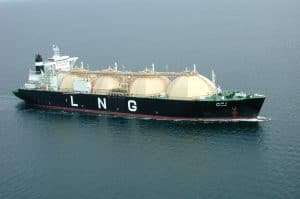

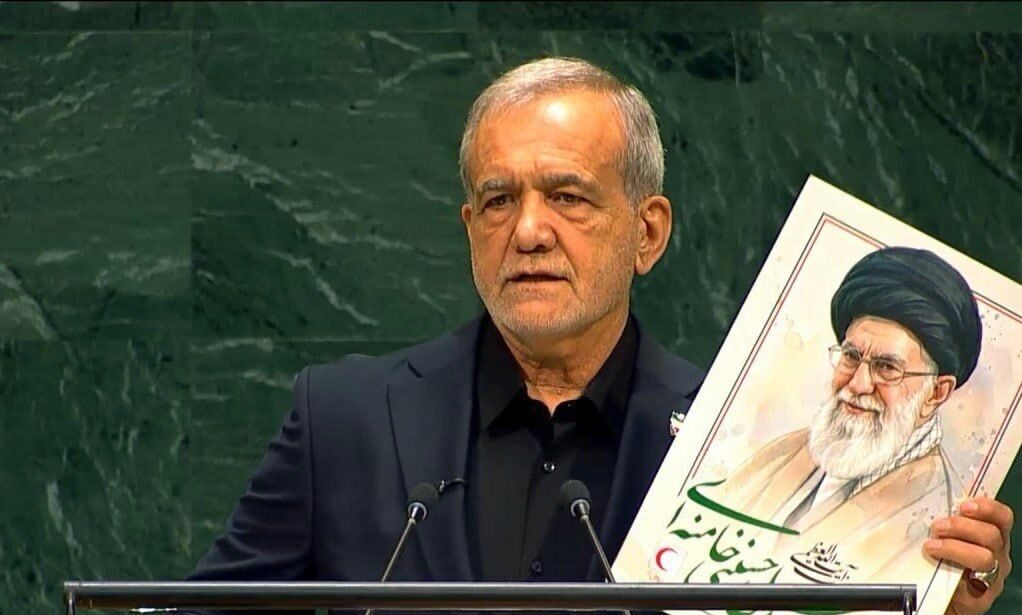

Iranian President Masoud Pezeshkian said Tehran had reached “good agreements” on gas and energy during talks in Moscow, while arguing that regional countries could resolve Middle East problems without US intervention, as tensions over the Iran war continued.
Pezeshkian spoke to Iran’s state news agency IRNA after attending the Gas Exporting Countries Forum on Tuesday. He met Russian President Vladimir Putin and Qatar’s Emir Sheikh Tamim bin Hamad Al Thani on the sidelines of the gathering.
“We had detailed discussions on gas and energy issues, and we reached good agreements,” Pezeshkian said.
The meetings came as the conflict involving Iran, the United States and Israel continued to weigh on regional security and energy markets. Putin and Sheikh Tamim also discussed bilateral ties and the impact of US-Iran tensions on regional stability.
Trump says Iran war can end whenever he wants
US President Donald Trump said the war with Iran could end whenever he chose, but insisted that Tehran must declare it would never possess a nuclear weapon.
Speaking at an election rally in Lubbock, Texas, Trump said the conflict could end “very quick,” but added that it had to end “properly.”
His remarks came as Washington and Tehran traded accusations over diplomatic commitments linked to an Islamabad memorandum of understanding.
Iranian Foreign Ministry spokesperson Esmaeil Baghaei accused Washington of showing “contempt for diplomacy” after Trump said he had never believed in the agreement and considered it a waste of time.
In a post on X, Baghaei accused the United States of repeatedly breaking commitments and treating international obligations as disposable when they became inconvenient. He also criticized European countries and others for what he described as shielding Washington from accountability.
“Broken commitments cannot be excused, international law cannot be applied selectively, and no amount of political spin can absolve Washington of accountability,” Baghaei wrote.
Netanyahu says Iran threat persists despite military setbacks
Israeli Prime Minister Benjamin Netanyahu said Iran was weaker than ever but warned that the threat posed by the country would persist as long as its government remained in power.
Addressing supporters at Likud party headquarters in Jerusalem, Netanyahu said Israel had targeted Iranian government infrastructure and weakened what he described as an existential threat.
“However, ladies and gentlemen, this is not over as long as the regime is still here,” he said.
Netanyahu said Israel would work with Trump to eliminate the threat, describing the situation as an unprecedented opportunity.
His comments came as Israel held parliamentary elections on Tuesday. Initial exit polls and projections showed a closely contested race, with the opposition bloc and Netanyahu’s camp locked in a tight contest.
US Iran war bill exceeds $47 billion, Reuters reports
The US military has spent more than $47 billion on the war with Iran, according to Pentagon data obtained by Reuters, exceeding Defense Secretary Pete Hegseth’s July estimate of $37.5 billion.
The latest estimate includes more than $29 billion to replace munitions used during the conflict and more than $6 billion to replace military equipment, including aircraft and drones lost in the war.
The figures did not clearly account for the cost of repairing damage to US military bases caused by Iranian missile and drone attacks, Reuters reported. The Pentagon did not immediately respond to a request for comment.
Araghchi urges regional action in call with Jordan
Iranian Foreign Minister Abbas Araghchi spoke by telephone with Jordanian Foreign Minister Ayman Safadi on Tuesday about regional developments, according to a statement posted on Araghchi’s Telegram channel.
Araghchi called for serious action by Islamic countries and the international community to address what he described as Israel’s ongoing genocide and expansionism.
He also said restoring regional security required an end to what he characterized as aggressive and interventionist US actions. Araghchi expressed condolences to Safadi over a church attack the previous week that killed nine people.
Saudi Arabia reports missile interceptions and emergency alerts
A Saudi-led coalition spokesperson said air defenses had intercepted and destroyed a ballistic missile launched by the Houthis toward Taif. A second missile fired toward Yanbu was also destroyed, according to the spokesperson’s post on X.
Saudi Arabia’s Civil Defense separately issued and later lifted emergency alerts in the Jeddah and Yanbu governorates. The agency said the warnings had been sent through the National Early Warning Platform to alert residents to potential danger.
Authorities later said the danger had passed and urged residents to follow safety instructions, avoid gathering or filming and call 911 in an emergency.
Saudi authorities also reported that debris from two downed ballistic missiles had fallen over Riyadh, according to the developments summarized in the regional coverage.
Hormuz and Bab al-Mandeb remain regional flashpoints
Iran said an oil tanker caught fire after striking mines east of the Strait of Hormuz, according to the regional updates. The report did not provide further details about the vessel, the extent of the damage or possible casualties.
Fighting also continued in Yemen, where Saudi-backed coalition forces and the Houthis both claimed advances near the Bab al-Mandeb strait, a key maritime passage connecting the Red Sea with the Gulf of Aden.
The developments underscored the wider security risks surrounding the conflict, with tensions affecting strategic waterways, energy infrastructure and regional diplomacy.