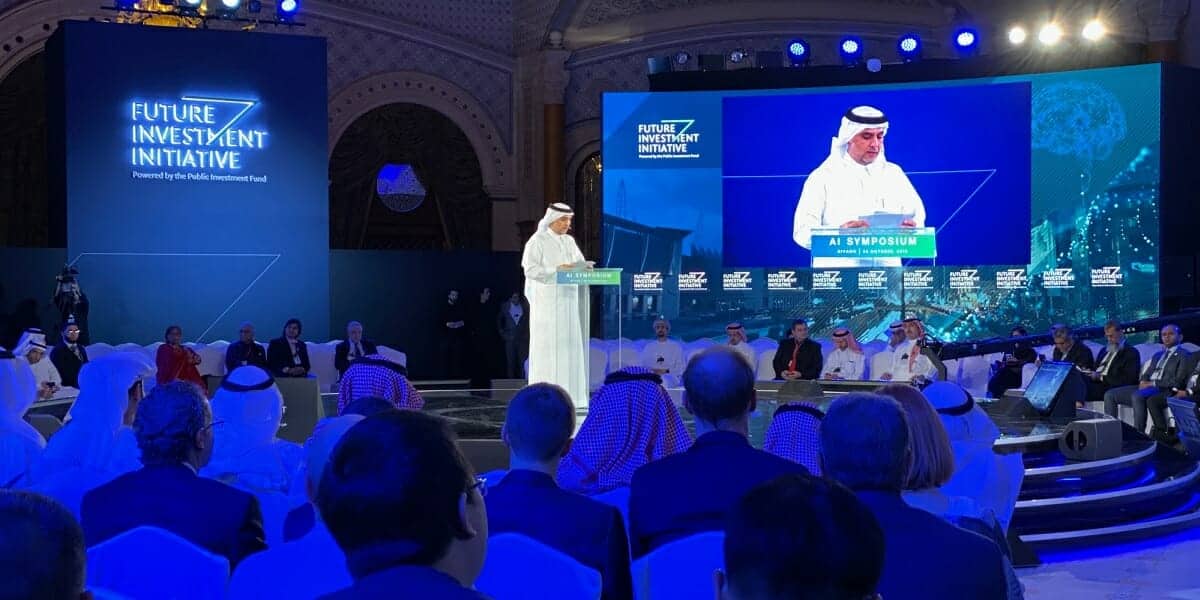

Saudi Arabia aims to be one of the top 10 countries in the world in data and artificial intelligence, and in this direction the kingdom is has put 25,000 data and AI specialists through training.
According to Mishari Almishari, the head of the authority’s strategy office, the plan is to attract $5.3 billion in investments into data and AI.
Speaking at the Saudi Arabia CIO summit held earlier this month in partnership with International Data Corporation (IDC), he said: “Our role is enabling digitalization. I don’t think it’s a luxury; it’s a key and an answer to many challenges.”
SDAIA contributed to containing the pandemic with the launch of Tawakkalna, a smartphone application that allows the government to trace people infected with COVID-19, Almishari said.
It took only three weeks to develop as the groundwork in digital transformation had already been laid before the pandemic. Today the application has more than 22 million users and more than 75 services, said Almishari.
The CIO summit follows a number of initiatives taken by SDAIA, including the global AI summit held last year and August’s LAUNCH event, where it was agreed with 10 global technology companies to establish academies to train the Saudi youth.
Other speakers at the event included Richard Heitmann, vice president automation at IBM, who said those organizations which started earlier with AI technology did not suffer as much during the pandemic.
Fawaz Al-Harbi, deputy chairman of the Saudi Cloud Computing Association, highlighted the importance of cloud technology in terms of flexibility, innovation support and cost reduction.
“We were able to witness how important the cloud is, as many organizations would have suffered in dealing with the changes brought about by the pandemic” if it were not for the cloud, he said.
Business leaders are making fundamental changes in terms of operations, among these is to connect systems across the complex hybrid cloud environment, IBM’s Heitmann said.
Khasim Anwar, from Samba Financial Group, pointed out that this approach is not always possible in Saudi Arabia. For example, the financial sector is one of many that are not permitted to use hybrid clouds.
SDAIA is hoping to host the second global AI summit before the end of 2021, said SAAIA strategy consultant Areej Alamri. Final arrangements are being made and, unlike last year which was a virtual event, “this year it will be hybrid where some people will attend in person, and others will attend online,” she said.