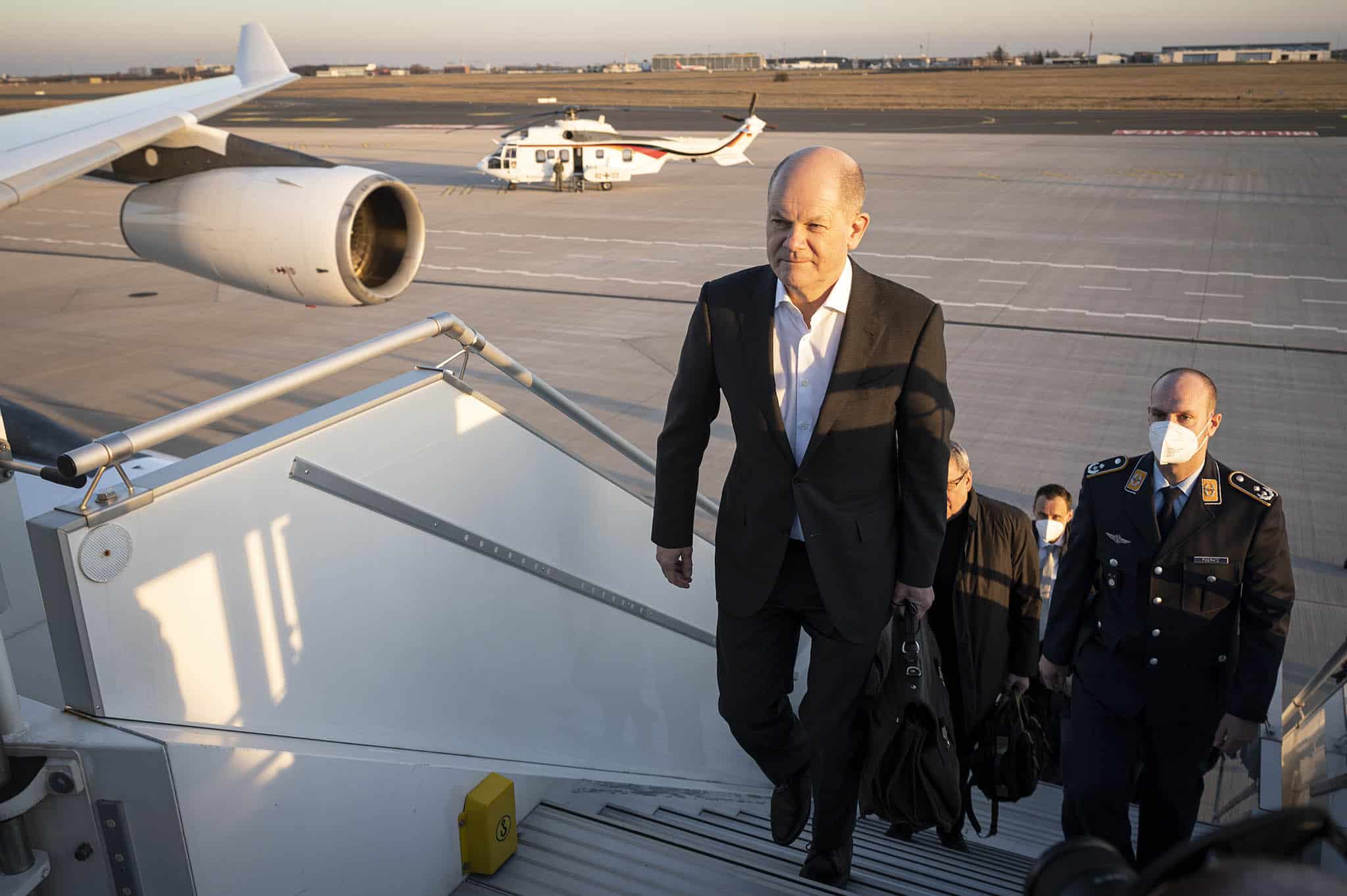

German Chancellor Olaf Scholz said Wednesday that a new Iran nuclear agreement “cannot be postponed any longer”, during a visit to Israel which staunchly opposes efforts to forge a deal.
“What we would like to see is that an agreement is reached in Vienna,” Scholz told reporters alongside Israeli Prime Minister Naftali Bennett, a vocal critic of the international talks in Austria’s capital.
“Now is the time to make a decision,” Scholz said. “This must not be postponed any longer and cannot be postponed any longer. Now is the time to finally say yes to something that represents a good and reasonable solution.”
The latest round of negotiations to salvage Iran’s 2015 nuclear deal started in late November and the talks are expected to reach a crunch point in the coming days.
The deal, known as the Joint Comprehensive Plan of Action (JCPOA), secured sanctions relief for Iran in return for strict curbs on its nuclear programme to prevent it acquiring an atomic weapon, a goal Iran has always denied pursuing.
Israel is a long-standing critic of the JCPOA, arguing that giving Tehran sanctions relief would boost state revenues that will buy weapons for Iranian proxies across the Middle East, notably the Lebanese Shiite Muslim group Hezbollah.
Former Israeli Prime Minister Benjamin Netanyahu cheered when then-president Donald Trump withdrew the United States from the deal in 2018.
Bennett on Wednesday reiterated that he was watching “the talks in Vienna with concern”.
“The possibility of them negotiating an agreement that will allow Iran to install centrifuges on a large scale within a few years is not acceptable to us,” he said, without detailing his source for the substance of the proposed deal.
“Israel will know how to defend itself and ensure its security and future.”
The Jewish state has maintained that, regardless of any agreement that may be reached in Vienna, it would maintain full freedom to act against its arch-enemy Iran.
“We also expect our friends in the world not to put up with a situation of massive installation of centrifuges in two or three years,” the premier said.