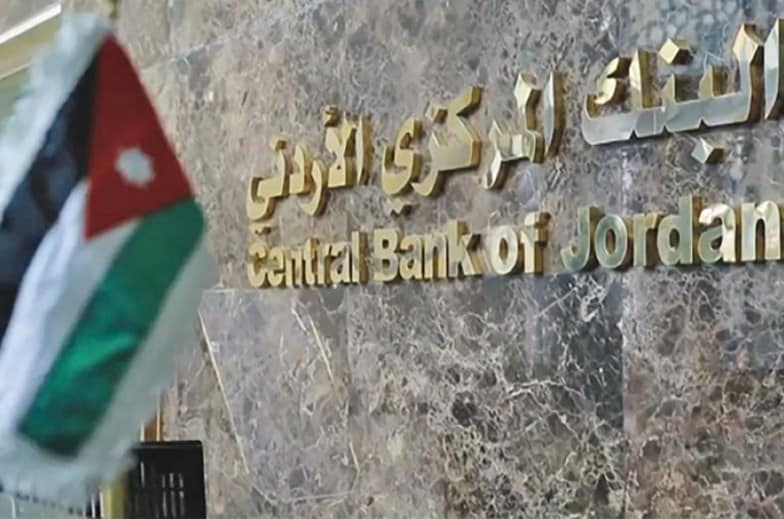

The Central Bank of Jordan (CBJ) on Thursday decided to increase the interest rate on its various monetary policy instruments by 50 basis points, effective Sunday, May 8.
Local media reports said the decision comes in line with the CBJ’s objective to maintain monetary and financial stability in Jordan, and to contain the expected domestic inflationary pressures in light of the continued rise in global inflation rates, as well as in line with the rise in interest rates in regional and international financial markets.
The committee also decided to extend the bank’s refinancing program, valued at JD1.3 billion, that targets the 10 sectors of industry, tourism, renewable energy, agriculture and IT, engineering consultancy, health, transport (transport companies), education (vocational and technical training) and export sector.
It decided to keep the refinancing programs’ interest rates unchanged to stand at 1 per cent for projects located in Amman and 0.5 per cent for projects located in other governorates.
The CBJ will also continue a JD700-million program aimed to support SMEs, professionals and craftsperson, and maintain the interest rate at no more than 2 per cent, with loans to be repaid in 54 months, including a grace period of up to 12 months.
A total of 5,910 projects benefited from the JD532-million program, which helped in maintaining about 95,200 jobs since the outbreak of the pandemic.
The Kingdom’s foreign currency reserves currently stand at $17.9 billion, which could cover its imports for 9.3 months, according to the latest monetary and economic indicators.