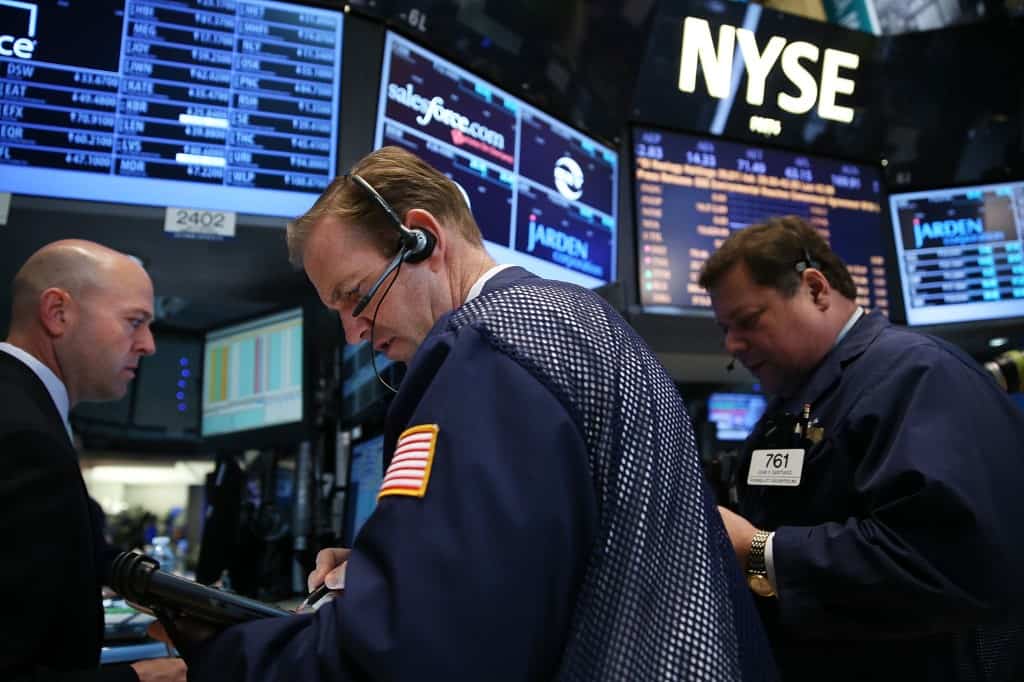

Wall Street stocks sank early Monday, tumbling into a “bear market” in anticipation of more Federal Reserve monetary tightening this week amid runaway inflation.
The market’s latest losses, which come on the heels of three straight down sessions, put the S&P 500 into a bear market, defined as a 20 percent drop from a market peak.
About 35 minutes into trading, the broad-based S&P 500 was at 3,796.66, down 2.7 from Friday’s session and off more than 21 percent from January.
The Dow Jones Industrial Average dropped 2.1 percent to 30,746.33, while the tech-rich Nasdaq Composite Index plunged 3.2 percent to 10,972.92.
US equities have been on shaky ground throughout 2022, as central banks shift abruptly from easy money policies to aggressive tightening through phased-out stimulus programs and higher interest rates.
Friday’s US inflation report has exacerbated this dynamic, undermining hopes that pricing pressures have peaked, or are peaking, and raising the possibility for even more aggressive rate hikes from Washington.
“The March report was believed to have been the peak in this inflation cycle, but the May headline CPI reading is now the highest since late 1982,” said a note from CFRA Research’s Sam Stovall, which cautioned about the report’s “hawkish implications” for the Fed.
Among individual companies, Duke Realty gained 1.0 percent after agreeing to be acquired by logistics real estate firm Prologis for $26 billion. Prologis declined 7.1 percent.