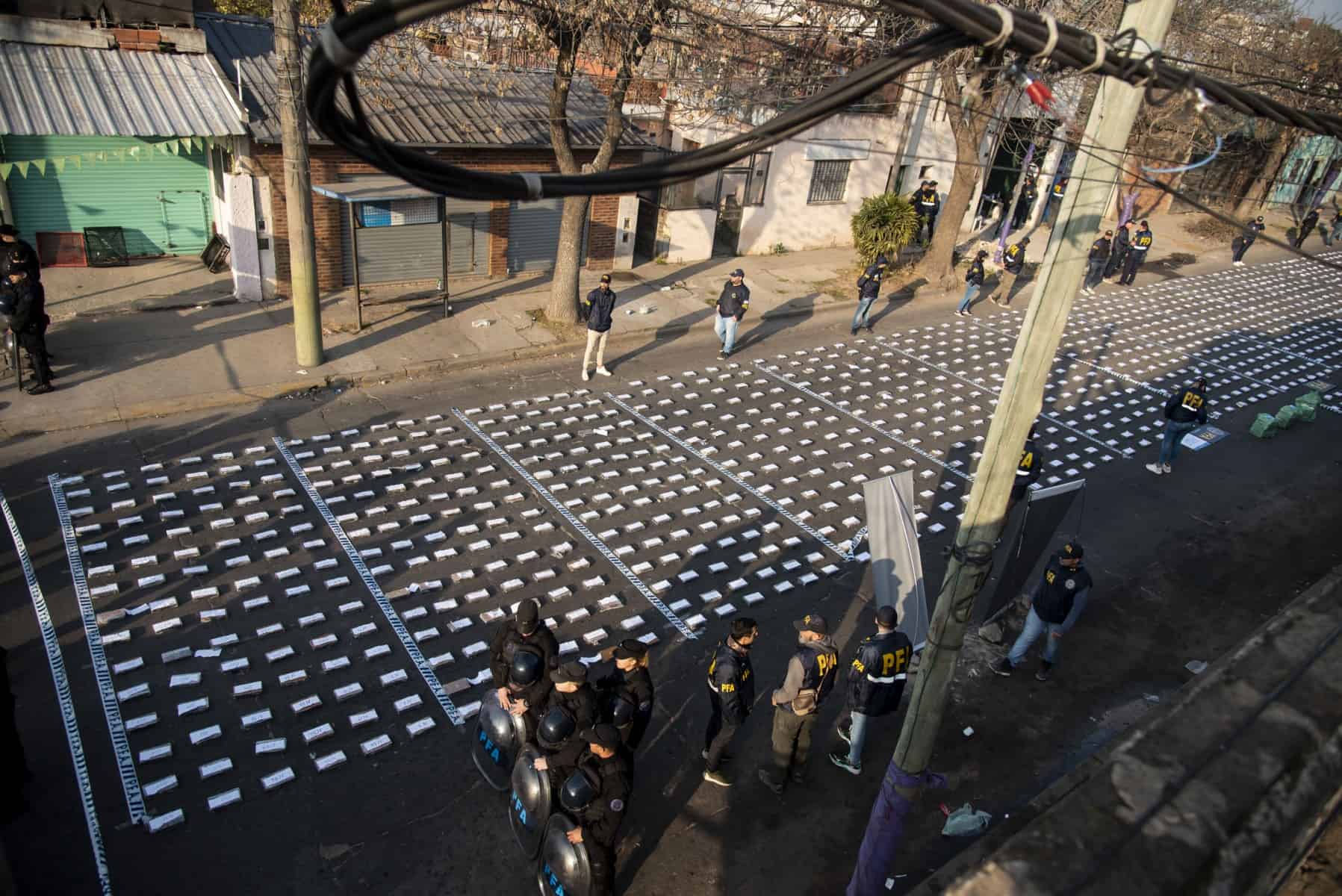

Argentine authorities seized 1.6 tons of cocaine hidden in animal feed destined for Dubai and detained 12 people, police said on Friday.
The seizure, which took place overnight from Thursday to Friday in the central city of Rosario, highlights the role played by Argentine ports in trafficking South American drugs internationally.
The cocaine “is worth approximately $60 million,” said Mariano Giuffra, head of the dangerous drugs department in the federal police.
The arrests took place at various sites around the country.
“They are all Argentines and some of them are known drug traffickers,” added Giuffra.
Several firearms, sports cars and a large amount of cash were also seized.
Rosario, located 310 kilometers (190 miles) from Buenos Aires, is Argentina’s third-largest city and the main port for agricultural exports to the Atlantic.
It is also the most violent city in Argentina, with a murder rate three times the national average.
The cocaine had been hidden in bags of corn fodder that was about to be loaded onto a container destined for Dubai.
Police said the cocaine probably originated in Colombia, the world’s largest producer of the drug.
While most cocaine is produced by Colombia, Peru and Bolivia – where growing coca leaf, which is the main ingredient in the white powder, is legal – experts say Argentina has increasingly taken on an important role in trafficking the drug.
Argentina has several major ports, has a large supply of quality chemicals needed to turn coca leaf into cocaine and provides ample opportunities for money laundering.