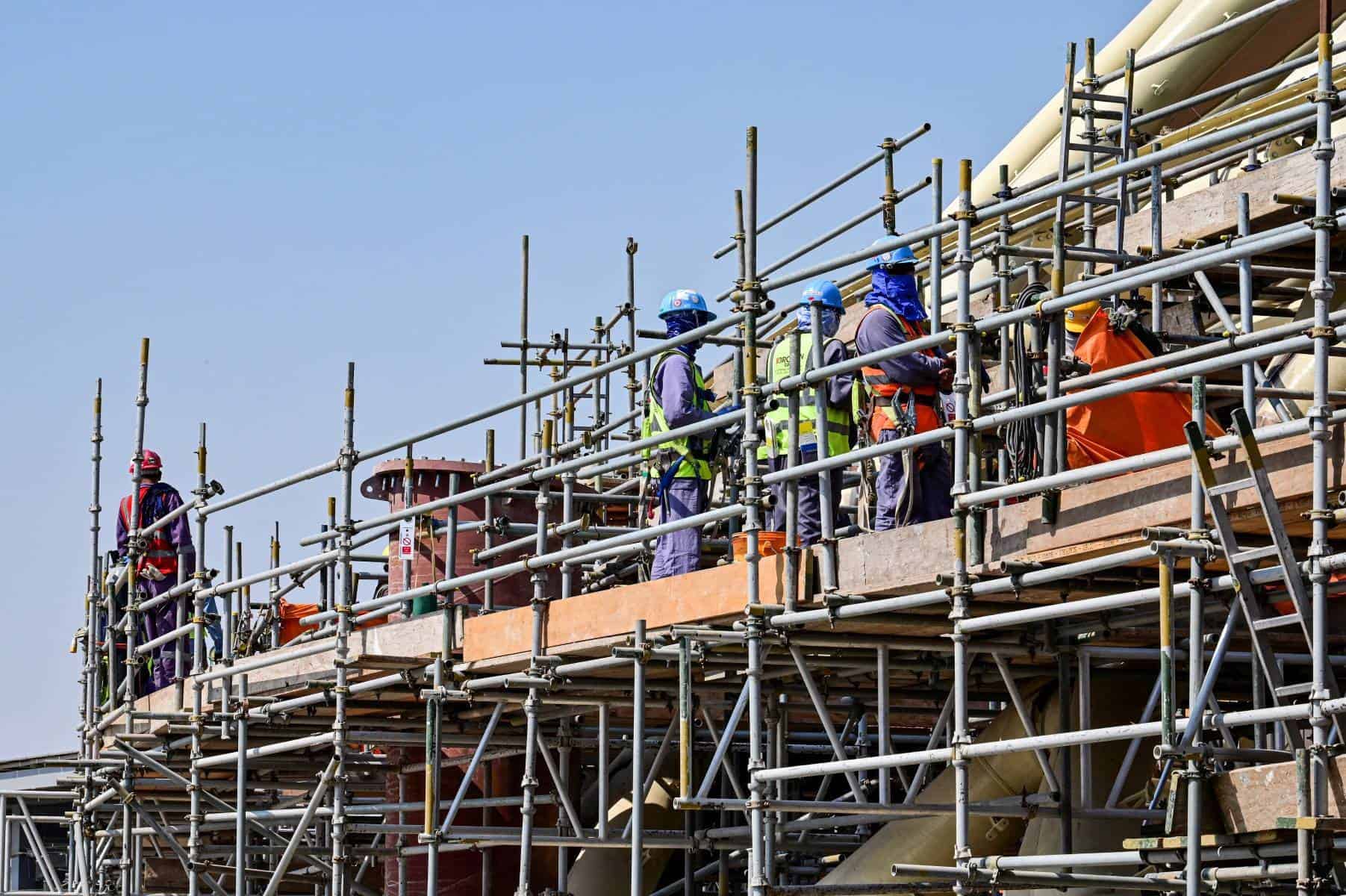

ABU DHABI, UAE — Sixteen member countries of the Abu Dhabi Dialogue (ADD) that send and receive laborers have participated in high-level meetings, chaired by the Pakistan, joining a number of experts and representatives from the private sector and international organizations.
The officials’ meeting precedes ADD’s seventh Ministerial Consultation, which the UAE will host in 2023.
Participants will include Dr Abdulrahman Al Awar, UAE Minister of Human Resources and Emiratisation, and ministers of labor from member states, including seven countries receiving laborers – Bahrain, Kuwait, Oman, Qatar, Saudi Arabia, UAE, and Malaysia – and nine countries sending laborers – Afghanistan, Bangladesh, India, Indonesia, Nepal, Pakistan, Philippines, Sri Lanka, Thailand, and Vietnam.
Regular observers include international organizations, companies and entities from the private sector and civil society.
Shayma Al Awadhi, Acting Assistant Under-Secretary for Communication and International Relations at the UAE Ministry of Human Resources and Emiratisation, said, “Initiating open discussions between labor sending and receiving countries is key. We must collaborate to finding alternative solutions that address issues related to contracting and employing laborers, and this presents an opportunity for governments to act – on their own, in a bilateral cooperation, or in a regional cooperation – to improve the temporary employment, especially in terms of pre-employment, post-employment departures, orientation programmes in labor-sending countries, and work and residency issues in labor-receiving countries.”
She added “We are identifying the challenges, and the steps that governments can take to address these challenges to enhance the contracting of temporary laborers and promote human development by providing laborers the opportunities to be productive.
“We also prioritise inspecting every step of the recruitment process, granting government agencies in the labor receiving countries their approval for employers to search for foreign laborers from abroad, reviewing the rules and regulations for hiring, as well as testing and employing laborers and the issues that may arise from that. We are also keen on outlining the steps that governments can take, either unilaterally, bilaterally, or multilaterally.”
The meetings discussed several topics, including enabling member states to manage labor markets and enhance the welfare of laborers through modern technologies, extending the umbrella of wage protection systems to include protecting the wages of domestic helpers, evaluating options and expected results, facilitating banking services and safe transfers for temporary employees, including domestic helpers, by utilizing modern technology, improving workers’ access to health-related information in the member states of the Abu Dhabi Dialogue, facilitating and promoting skills transfer between countries of origin and destination in response to the future of work, and how to forge successful skills partnerships.
The meetings also explored finding guidelines for skills-based partnerships, aligning with labor market needs, integrating the concept of gender in the framework of policies to promote recruitment and employment, and current and future trends in demand for women to work in various economic sectors, with a focus on those related to technology, and best practices to enhance the transition opportunities and facilitate the employment of women to work in sectors with high rates of demand with a focus on the health sector.
The Abu Dhabi Dialogue is a voluntary, non-binding, inter-government consultative process established in 2008 as a forum for dialogue and cooperation between labor sending and receiving countries.
Through multilateral dialogue and cooperation on the joint development of labor mobility-related programming, implementation, and reporting, ADD helps to ensure that member states develop partnerships for adopting best practices, and are in a position to learn from each other’s experiences and knowledge.