
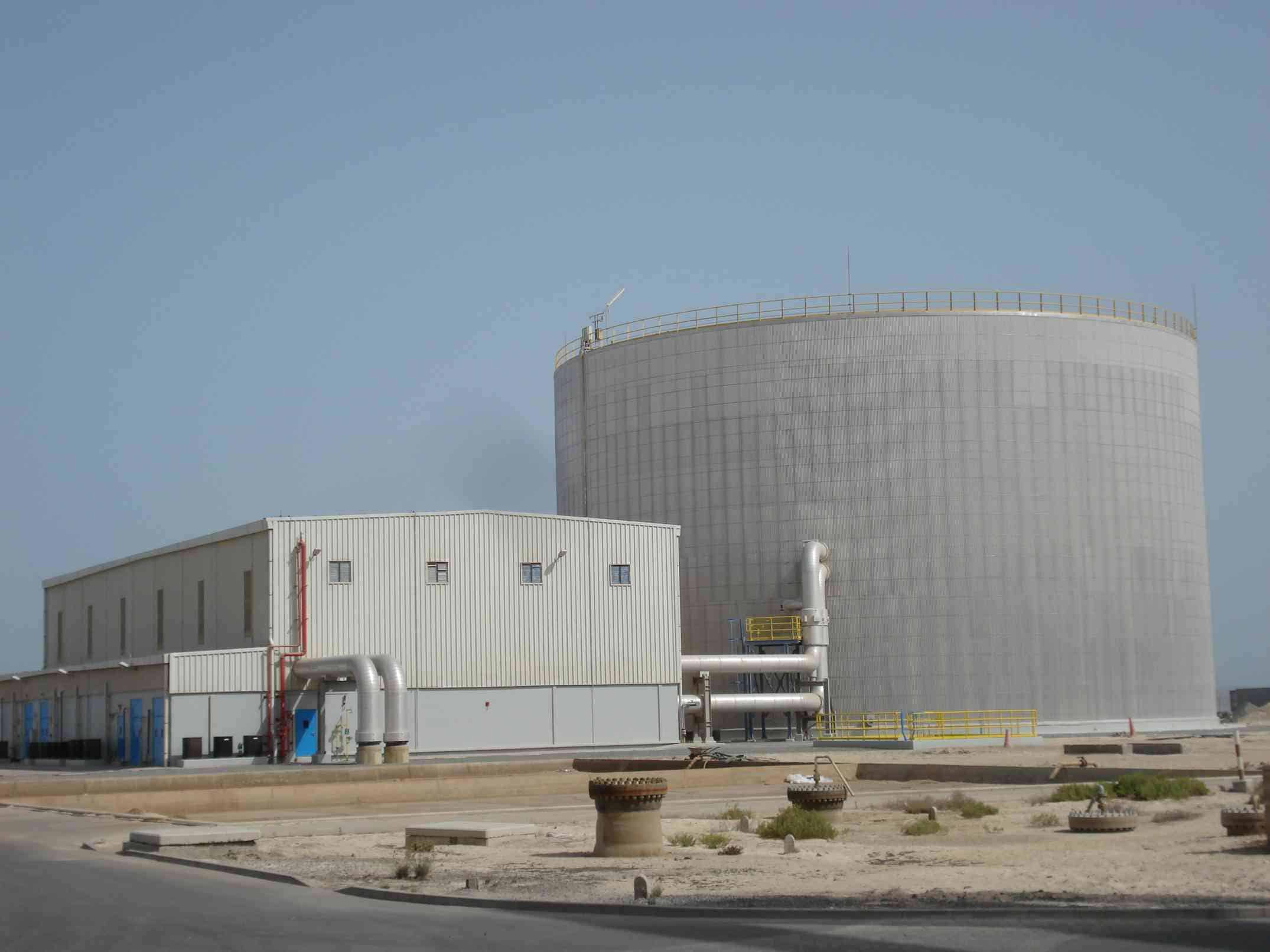


Dubai, UAE – Dubai Electricity and Water Authority (DEWA)’s Thermal Energy Storage and Turbine Inlet Air Chilling (TESTIAC) project, which has been implemented at three Gas Turbines at L-Station in Jebel Ali Power and Desalination Complex, has reduced over 44,000 tons of CO2 emissions annually.
It is equivalent to the planting of two million trees, said reports.
This project is the first of its kind internationally combining Thermal Energy Storage with Inlet Air Chilling in Frame 9F Gas Turbines.
This reduces the consumption of natural gas in the electricity production process, which limits greenhouse gas emissions.
The TESTIAC project was implemented to increase the electricity generation capacity of gas turbines during high ambient temperatures in summer by using chilled water to cool the inlet air to gas turbines.
The process consumes less energy than the additional energy produced, as it resulted in increasing the cumulative electricity generation capacity of three gas turbines by 111 MW.
The project was awarded the Certified Emissions Reductions (CERs) credit from the United Nations Framework Convention on Climate Change.
Dubai Carbon Centre of Excellence (Dubai Carbon) presented the accreditation after the project significantly exceeded its initial target.