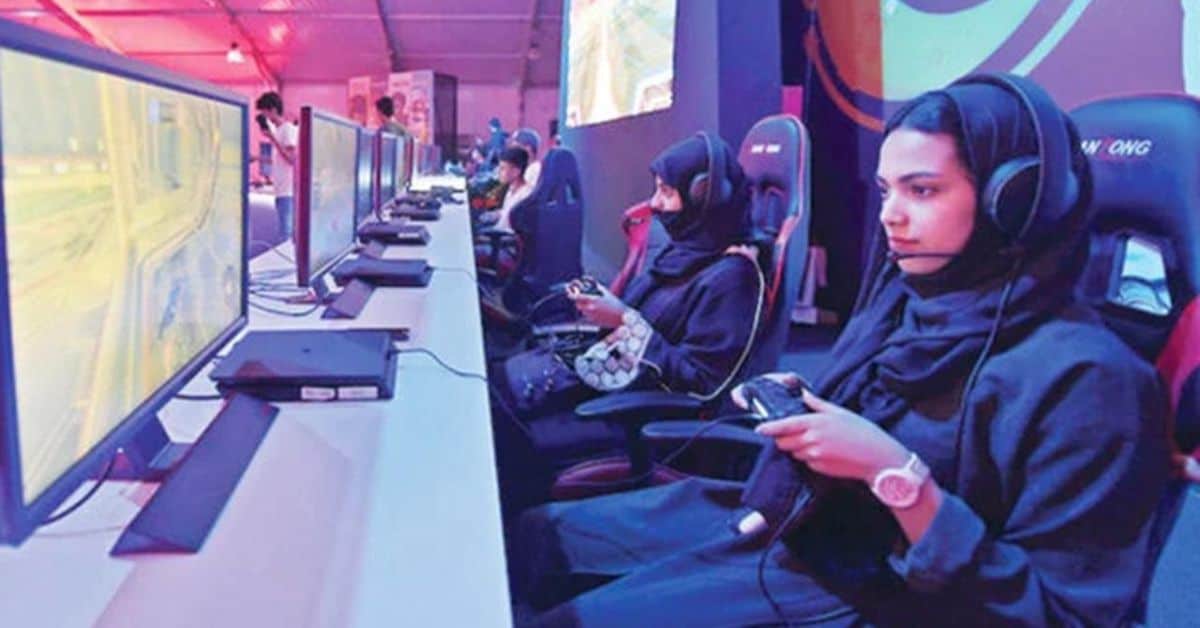
The GCC region has become one of the most influential markets in global gaming, evolving in just a few years from an emerging player into one of the fastest-growing regions worldwide—fueling economic diversification, innovation, and youth engagement.
Gaming is at the core of Saudi Arabia’s Vision 2030 digital transformation agenda. Esports are no longer seen merely as entertainment; they are recognized as a vital sector and a driver of economic growth.
The National Gaming and Esports Strategy (NGES), launched in 2022, aims to generate $13.3 billion for the kingdom’s GDP and create over 39,000 jobs by 2030, spanning esports development, event management, and digital media. Backed by an investment of more than $38 billion, Saudi Arabia is building one of the world’s most advanced gaming ecosystems.
The upcoming Esports Olympics, scheduled for Riyadh in 2027, along with the Qiddiya City Esports & Gaming District, will position the kingdom as a premier global hub for esports excellence.
Saudi Arabia’s rapid rise in global esports is no longer a projection—it is a measurable reality. According to Ralf Reichert, CEO of the Esports World Cup Foundation (EWCF), the kingdom has already proven its ability to deliver events on par with the world’s biggest sporting moments and is now helping shape the future of digital sport itself.
“Saudi Arabia has shown it can execute at the level of the world’s biggest sports moments, and now it’s helping shape digital sport itself,” Reichert told TRENDS. “With EWC and the Esports Nations Cup, the kingdom is becoming a convening force between East and West. From Team Falcons’ $7 million Club Championship to Magnus Carlsen competing on the EWC stage, we’re setting new benchmarks for competitive excellence and cultural reach.”
The numbers underscore that transformation. “In 2025, the Esports World Cup became the largest event in esports history—with 750 million viewers, 350 million hours watched, and 3 million festival visitors over seven weeks. That scale builds a market. The result is a stronger global sport and, through it, a stronger home base in Saudi Arabia,” he added.
Empowering Saudi Youth Through Digital Skills
With nearly 71 percent of the population under the age of 35, Saudi Arabia’s youth form the foundation of its gaming transformation. Esports are offering new opportunities to develop digital literacy, creativity, and collaboration—skills essential for the 21st-century economy.
The success stories of Saudi champions such as Mosaed “MSdossary7” Al-Dossary, FIFA eWorld Cup winner and founder of Team Falcons, reflect this potential. Similarly, the kingdom’s Rocket League team—led by TRK (Mohammed AlOtaibi), RW9 (Saleh Abdullah), and Kiilleerz (Yazzed Abdullah), all under 20—exemplifies the region’s emerging talent.
According to PricewaterhouseCoopers (PwC), Saudi Arabia’s latest report on the economic potential of gaming and esports highlights how talent academies, youth-focused programs, and national tournaments are equipping the next generation with professional pathways, ensuring that the gaming community continues to thrive as a place “where passion meets purpose.”
However, challenges remain. Sustaining momentum requires more than investment. Long-term success depends on nurturing grassroots talent, fostering inclusivity, and developing culturally relevant content. Addressing infrastructure gaps, talent retention, and equitable access will be critical to the sector’s maturity.
As the World Economic Forum’s Future of Jobs Report 2023 notes, nearly half of the global workforce will require reskilling in digital and advanced technologies by 2025—a space where gaming and esports can play a transformative role.
The UAE’s Quest to Become a Global Gaming Capital
Parallel to the esports boom, the region’s gaming development scene is awakening, fueled by young talent and strategic government support. The MENA region is now home to nearly 68 million gamers, attracting international publishers while empowering local creators.
Beyond Saudi Arabia, the UAE has rapidly advanced its gaming ambitions. Over the past decade, it has transformed its gaming landscape through investments in infrastructure, talent development, and international partnerships—merging technology, entertainment, and innovation into a national asset.
Dubai’s Gaming 2033 strategy aims to position the city among the world’s top 10 gaming capitals, contributing $1 billion to GDP and creating 30,000 jobs. The strategy emphasizes nurturing local developers, building advanced studios, and attracting international headquarters. Meanwhile, Abu Dhabi’s twofour54 and Yas Creative Hub continue to invest in gaming startups and esports production facilities.
Flagship events such as the Dubai Esports Festival and the BLAST Premier World Final, hosted by AD Gaming, have elevated the UAE’s global standing, positioning it as a bridge between Eastern and Western gaming markets.
A Thriving Regional Ecosystem
Across the GCC, governments increasingly recognize gaming and esports as key drivers of future economies. From Riyadh to Dubai, initiatives are fostering ecosystems that merge innovation, creativity, and opportunity.
As Nikita Matsokin, executive director of MGVC (My.Games), told TRENDS: “The creative potential across the MENA region is exceptional. Developers combine storytelling rooted in regional culture with technical skills that meet global standards.”
Despite progress, regional developers continue to face challenges such as limited funding, global exposure, and experience in large-scale publishing. Addressing these gaps will require stronger collaboration between local studios and global publishers to ensure sustainable growth.
Growth Drivers and the Road Ahead
A Ken Research report titled GCC Esports Market Size, Share, Growth Drivers, Trends, Opportunities & Forecast 2025–2030 highlights mobile gaming as a key growth driver, with over 70 percent of GCC residents aged 15–34 actively participating in gaming. Internet penetration nearing 99 percent continues to fuel engagement.
Brand investment is also accelerating, with more than $200 million allocated to sponsorships and partnerships across the GCC esports market. Analysts project the regional gaming and esports market could reach $6 billion by 2027, led by Saudi Arabia and the UAE.
From Riyadh’s esports arenas to Dubai’s gaming studios, the GCC’s digital revolution represents more than an industry—it is a youth-driven transformation reshaping economies, communities, and culture on a global stage.
(This article was originally published in the special Knowledge Economy issue of TRENDS in Dec 2025.)