
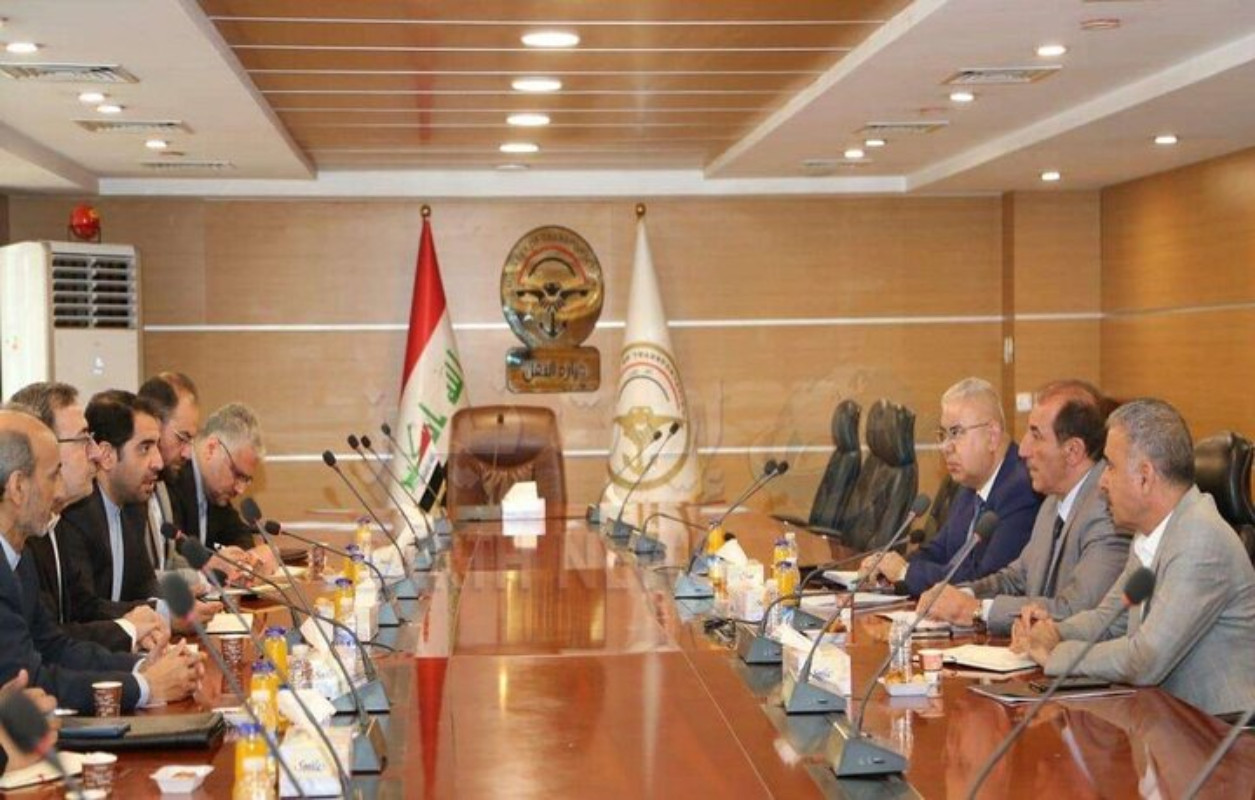


Baghdad, Iraq–Iraq is looking to deepen cooperation with Iran in the transport sector and facilitate the movement of pilgrims between the two countries.
The issue was discussed in a meeting in Baghdad between the Iranian and Iraqi ministers focusing on the ways to expand cooperation between the two countries.
The meeting occurred two days after Iraq announced an ambitious plan to turn itself into a regional transportation hub by developing its road and rail infrastructure, linking Europe with the Gulf and other Middle East countries.
Taleb Abdullah Bayesh, Undersecretary of Iraq Ministry of Transportation for Technical Affairs, told Iraqi media that they’ve also discussed increasing cooperation in the field of land and air transportation and the importance of increasing the number of flights.
The Iraqi Minister of Transportation has already committed to making all the necessary efforts to improve the services provided to Iranian pilgrims, he added.
The Iraqi Ministry plays an active role in facilitating the movement of pilgrims who enter through border crossings, according to him.
Two days back Iraq presented an ambitious plan to turn itself into a regional transportation hub by developing its road and rail infrastructure, linking Europe with the Gulf and other Middle East countries.
Once completed, the $17 billion project known as the “Route of Development” would span the length of the country, stretching 1,200 kilometers (745 miles) from the northern border with Turkey to the Gulf in the south.
Iraqi Prime Minister Mohamed Shia al-Sudani announced the project during a conference with transport ministry representatives from Iran, Jordan, Kuwait, Oman, Qatar, Saudi Arabia, Syria and the United Arab Emirates.
“We see this project as a pillar of a sustainable non-oil economy, a link that serves Iraq’s neighbors and the region, and a contribution to economic integration efforts,” Sudani said.
While further discussions are required, any country that wishes “will be able to carry out part of the project”, the Iraqi parliament’s transport committee said, adding that the project could be completed in “three to five years”.
War-ravaged and beset by rampant corruption, oil-rich Iraq suffers from dilapidated infrastructure.
Its roads are in terrible condition and those connecting the capital Baghdad to the north cross areas where Islamic State group remnants continue to carry out sporadic attacks.
Sudani has prioritized the reconstruction of the country’s road network, along with upgrading its failing electricity infrastructure.
Developing the road and rail corridor would allow Iraq to capitalize on its geographical position, with the aim of making the country a transportation hub for goods and people moving between the Gulf, Turkey and Europe.
Work has already started to increase capacity at the commercial port of Al-Faw, on the shores of the Gulf, where container ships will unload before embarking on the new road and rail links.