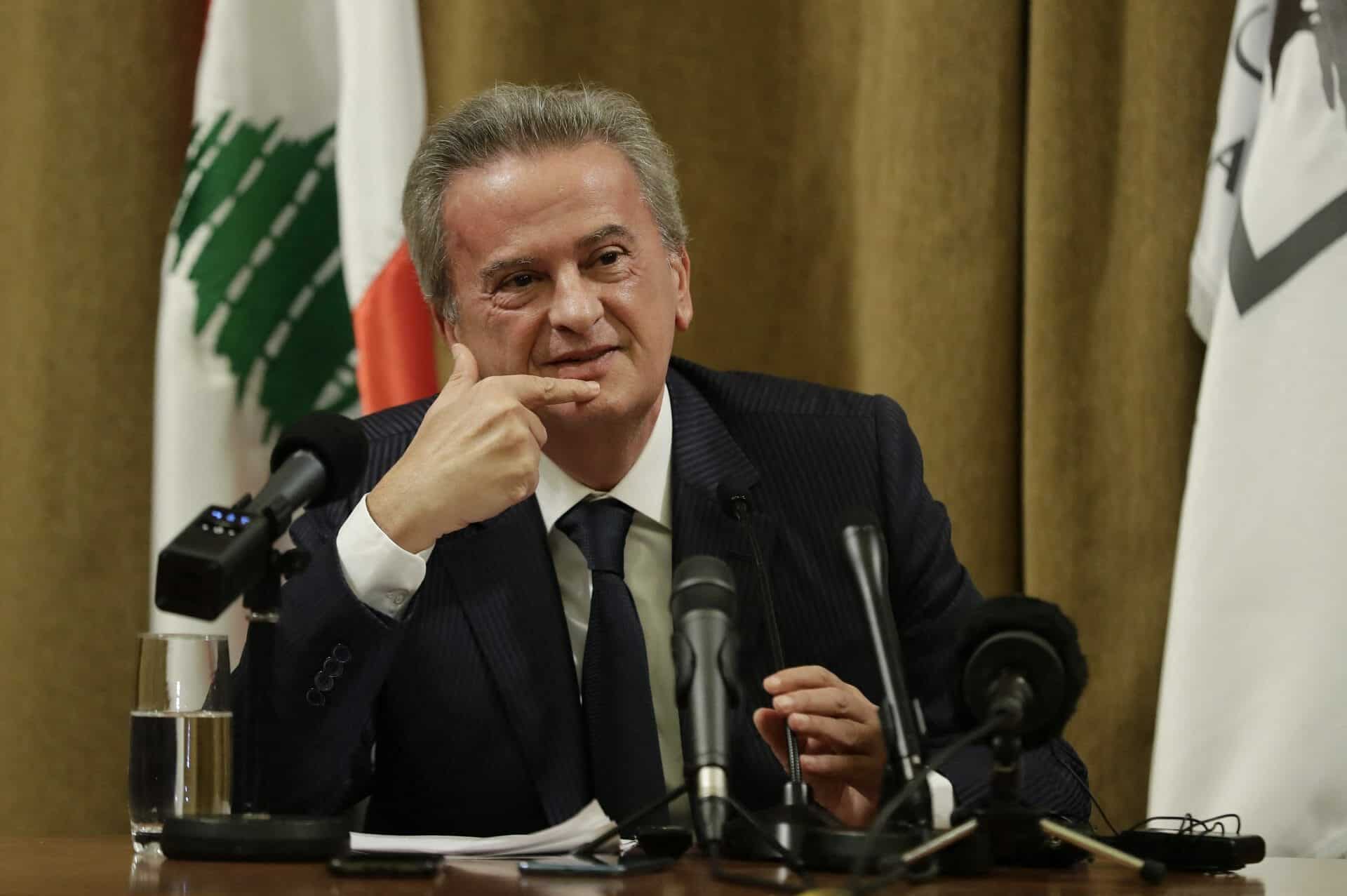

Lebanon’s central bank Governor Riad Salameh on Friday, October 8, denied he had rejected portions of an International Monetary Fund statement that predicted the current economic crisis in Lebanon.
In his statement, Salameh dismissed a report by Swiss newspaper Le Temps that made these allegations.
He said this was an outright attempt to lead the ongoing negotiations between Lebanon and the IMF to total failure.
The Le Temps article that Banque du Liban and its governor Salameh had crossed out 14 pages of an IMF report in 2016 that warned of the economic crisis that befell Lebanon after three years.
The newspaper said it was able to obtain a document about the meeting held on April 9, 2016, between representatives of the IMF in Lebanon, Salameh, and several other central bank officials.
According to its report, the document said an IMF representative warned Salameh Lebanon was “on the verge of collapse.”
Le Temps reported that the crossed-out information might have allowed reducing the economic crisis that Lebanon us undergoing now, where three out of four people live in poverty.
“The International Monetary Fund’s work method is very serious and transparent, and whoever is aware of its method, will not believe such lies and hearsay,” Salameh said.
He also explained that such reports were prepared by an entire team comprising several persons from the IMF and concerned parties from the Lebanese state, and not solely limited to the person of the central bank’s governor.
“What is mostly suspicious is the timing of an article as such, especially now that Lebanon has announced the start of serious negotiations with the International Monetary Fund; this is a cause for concern, as there are parties whose only goal is to thwart all the efforts being exerted to help Lebanon’s recovery,” Salameh added.