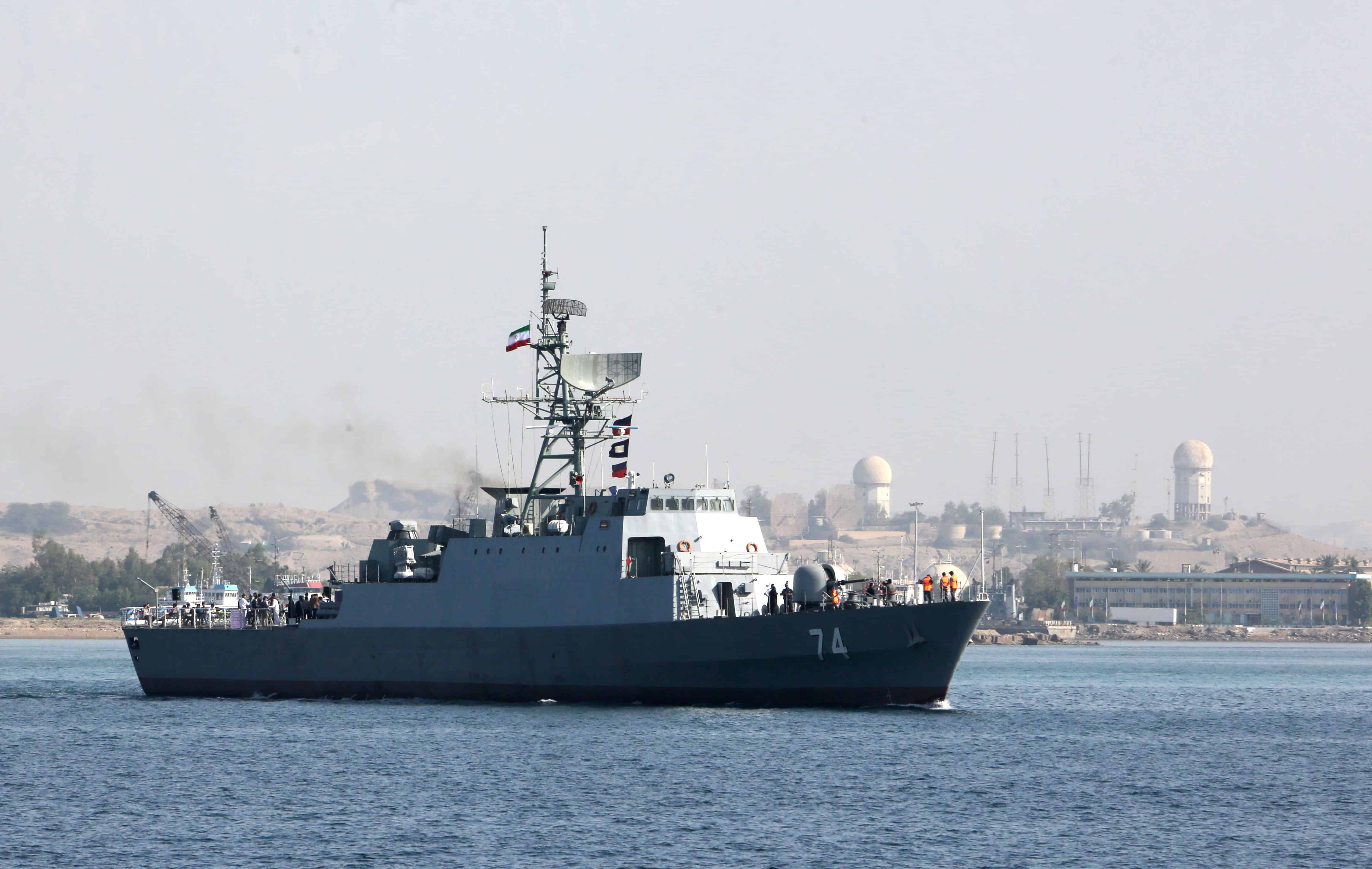

One person was killed and three others wounded after an Iranian commercial vessel was struck near Hengam Island and the Shib Deraz coast of Qeshm Island, Iranian broadcaster IRIB reported, citing Qeshm Governor Hossein Amir Teymouri.
Several explosions were also reported overnight around Qeshm, the largest island in the Strait of Hormuz.
Teymouri blamed “American enemy” for the attack, which came a day before a meeting between Iran and Gulf states in Oman over the strategically important waterway, which is crucial for global oil and gas trade.
Separately, the United Kingdom Maritime Trade Operations (UKMTO) said a vessel transiting the Strait of Hormuz was hit by an unknown projectile at about 23:00 UTC on September 12.
UKMTO said the status of the crew, extent of damage and any environmental impact were not immediately known.
Iranian state media had earlier reported explosions off the coast of Qeshm, with IRNA saying two explosions were heard from the direction of the sea.
The developments come as shipping through the waterway remains affected by the wider conflict. US Central Command said American forces had redirected 100 commercial vessels over the past 60 days since Washington enforced a naval blockade against Iran.
Centcom said no ships had passed through the blockade without US forces allowing them to do so.
Gulf meeting faces diplomatic strain
The planned Iran-Gulf meeting in Oman has also been complicated by regional tensions.
Bahrain said it would not participate in Monday’s meeting, according to AFP. Its foreign ministry said Manama would not join a collective meeting involving Iran until diplomatic relations between the two countries were restored.
Bahrain said security and stability could not be preserved through what it called a policy of appeasement and called for the Strait of Hormuz to be opened without discrimination, fees or permits.
Iran’s foreign ministry had said the meeting, hosted by Muscat, would address the future of the strait.
An Iranian source separately told the semi-official Tasnim news agency that an understanding between Iran and Oman did not provide for the immediate reopening of Hormuz. The source said it established a basis for reopening the waterway, with the timing dependent on the United States meeting Tehran’s conditions.
Houthi attacks expand Yemen front
The conflict has also intensified in Yemen, where the Houthis claimed a new attack on Saudi Arabia.
Houthi military spokesman Yahya Saree said the group used ballistic missiles and drones to target a military base in Sharurah, southern Saudi Arabia.
He said the attack targeted weapons depots and command-and-control centres involved in what the Houthis described as aggression against Yemen.
Saudi authorities separately said a Houthi projectile wounded two people in the Al-Tuwal Governorate in the Jazan region. The projectile also caused material damage to a mosque, buildings and vehicles, according to the Saudi civil defence directorate.
The Houthi escalation comes after the group’s forces made major advances inside Yemen.
The Houthis have captured the remainder of Yemen’s Red Sea coast and several strategic islands following a week-long offensive, according to the supplied reports, strengthening their hold over the Bab al-Mandab Strait at the southern entrance to the Red Sea.
Yemeni government forces said they had struck Houthi fighters in the Red Sea city of Mocha, while a senior government official said government forces that had withdrawn from the western coast were regrouping and would return to the battlefield.
Sultan al-Arada, a member of Yemen’s Presidential Leadership Council and governor of Marib, described the loss to the Houthis as painful but said such setbacks were part of war.
The escalation has also triggered a new displacement crisis. Djibouti’s economy and finance minister said at least 1,400 refugees fleeing Yemen had arrived in the country within 24 hours.
The International Organization for Migration said at least 46,000 people had been displaced in Yemen since fighting escalated the previous week, with at least 76,000 displaced since July.
Pezeshkian distances Iran from Houthi actions
Iranian President Masoud Pezeshkian sought to distinguish Tehran from the Houthis’ actions against Saudi Arabia.
Pezeshkian said Iran was “not at war with Saudi Arabia”, according to Al Jazeera, and said the Houthis had “their own issues”.
His comments came as the Houthis claimed the Sharurah attack and as Saudi Arabia and the group traded attacks.
US President Donald Trump said the Houthis had asked Washington not to intervene in their escalating conflict with Saudi Arabia.
Trump said the Houthis had told the United States they did not want to fight American forces or face US intervention. He also said the group was allowing most ships through and suggested it had an issue with one country.
Tehran vows to resist US pressure
Pezeshkian also said Iran would not surrender to US pressure, accusing Washington of targeting civilian infrastructure and essential supplies.
In a post on X, he questioned why the United States would target civilian infrastructure, food supplies and livelihoods rather than confronting Iranian military forces.
He also accused Washington of denying people access to water, food and medicine, saying Iran would not be bullied into submission.
Meanwhile, Iranian Foreign Minister Abbas Araghchi and Iraqi Foreign Minister Fuad Hussein discussed bilateral issues and regional developments by telephone.
The two ministers stressed the importance of security and stability along their shared borders and the need for continued coordination. They also called for responsible approaches to regional developments and efforts to prevent tensions from escalating or conflicts expanding.
Iraq had closed a border crossing with Iran after a drone attack originating from Iranian territory led to the closure of a key oil pipeline in Saudi Arabia.
Wider regional fallout
The Iran war is also continuing to reverberate beyond the Gulf and Yemen.
In southern Lebanon, Israeli forces carried out a large explosion in Khiam that shattered windows in nearby towns, according to Lebanon’s National News Agency.
The incident came despite a ceasefire, amid continued Israeli bombing, ground operations and demolitions in southern Lebanon.
Lebanese President Joseph Aoun visited Nabatieh on Saturday, near a strategic Hezbollah position that Israel had destroyed earlier in the week, and said there would be no new negotiations with Israel at present.
The latest developments underscore the widening geographic impact of the Iran war, with attacks affecting commercial shipping around Hormuz, fighting intensifying in Yemen and diplomatic efforts over the strategic waterway facing new obstacles.