


US President Donald Trump said he expected to discuss the war on Iran and nuclear disarmament with Chinese President Xi Jinping and Russian President Vladimir Putin at next week’s Asia-Pacific Economic Cooperation (APEC) summit in Shenzhen, China, as Washington intensified economic pressure on Tehran.
“One of the meetings, I think, will be with President Putin and President Xi. And that’ll be interesting,” Trump told reporters in West Palm Beach, Florida, on Sunday. “We’ll talk a lot of things, including denuclearisation. But we’ll be talking a lot of things. We’re trying to end the war in Iran, and we’re doing well because, you know, all we have to do, we’re choking it off.”
Trump said the US military’s Operation Iron Gate, designed to disrupt Iran’s land supply routes, was now in effect, complementing the naval blockade of Iranian ports.
“That means nothing comes in by land. And as you know, the naval blockade, nothing comes in by water,” he said.
The new operation, established by US Central Command (CENTCOM), extends the blockade to Iran’s land borders and the Caspian Sea. A 20-member task force will seek to prevent the movement of weapons systems, dual-use technologies, sanctioned materials and revenue streams across Iran’s borders.
Iran, which shares approximately 5,900 kilometres of land borders with seven countries, dismissed the initiative as an attempt to rebrand the existing blockade. Islamic Revolutionary Guard Corps spokesperson Hossein Mohebi said the operation would fail to achieve its objectives.
Trump also sought to play down the prospect of renewed military action, saying further US strikes were highly unlikely if negotiations made progress on Iran’s nuclear programme and the reopening of the Strait of Hormuz.
In an interview with CBS News, he said he did not see a reason to escalate the conflict, adding that Iran’s nuclear material was buried under thousands of tonnes of rock. He also claimed there had been little activity at the country’s alleged nuclear site at Pickaxe Mountain.
However, US Secretary of State Marco Rubio said negotiations had made no progress and that Tehran’s demands remained unacceptable. He said several countries were continuing to convey proposals but that an agreement was not imminent.
“I don’t have any progress to report to you,” Rubio told reporters in Florida before departing for Paris to attend the G7 foreign ministers’ meeting.
Tehran has consistently denied seeking nuclear weapons. The International Atomic Energy Agency has said it has no proof of a systematic Iranian effort to develop one.
Qatar mediation and stalled negotiations
Trump is also scheduled to meet Qatari Prime Minister Sheikh Mohammed bin Abdulrahman Al Thani at the White House on Monday as Doha continues to mediate between Washington and Tehran.
Qatar has been conveying proposals aimed at bridging differences over Iran’s nuclear programme and the conditions for ending the conflict. US Vice President JD Vance is also expected to meet the Qatari premier, according to a US official cited by Reuters.
Rubio said mediation efforts were continuing but acknowledged that Washington was not close to a breakthrough. Iranian Foreign Minister Abbas Araghchi, meanwhile, said Tehran was waiting to see whether Washington’s position would change following the Republicans’ poor performance in last week’s midterm elections.
Trump’s comments on diplomacy came amid signs of domestic political pressure over the conflict. In an interview with CBS News, he acknowledged that voters disliked the war and the increase in gasoline prices, while also pointing to what he described as growing public opposition to Israel.
He nevertheless defended the decision to attack Iran, saying he would make the same decision again. Vice President JD Vance had earlier linked the Republicans’ electoral setback partly to public dissatisfaction with the war.
Drone attack cripples Iraqi Kurdistan’s power supply
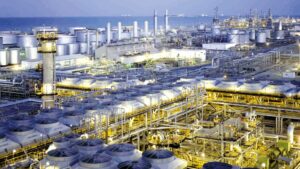
Meanwhile, a drone attack on the Khor Mor gasfield in Iraq’s Kurdistan region triggered an explosion and fire, halting production and causing widespread electricity outages.
More than 70 percent of the region was left without power after the strike on the facility, which supplies gas for most of Kurdistan’s electricity generation.
The attack also disrupted efforts to restore essential services, with Kurdish authorities turning to alternative sources, including hydropower, to keep hospitals and water treatment facilities operating.
Khor Mor, Iraq’s largest gas facility, is operated by UAE-based Dana Gas. The attack has also raised questions about security arrangements around the strategic energy installation.
The facility was targeted in a similar drone attack in November last year, which also caused widespread power outages. Kurdish authorities had previously blamed pro-Iranian armed factions, although no group claimed responsibility.
Gaza collapse kills five Palestinians
In Gaza, at least five Palestinians, including four children, were killed when a sand embankment collapsed onto tents sheltering displaced families in Deir el-Balah following heavy rain.
Residents used their bare hands to dig through the debris and rescue survivors as emergency services struggled to reach the site.
The disaster highlighted the precarious conditions facing displaced Palestinians living in makeshift shelters on unstable ground as the winter season approaches. Humanitarian organizations have repeatedly called for the entry of better-quality tents and mobile homes under the ceasefire agreement.
Oil prices ease as Trump signals restraint
Oil prices fell in early Asian trading after Trump indicated that further US attacks on Iran were unlikely if negotiations advanced.
Brent crude slipped more than 0.5 percent to $97.67 a barrel, while US crude futures fell to $90.51, according to Reuters.
The decline came despite renewed reports of attacks on commercial shipping in and around the Strait of Hormuz, underscoring the uncertainty surrounding energy supplies and the prospects for a diplomatic settlement.