
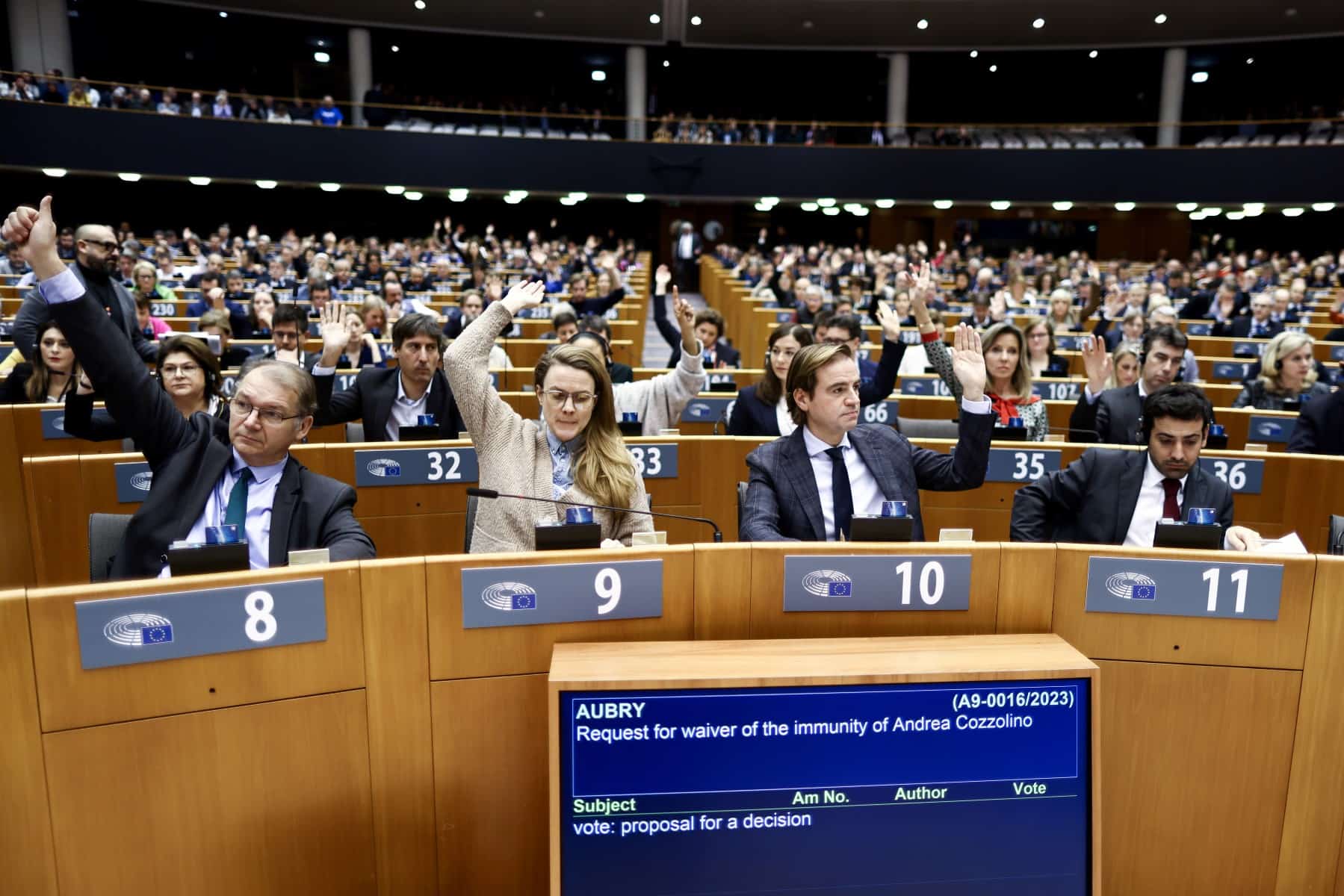


Strasbourg, France– A large group of MEPs called on Tuesday for a tax on wealthy individuals, similar to one on multinational companies, to fund the transition to a carbon-free world.
A previous landmark deal for a global minimum 15 percent tax on multinational businesses is set to start to go into force this year.
“What we have achieved for multinationals, we must now do for the wealthy,” French MEP Aurore Lalucq and economist Gabriel Zucman wrote in an opinion piece published in the French daily Le Monde, as they launched the campaign with more than 130 MEPs.
“Our proposal is simple: introduce a progressive tax on the wealth of the ultra-rich on an international scale in order to reduce inequalities while helping to finance investments needed for the green and social transition,” they said.
The signatories claimed that in 2018 Tesla owner Elon Musk, “then the second-richest man in the world, did not pay a single cent in federal taxes” and “in France, known for its high taxes, the 370 richest families are effectively taxed only around two to three percent”.
The Organization for Economic Cooperation and Development (OECD), a club of mostly rich countries based in Paris, brokered the agreement on multinationals.
Lalucq and Zucman called on the OECD and the United Nations to start work on a similar tax on the richest people, and urged the European Union to act as well.
The authors propose a 1.5 percent tax on wealth of 50 million euros ($54 million) or more, but said the exact level should be decided “collectively and democratically”.
Most of the MEPs who signed are from Green or left-wing parties. They were joined by non-governmental organizations, including Oxfam, supported by a dozen economists and by 20 millionaires.