
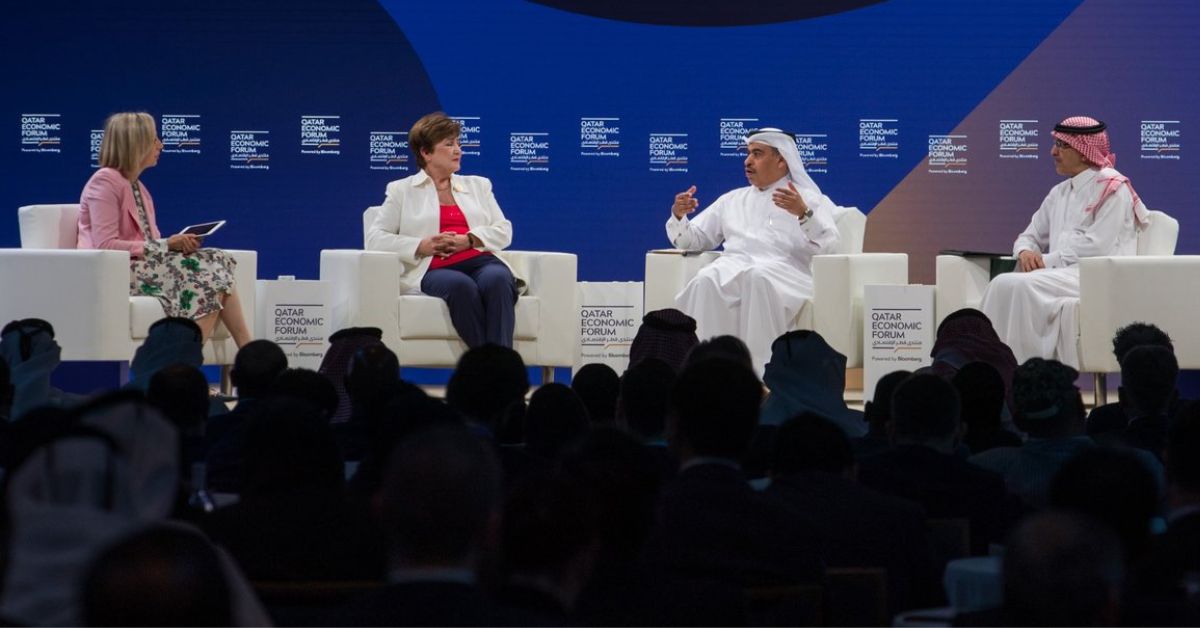


Doha – Qatar is a shining example of reforms and strong institutions that lead to diversified growth to create the future economy for the people of the Gulf country, said International Monetary Fund (IMF) Managing Director Kristalina Georgieva while praising the performance of the Qatari economy.
Georgieva, in an interview with Qatar News Agency, said that the contribution of the non-oil sector to the growth of the economy is the strongest in the Gulf region, which indicates that the diversification that has been followed over the past years is bearing fruit.
She pointed out a pledge under which Qatar contributes 20 percent of its Special Drawing Rights (SDR) so that the IMF can support low-growth countries as well as those most at risk in terms of climate shocks on concessional terms, which will not only bring financial resources to these countries but also carry Qatar’s reform experience to them.
The top IMF official highlighted well-known Qatar’s generosity and leading role in supporting vulnerable countries, considering the pledge that was announced today would allow the Fund to expand lending to low-income countries, in addition to expanding lending to countries vulnerable to shocks as a result of climate, so that that they could build more flexibility in the economy, deal with floods, droughts, and other forms of climate-related natural disasters.
Economic slowdown
Georgieva expected a slowdown in global economic growth in 2023, which is expected to remain weak over the next five years. In that regard, she said that this slowdown will indeed affect Qatar’s economy, yet the Qatari performance has been very good in diversifying its economy, as it is the strongest among the GCC countries in terms of non-oil economic growth, and according to the IMF vision, and as a result, Qatar will continue to grow at a rate that exceeds the global growth. As for the GCC countries as a whole, it is a bright spot in the global economy.
She stressed that the GCC countries had done well in investing in resources derived from oil and gas, saying that the outstanding thing that the GCC countries have done is investing in human capital, education, health care and creating a dynamic, strong, and more flexible private sector in a faltering global economy.
Georgieva pointed out that Qatar Economic Forum is an opportunity to listen to leaders of the financial, business, and government communities in the region and understand the vision here and how to translate it on the ground.
She said that on the economic side, there are strong partnerships with the GCC countries, in particular, to support more flexible policies toward comprehensive economic growth.